
 By admin

Quantifying the Unquantifiable: Scientific Methods for Estimating Incalculable Entities from Ants to Stars
Introduction
The act of counting is one of humanity’s oldest intellectual pursuits. It forms the foundation of mathematics, science, and technological progress. Yet, despite centuries of advancement, some quantities in nature appear fundamentally beyond enumeration—whether due to their vastness, minuteness, or constant dynamism. How, then, can scientists claim to estimate the number of ants on Earth, the bacteria in a gram of soil, or the stars populating the observable universe?
Modern science approaches these challenges through a synthesis of sampling theory, statistical inference, remote sensing, and computational modeling. These techniques allow researchers to derive credible estimates of quantities that cannot be directly counted. From ecological surveys to cosmological observations, the art and science of “counting the uncountable” reveal both the ingenuity of human reasoning and the underlying order within nature’s apparent infinity.
This paper examines how scientists quantify extremely large or small populations—spanning biological, ecological, and astronomical domains—while also highlighting the technological innovations and philosophical implications that accompany these endeavors.
1. Estimating Biological Populations: Counting the Small and Abundant
1.1 The Global Ant Census
Ants represent one of the most abundant animal taxa on Earth, with an estimated 20 quadrillion individuals (Schultheiss et al., PNAS, 2022). Direct enumeration is, of course, impossible. Instead, researchers employ systematic sampling methods to estimate global populations.
The standard approach involves collecting soil and leaf litter samples from various ecosystems. Ants within these samples are identified, counted, and standardized per unit area. Using spatial extrapolation, these local densities are multiplied by the total land area of corresponding biomes. The resulting figure—while approximate—yields a remarkably consistent global estimate when compared across hundreds of studies.
Ecological Significance
Such estimations extend beyond numerical curiosity. Ants constitute a crucial component of terrestrial ecosystems, influencing soil aeration, nutrient cycling, and food web dynamics. Quantifying their abundance allows scientists to assess the biomass distribution of terrestrial arthropods, revealing that ants collectively account for approximately 12 megatons of carbon biomass, surpassing the combined total of wild mammals and birds.
Furthermore, population modeling helps ecologists predict how climate change, deforestation, and urbanization may affect ant diversity and ecosystem stability. In this sense, “counting” becomes a tool for forecasting environmental resilience.
1.2 Microbial Enumeration: The Invisible Majority
If ants dominate the macroscopic biosphere, microbes reign supreme at the microscopic level. Estimates suggest that the Earth harbors approximately 5 × 10³⁰ microbial cells, including bacteria, archaea, and microeukaryotes. These microorganisms collectively form the backbone of biogeochemical cycles, regulating global carbon, nitrogen, and sulfur fluxes.
Techniques of Microbial Quantification
Unlike ants, microbes cannot be visually counted with the naked eye. Early microbiologists relied on microscopy-based counting chambers, such as the Petroff–Hausser cell counter, to manually enumerate microbial cells within diluted samples. However, these methods were limited by human error and by the inability to distinguish live from dead cells.
Contemporary research employs molecular and genomic tools:
- Fluorescence microscopy and flow cytometry enable high-throughput cell counting with fluorescent markers that target DNA or specific proteins.
- Metagenomic sequencing provides a statistical measure of microbial abundance based on DNA fragment frequency.
- Quantitative PCR (qPCR) is used to estimate gene copy numbers, correlating genetic data with cell counts.
Applications and Implications
Microbial quantification plays a pivotal role in multiple disciplines:
- Medical microbiology: estimating bacterial loads in infection diagnosis and antibiotic resistance studies.
- Agricultural science: assessing soil health and nutrient content via microbial biomass.
- Climate science: modeling carbon sequestration and methane production in microbial ecosystems.
The scientific challenge lies not merely in quantifying microorganisms, but in interpreting these vast numbers within an ecological and evolutionary context.
1.3 Estimating Animal Populations in the Wild
For larger animals, population estimation involves more direct but equally inferential techniques. Commonly used methods include:
- Mark–recapture analysis: A sample of individuals is captured, marked, and released. Subsequent sampling reveals the ratio of marked to unmarked individuals, allowing estimation of total population size using statistical models such as the Lincoln–Petersen index.
- Camera traps and acoustic sensors: Automated detection devices record animal presence over time, enabling machine learning algorithms to estimate density.
- Aerial and satellite imaging: Remote sensing technologies provide large-scale population assessments of species such as elephants, penguins, and whales.
For example, the global emperor penguin population has been estimated using high-resolution satellite imagery that detects colonies by identifying guano stains on Antarctic ice. These data are integrated with climatic variables to model population trends under warming scenarios.
2. Quantifying Astronomical Magnitudes: Counting the Vast and Distant
2.1 Stellar Enumeration
Counting stars is a centuries-old pursuit that has evolved alongside astronomical technology. Modern estimates place the number of stars in the observable universe at approximately 2 × 10²³, or 200 sextillion.
Methods of Estimation
Astronomers count stars within well-observed regions of space—such as specific patches of the Milky Way or other galaxies—using instruments like the Hubble Space Telescope and the James Webb Space Telescope (JWST). These localized counts are then extrapolated based on the observed distribution of galaxies, stellar density, and luminosity functions.
The Hubble Ultra Deep Field and JWST Deep Field surveys, for instance, provided the most detailed stellar density data yet obtained. Through statistical modeling and corrections for observational bias, astronomers derived population estimates extending billions of light-years into cosmic history.
Scientific Relevance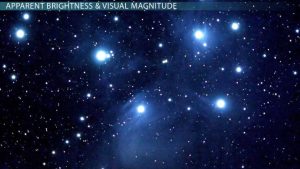
Estimating stellar abundance aids in:
- Modeling galactic formation and evolution.
- Refining estimates of cosmic baryonic matter.
- Assessing the habitable potential of planetary systems.
The process demonstrates that even the largest scales in the universe are amenable to mathematical characterization, provided sufficient observational data and computational power.
2.2 Counting Exoplanets
Since the first confirmed exoplanet detection in 1992, the number of known exoplanets has grown exponentially, surpassing 5,600 confirmed cases by 2025. However, statistical inference suggests that the Milky Way alone may contain billions of planets.
Detection Techniques
The primary method for discovering and quantifying exoplanets is the transit photometry technique, used by missions such as NASA’s Kepler and TESS. By measuring minute fluctuations in a star’s brightness, astronomers infer the presence and size of orbiting planets. Complementary techniques, such as radial velocity measurements and gravitational microlensing, provide additional population data.
Extrapolation to Galactic Scale
By analyzing the fraction of observed stars that host planets and correcting for observational limitations, astronomers estimate the planet occurrence rate. The resulting models imply that nearly every star in the Milky Way likely harbors at least one planet, underscoring the potential ubiquity of planetary systems in the cosmos.
2.3 Estimating the Number of Galaxies
The question of how many galaxies exist has evolved dramatically with technological progress. Initial estimates in the 1990s suggested about 100–200 billion galaxies. However, data from the Hubble Space Telescope (2016) raised this number to nearly two trillion, incorporating galaxies too faint for earlier detection. More recent observations from the JWST indicate a lower total due to galaxy merging processes that occurred over cosmic time.
Astronomers employ deep-field imaging combined with statistical completeness corrections to estimate total galactic populations. By analyzing light intensity distributions and redshift data, cosmologists can reconstruct the large-scale structure of the universe and its evolution.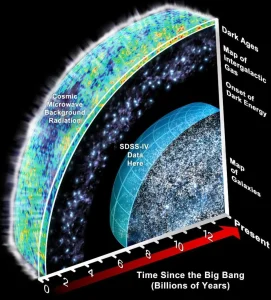
3. Mathematical and Technological Foundations of Estimation
3.1 Sampling Theory and Extrapolation
Sampling theory forms the conceptual core of nearly all estimation procedures. Whether measuring microbial densities or stellar distributions, scientists rely on representative samples to infer total populations. The reliability of an estimate depends on sample size, randomness, and statistical variance. In cases where direct sampling is impractical, probabilistic models compensate for uncertainty.
3.2 Computational and Artificial Intelligence Approaches
Recent years have witnessed a paradigm shift with the introduction of machine learning and artificial intelligence (AI) in quantitative sciences. AI models are now used to:
- Identify celestial bodies in astronomical images.
- Count and classify animals in ecological camera trap datasets.
- Analyze microbial colonies in digital micrographs.
For instance, NASA’s AI-assisted data pipelines can process terabytes of telescope imagery to automatically detect and catalog stars, galaxies, and exoplanets—tasks that would otherwise require decades of manual analysis.
3.3 Remote Sensing and Big Data Analytics
In ecology and earth sciences, remote sensing technologies—including drones, LIDAR, and multispectral satellite imaging—enable non-invasive population estimation across vast geographic areas. These data streams are integrated with big data analytics to model trends in biodiversity, deforestation, and climate change effects.
Similarly, in astronomy, space observatories continuously generate petabytes of observational data, which are analyzed using distributed computing systems. The fusion of remote sensing and big data has therefore become central to the modern practice of large-scale quantification.
4. Counting the Unseen: Quantum and Subatomic Estimation
Beyond the macroscopic and cosmic scales lies the realm of the infinitesimal. Counting atomic or subatomic particles poses distinct conceptual challenges, as these entities often defy direct observation. Physicists thus rely on indirect quantification through measurable properties such as mass, charge, and energy.
For instance: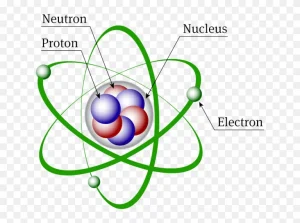
- The number of atoms in a given sample can be determined via Avogadro’s constant (6.022 × 10²³) and molecular weight.
- Particle accelerators like CERN’s Large Hadron Collider count subatomic events through energy signature detection, not visual enumeration.
- Quantum optics experiments count photons by measuring discrete energy quanta in detectors sensitive to individual light particles.
These practices extend the concept of “counting” into probabilistic and statistical domains, aligning with the principles of quantum mechanics, where uncertainty itself becomes a measurable quantity.
5. Epistemological and Philosophical Dimensions
The scientific endeavor to count the uncountable transcends empirical curiosity—it reflects a deeper epistemological question: What does it mean to measure the infinite or the imperceptible? Each act of estimation reveals both the power and limitation of human cognition. It demonstrates that while absolute precision may remain unattainable, probabilistic reasoning enables a profound degree of understanding.
Moreover, the progression from manual counting to AI-assisted quantification mirrors the broader trajectory of human knowledge: from observation to automation, from empirical simplicity to computational complexity. In this continuum, the act of counting evolves from a basic skill into an expression of our collective intellectual capacity to comprehend the cosmos.
Conclusion
From ant colonies teeming beneath the soil to galaxies spiraling billions of light-years away, the act of counting uncountable entities underscores the unity of scientific reasoning across all scales of existence. Through the integration of sampling methods, mathematical inference, remote sensing, and computational modeling, humanity has developed robust frameworks for quantifying what once seemed immeasurable.
These methods not only enhance our understanding of biological and cosmic systems but also illustrate the adaptability of science itself. Every estimate—however approximate—serves as a bridge between ignorance and knowledge, between the invisible and the comprehensible. Ultimately, counting the uncountable is more than a technical exercise; it is a testament to the human spirit’s relentless pursuit of order within the infinite complexity of nature.
The Technology Behind Autonomous Vehicles