
 By admin

Introduction
The global technology sector is evolving at an unprecedented pace, reshaping how businesses operate, communicate, and innovate. In this rapidly changing digital environment, traditional academic qualifications alone are no longer sufficient to guarantee career growth or long-term employability in the information technology (IT) field. While a university degree remains an important foundation, it often represents only the starting point of a professional journey rather than a decisive competitive advantage.
Today’s employers seek professionals who can demonstrate verified, up-to-date, and practical expertise in technologies that directly impact business performance. This is where industry-recognized certifications, particularly Microsoft certifications, play a pivotal role. As Microsoft technologies underpin a vast portion of the global digital infrastructure—from cloud computing and cybersecurity to data analytics and artificial intelligence—validated proficiency in these tools has become a powerful career accelerator.
Microsoft certifications are not merely credentials to enhance a résumé; they represent a structured and strategic approach to professional development. Designed around real-world job roles and modern enterprise requirements, these certifications validate hands-on skills, reinforce credibility, and align professionals with the most in-demand competencies in the modern IT landscape. In an era defined by cloud transformation, digital security challenges, automation, and data-driven decision-making, Microsoft certifications are no longer optional enhancements—they are a strategic imperative for career advancement.
This article provides an in-depth exploration of the value of Microsoft certifications, examining how they bridge the gap between theory and practice, support specialized career pathways, deliver tangible financial and professional benefits, and future-proof IT careers against technological disruption.
The Strategic Value of Microsoft Certifications in a Competitive IT Market
Bridging the Gap Between Academic Learning and Industry Requirements
Academic education equips IT professionals with essential theoretical knowledge, critical thinking skills, and foundational concepts. However, university curricula often struggle to keep pace with the rapid evolution of enterprise technologies. As a result, graduates may find themselves underprepared for the practical challenges they encounter in real-world IT roles.
Microsoft certifications are specifically designed to close this gap by focusing on applied skills rather than abstract theory.
Real-World, Performance-Based Assessment
Microsoft certification exams emphasize scenario-based and performance-driven evaluation. Candidates are tested on their ability to configure systems, manage services, troubleshoot issues, and implement solutions in environments that closely resemble real workplace conditions. Whether deploying virtual machines in Microsoft Azure, managing identity and access in Microsoft Entra ID, or analyzing data using Power BI, candidates must demonstrate competence in tasks they will perform on the job.
This practical focus ensures that certified professionals are not only knowledgeable but also job-ready.
A Trusted Benchmark for Employers
From an employer’s perspective, Microsoft certifications provide a standardized and globally recognized benchmark for evaluating candidates. In a crowded job market filled with diverse educational backgrounds and varying levels of experience, certifications offer hiring managers a reliable indicator of verified skills.
A Microsoft-certified professional signals discipline, commitment to continuous learning, and the ability to meet rigorous industry standards—qualities that significantly reduce hiring risk.
Role-Based Certification Paths: Aligning Skills with Career Goals
Microsoft has modernized its certification ecosystem by shifting from product-based credentials to role-based certifications. This evolution reflects the realities of today’s IT workforce, where professionals specialize in clearly defined roles within complex digital ecosystems.
Cloud Computing and Azure Infrastructure
Cloud computing is at the heart of modern digital transformation, and Microsoft Azure stands as one of the world’s leading cloud platforms. Certifications in this domain validate critical skills that are essential across industries.
Key certifications include: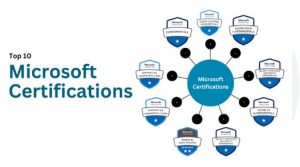
- Microsoft Certified: Azure Administrator Associate
- Microsoft Certified: Azure Developer Associate
- Microsoft Certified: Azure Solutions Architect Expert
These credentials confirm expertise in deploying, managing, and optimizing scalable cloud solutions, making certified professionals indispensable to organizations undergoing cloud migration or modernization.
Cybersecurity, Identity, and Compliance
As cyber threats become more frequent and sophisticated, organizations are prioritizing robust security frameworks. Microsoft’s security certifications address this urgent need by focusing on threat detection, identity management, and compliance.
High-impact certifications include:
- Microsoft Certified: Security Operations Analyst Associate
- Microsoft Certified: Identity and Access Administrator Associate
- Microsoft Certified: Cybersecurity Architect Expert
Professionals holding these certifications demonstrate their ability to protect hybrid and cloud environments using tools such as Microsoft Defender, Sentinel, and Entra ID.
Data Analytics, Business Intelligence, and Artificial Intelligence
Data has become a strategic asset, driving smarter decisions and competitive advantage. Microsoft certifications in data and AI validate the skills needed to transform raw information into actionable insights.
Prominent certifications include:
- Microsoft Certified: Data Analyst Associate
- Microsoft Certified: Azure Data Engineer Associate
- Microsoft Certified: Azure AI Engineer Associate
These credentials confirm proficiency in platforms such as Power BI, Azure Synapse Analytics, Microsoft Fabric, and Azure Cognitive Services, positioning professionals at the forefront of data-driven innovation.
Building a Competitive Edge Through Certification Stacking
One of the most powerful strategies in the Microsoft certification ecosystem is the practice of stacking complementary credentials. Rather than pursuing a single certification, professionals can combine multiple certifications to build a “T-shaped” skill profile—broad foundational knowledge paired with deep specialization.
For example, combining an Azure Administrator Associate certification with a DevOps Engineer Expert credential demonstrates both infrastructure expertise and advanced automation capabilities. This versatility makes professionals highly valuable for leadership roles, cross-functional projects, and complex enterprise environments.
Certification stacking also signals ambition, adaptability, and long-term career planning—qualities that employers increasingly value in senior and strategic IT roles.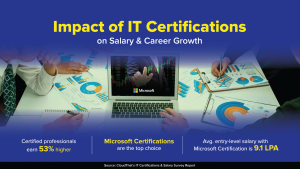
Career Advancement and Financial Benefits of Microsoft Certifications
Higher Earning Potential and Salary Growth
Numerous industry surveys consistently show that IT professionals with Microsoft certifications earn higher salaries than their non-certified counterparts. Certifications often translate into salary premiums ranging from 15% to 30%, depending on role, region, and level of expertise.
For example, professionals holding expert-level Azure certifications frequently command top-tier compensation due to the high demand for cloud architects and engineers. Certifications empower individuals to negotiate better salaries, faster promotions, and performance-based bonuses.
Improved Job Security and Global Mobility
In times of economic uncertainty or organizational restructuring, certified professionals are often viewed as essential assets. Their validated, up-to-date skills reduce the risk associated with workforce changes and make them more resilient in competitive job markets.
Moreover, Microsoft certifications are globally recognized, enabling professionals to pursue remote roles, international opportunities, and contracts with multinational organizations. This global portability significantly enhances career mobility.
Employer Sponsorship and Professional Investment
Many organizations recognize the strategic value of a certified workforce and actively support employee certification efforts. This support often includes:
- Reimbursement of exam and training fees
- Access to official Microsoft learning resources
- Dedicated study time during work hours
Such initiatives transform certification from a personal expense into a shared investment that benefits both employee and employer.
The Long-Term Benefits Beyond the Credential
Continuous Learning and Skill Relevance
Technology evolves rapidly, and skills can become obsolete within a few years. Microsoft certifications are designed to promote continuous learning through periodic updates and renewal requirements. This ensures that certified professionals remain aligned with the latest advancements in cloud services, security frameworks, and productivity tools.
By engaging in ongoing certification pathways, professionals future-proof their careers against technological disruption.
Professional Credibility and Industry Recognition
Holding Microsoft certifications enhances professional credibility with colleagues, managers, clients, and stakeholders. Certified individuals are often trusted with greater responsibility and recognized as subject-matter experts within their organizations.
This recognition can lead to leadership opportunities, consulting roles, and participation in strategic decision-making processes.
Access to a Global Professional Community
Microsoft-certified professionals gain access to a global network of peers, experts, and learning communities. Through platforms such as LinkedIn, Microsoft Learn, and local user groups, certified individuals can exchange knowledge, collaborate on projects, and discover new career opportunities.
This professional ecosystem fosters collaboration, innovation, and long-term career growth.
Conclusion
Microsoft certifications are far more than decorative credentials—they are strategic tools for career acceleration in the modern IT landscape. For employers, they offer a reliable way to identify professionals with verified, job-ready skills. For organizations, they help build resilient, innovative, and future-focused technology teams. For individuals, they represent a proactive investment in lifelong relevance, professional credibility, and financial growth.
Whether you are an entry-level IT professional seeking to establish a strong foundation, an experienced administrator transitioning to the cloud, or a developer aspiring to design next-generation digital solutions, Microsoft’s role-based certification pathways provide a clear and rewarding route to success.
In an industry defined by constant change, continuous certification is no longer a luxury—it is a necessity. Those who commit to ongoing learning and validated expertise position themselves not only to survive but to thrive in the ever-evolving world of information technology.