
 By admin
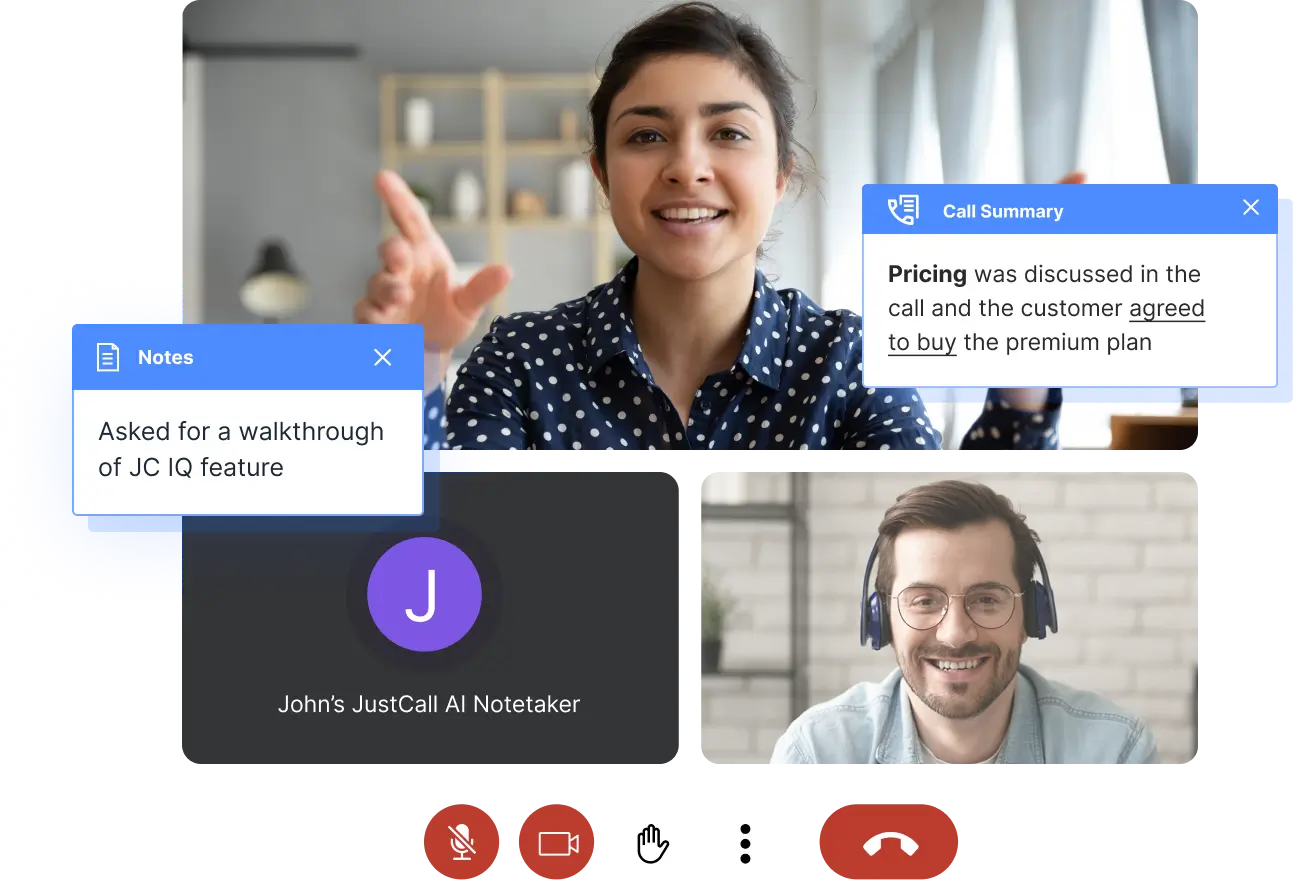
AI Notetakers: How Artificial Intelligence Is Redefining Meeting Notes, Productivity, and Knowledge Management
Introduction
The modern workplace is evolving at an unprecedented pace. Remote work, hybrid teams, global collaboration, and digital-first communication have transformed how professionals interact, share ideas, and make decisions. Meetings—once limited to conference rooms—now take place across video platforms, virtual classrooms, webinars, and international calls. While these meetings are essential for alignment and innovation, they also generate an overwhelming volume of information.
Traditional note-taking methods struggle to keep up with this reality. Writing notes manually is distracting, incomplete, and often inaccurate. Important insights are missed, action items get buried, and valuable institutional knowledge disappears as soon as the meeting ends. Professionals frequently find themselves replaying recordings, searching through fragmented notes, or relying on memory—an inefficient and error-prone process.
This challenge has given rise to AI notetakers, intelligent tools powered by artificial intelligence that automatically record, transcribe, summarize, and organize spoken conversations. By combining speech recognition, natural language processing (NLP), and machine learning, AI notetakers transform raw dialogue into structured, searchable, and actionable knowledge.
Today, AI notetakers are no longer experimental tools. They are becoming essential productivity systems used by startups, enterprises, educators, consultants, and students. From virtual meetings on Zoom to in-person lectures and interviews, AI notetakers are redefining how knowledge is captured and preserved.
This comprehensive guide explores what AI notetakers are, how they work, why they matter, and which solutions are best suited for different use cases. It also examines legal, ethical, and privacy considerations, and looks ahead to the future of AI-driven note-taking.
What Are AI Notetakers?
AI notetakers are software applications—or in some cases, dedicated hardware devices—that automatically convert spoken language into organized digital notes. Unlike basic voice recorders or traditional transcription services, AI notetakers go far beyond word-for-word text.
They analyze conversations, identify key ideas, highlight decisions, extract tasks, and generate concise summaries that users can immediately act upon. The goal is not just to document meetings, but to turn conversations into usable knowledge assets.
AI notetakers are commonly used in:
- Business meetings and strategy sessions
- Remote and hybrid team collaboration
- Sales calls and customer interviews
- Academic lectures and online courses
- Conferences, workshops, and seminars
- Legal, medical, and compliance-driven discussions
By automating the capture and organization of spoken information, these tools eliminate one of the biggest productivity bottlenecks in modern work.
How AI Notetakers Work: Core Technologies Explained
AI notetakers rely on a combination of advanced technologies working together seamlessly.
1. Speech-to-Text (Automatic Speech Recognition)
At the foundation of every AI notetaker is automatic speech recognition (ASR). This technology converts spoken language into written text. Modern ASR systems are highly sophisticated, capable of:
- Understanding different accents and dialects
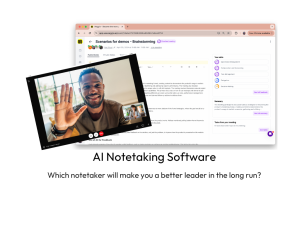
- Handling multiple speakers in the same conversation
- Filtering background noise
- Adapting to industry-specific vocabulary
Accuracy levels today far exceed earlier transcription tools, making AI-generated transcripts reliable for professional use.
2. Natural Language Processing (NLP)
Natural language processing allows AI notetakers to understand meaning, context, and intent. NLP enables features such as:
- Identifying key discussion topics
- Detecting action items and deadlines
- Summarizing long conversations into concise overviews
- Recognizing questions, decisions, and follow-ups
Instead of producing raw transcripts, NLP transforms conversations into structured insights.
3. Speaker Recognition and Attribution
Many AI notetakers can distinguish between speakers, label who said what, and track participation levels. This is particularly useful for:
- Team accountability
- Performance reviews
- Interview analysis
- Sales and negotiation assessments
4. Integrations and Automation
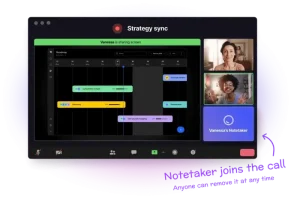
Modern AI notetakers integrate with calendars, video conferencing platforms, project management tools, and CRMs. After a meeting ends, summaries and tasks can be automatically sent to tools like task boards, shared drives, or knowledge bases.
The result is a fully automated workflow that connects meetings directly to execution.
Why AI Notetakers Are Essential in Today’s Digital Workplace
The growing adoption of AI notetakers is driven by clear and measurable benefits.
Improved Focus and Engagement
When participants are no longer busy typing notes, they can fully engage in discussions, ask better questions, and contribute more meaningfully.
Increased Accuracy and Consistency
AI notetakers capture details that humans often miss, ensuring that decisions, commitments, and ideas are documented consistently across teams.
Significant Time Savings
Professionals save hours each week by eliminating the need to:
- Replay meeting recordings
- Rewrite or clean up notes
- Manually summarize discussions
Searchable Knowledge Repositories
Every meeting becomes a searchable resource. Teams can quickly retrieve past decisions, insights, and context without relying on memory.
Better Knowledge Management
AI notetakers turn conversations into long-term organizational knowledge, reducing information loss caused by employee turnover or siloed communication.
Best AI Notetakers by Use Case and User Profile
Not all AI notetakers are designed for the same audience. Below is a structured overview of leading solutions, grouped by how they are used.
AI Notetakers for Team Meetings and Collaboration
These tools are optimized for remote teams, managers, consultants, and organizations that rely heavily on virtual meetings.
Fathom AI
Fathom AI has gained widespread popularity due to its generous free plan and intuitive design. It integrates directly with Zoom and focuses on simplicity without sacrificing power.
Key strengths:
- Automatic meeting recording and transcription
- One-click highlights during live meetings
- Instant AI-generated summaries
- Easy sharing of key moments with teammates
Fathom AI is ideal for professionals who want fast, reliable meeting notes with minimal setup.
Otter.ai
Otter.ai is one of the most established names in AI transcription. It excels in real-time transcription and long-term knowledge archiving.
Key strengths:
- Live transcription with high accuracy
- Speaker identification
- Advanced keyword search across meeting history
- Collaboration features such as comments and highlights
Otter.ai is particularly popular among journalists, researchers, and teams that rely on detailed records.
Fireflies.ai
Fireflies.ai goes beyond transcription by offering deep meeting analytics and insights.
Key strengths:
- Automatic action-item detection
- Sentiment and engagement analysis
- Speaking-time analytics
- CRM integrations with platforms like Salesforce
Fireflies.ai is especially valuable for sales teams, customer success managers, and data-driven organizations.
Discreet AI Notetakers Without Visible Bots
Some professionals prefer tools that do not appear as participants in meetings.
Granola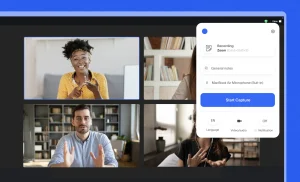
Granola is designed for discretion and minimalism. Instead of joining meetings, it listens to system audio and enhances personal notes.
Key strengths:
- No visible meeting bot
- Lightweight and privacy-focused
- Complements existing note-taking workflows
Granola appeals to executives and consultants who value subtlety.
Jamie
Jamie operates quietly in the background and supports more than 99 languages.
Key strengths:
- No bot required
- Clear, structured summaries
- Multilingual transcription
- Strong emphasis on clarity
Jamie is well-suited for international and multilingual teams.
AI Notetakers for In-Person Meetings and Education
AI note-taking is no longer limited to virtual environments.
Plaud Note
Plaud Note is a physical AI-powered recording device designed for face-to-face conversations.
Key strengths:
- High-quality audio capture
- Portable and discreet design
- AI transcription for interviews and lectures
It bridges the gap between physical meetings and digital workflows.
NotebookLM
NotebookLM, developed by Google, is particularly popular among students and researchers.
Key strengths:
- AI trained on user-uploaded materials
- Generates summaries, FAQs, and study guides
- Deep contextual understanding
NotebookLM transforms raw content into structured learning resources.
Legal, Ethical, and Privacy Considerations
Despite their benefits, AI notetakers must be used responsibly.
Legal Compliance
In many regions, recording conversations requires explicit consent from all participants. Transparency is essential, and users should always inform attendees when AI recording is active.
Data Privacy
Some AI tools may use recorded data to improve their models. Organizations handling sensitive information must carefully review data usage policies.
Security and Compliance
For regulated industries, enterprise-grade solutions with encryption, access controls, and compliance certifications are critical.
Responsible use ensures trust and long-term adoption.
The Future of AI Notetaking
AI notetakers are evolving rapidly. Future advancements are expected to include:
- Deeper contextual understanding
- Predictive insights and recommendations
- Seamless integration with enterprise knowledge systems
- Real-time coaching and feedback during meetings
As artificial intelligence becomes embedded in everyday workflows, AI notetakers will transition from optional tools to core infrastructure.
Conclusion
AI notetakers are fundamentally transforming how we capture, manage, and apply spoken information. By automating transcription, summarization, and task extraction, they free professionals to focus on meaningful conversations rather than administrative work.
From collaboration-focused platforms like Fathom AI and Otter.ai, to discreet background tools such as Granola and Jamie, and from physical devices like Plaud Note to educational solutions like NotebookLM, the AI notetaking ecosystem now offers solutions for every scenario.
In a world where time, attention, and knowledge are the most valuable resources, AI notetakers represent a decisive step toward smarter meetings, better learning, and more effective collaboration.
Philosophy of the C Programming Language