
 By admin
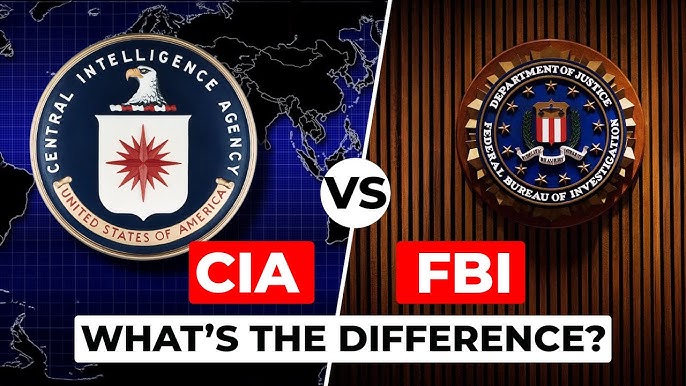
FBI vs. CIA: A Comprehensive Comparison of America’s Premier Intelligence Agencies
Introduction
In the intricate world of national security, two agencies stand at the forefront of protecting the United States: the Federal Bureau of Investigation (FBI) and the Central Intelligence Agency (CIA). While both are critical components of America’s intelligence and security infrastructure, they have fundamentally different missions, authorities, and operational scopes. The FBI is primarily a domestic security service with law enforcement powers, while the CIA focuses on gathering foreign intelligence and conducting covert operations abroad.
Despite frequent appearances in media, TV shows, and political headlines, the actual roles of the FBI and CIA are often misunderstood by the public. This article provides a modern, in-depth examination of the key differences between the two agencies, highlighting their histories, organizational structures, operational mandates, and how they collaborate to secure the nation against modern threats such as terrorism, cybercrime, and foreign espionage.
1. Historical Background and Formation
1.1 Origins of the FBI
The FBI was established in 1908 as the Bureau of Investigation and was later renamed the Federal Bureau of Investigation in 1935. It was created to address the growing need for a federal investigative body to enforce national laws across state lines. Under the leadership of J. Edgar Hoover, who served as director for nearly five decades, the FBI expanded into a powerful domestic agency responsible for counterintelligence, organized crime, civil rights violations, and later, terrorism.
1.2 Origins of the CIA
The CIA was created in 1947 under the National Security Act in response to the intelligence failures surrounding World War II and the growing tensions of the Cold War. Its predecessor, the Office of Strategic Services (OSS), operated during the war and was instrumental in foreign espionage. The CIA was designed to serve as the primary agency for collecting, analyzing, and coordinating foreign intelligence to assist U.S. policymakers.
2. Jurisdiction and Operational Scope
2.1 The FBI’s Domestic Focus
The FBI operates primarily within the United States and its territories. Its mission is multifaceted, covering law enforcement and intelligence gathering. The FBI investigates crimes such as terrorism, espionage, cybercrime, white-collar crime, organized crime, and public corruption. It also serves as the lead counterterrorism and counterintelligence agency within U.S. borders.
Key Functions of the FBI:
-
Domestic surveillance under strict legal guidelines
-
Counterterrorism investigations
-
Criminal investigations and forensic analysis
-
Cybercrime prevention
-
Enforcement of federal laws
2.2 The CIA’s International Role
The CIA is an intelligence-gathering agency that operates predominantly outside the United States. Unlike the FBI, it does not have law enforcement authority. Its core mission is to collect and analyze information about foreign governments, corporations, and individuals to advise U.S. decision-makers. The CIA also conducts covert operations and paramilitary actions authorized by the President.
Key Functions of the CIA:
-
Human intelligence (HUMINT) collection
-
Foreign surveillance and espionage
-
Covert operations in foreign territories
-
Counterintelligence outside the U.S.
-
Providing national security assessments
3. Legal Authority and Oversight
3.1 FBI’s Legal Framework
The FBI functions under the jurisdiction of the U.S. Department of Justice. It is bound by U.S. laws and must follow constitutional protections, especially when conducting surveillance, searches, or arrests. The FBI requires court orders for wiretaps or searches and must adhere to legal standards for evidence collection.
Oversight Mechanisms:
-
Department of Justice
-
Congressional oversight (e.g., Senate Judiciary Committee)
-
Inspector General audits
-
FISA Court for national security wiretaps
3.2 CIA’s Authorization and Limits
The CIA operates under the oversight of the Director of National Intelligence (DNI) and reports to the President through the National Security Council. While it can operate more freely abroad, the CIA is prohibited from conducting operations on U.S. soil unless specifically authorized and in coordination with domestic agencies.
Oversight Mechanisms:
-
Office of the Director of National Intelligence
-
Senate Select Committee on Intelligence
-
House Permanent Select Committee on Intelligence
-
Presidential findings for covert action
4. Intelligence Gathering Methods
4.1 FBI Intelligence Operations
The FBI uses a blend of investigative techniques, human sources, and technology to gather intelligence domestically. It often partners with state and local law enforcement agencies and operates Joint Terrorism Task Forces (JTTFs) to track threats.
Methods Include:
-
Wiretapping and surveillance with court approval
-
Informants and undercover agents
-
Digital forensics and cybersecurity tools
-
Public and commercial data analysis
4.2 CIA Intelligence Techniques
The CIA relies heavily on clandestine activities and overseas assets. Its operations are global and involve intelligence officers stationed at U.S. embassies or covert locations. The CIA is known for its technical capabilities and human intelligence network.
Methods Include:
-
Espionage and recruitment of foreign agents
-
Signals intelligence (SIGINT)
-
Satellite and drone surveillance
-
Covert influence operations
5. Notable Achievements and Controversies
5.1 FBI Successes and Criticism
The FBI has thwarted numerous terrorist plots, dismantled organized crime networks, and solved high-profile criminal cases. However, it has also faced criticism for civil rights abuses (e.g., COINTELPRO), mishandling investigations (e.g., 9/11 intelligence gaps), and politicization.
Key Successes:
-
Capture of the Unabomber
-
Investigation of the 1993 World Trade Center bombing
-
Cybercrime takedowns like Operation Ghost Click
5.2 CIA Operations and Controversy
The CIA has played crucial roles in foreign conflicts, such as the Soviet-Afghan War and the takedown of Osama bin Laden (in coordination with other agencies). However, it has also been embroiled in scandals involving torture (e.g., enhanced interrogation techniques), secret prisons, and unauthorized drone strikes.
Key Successes:
-
Intelligence for the Abbottabad raid
-
Cuban Missile Crisis surveillance
-
Counterterrorism in the Middle East
6. Interagency Collaboration and the Intelligence Community
6.1 Cooperation Through the ODNI
Since 2004, the Office of the Director of National Intelligence has coordinated the 18 U.S. intelligence agencies, including the FBI and CIA. This structure was created to improve information sharing post-9/11.
6.2 Joint Task Forces and Fusion Centers
Both agencies often work together in Joint Terrorism Task Forces and national fusion centers, where they share intelligence, coordinate responses, and prevent overlaps or gaps in operations.
Recent Collaborative Efforts:
-
Monitoring cyber threats from foreign actors
-
Countering disinformation campaigns
-
Investigating foreign interference in U.S. elections
7. Modern Challenges and Evolving Roles
7.1 Technological Advancements
Both agencies face challenges from rapid technological innovation. Encryption, artificial intelligence, and deepfakes are making intelligence and law enforcement more complex.
7.2 Global Threats and Domestic Extremism
While the CIA monitors foreign threats, the FBI is increasingly focused on domestic terrorism and political extremism, which have surged in recent years. Collaboration is vital to identifying threats that cross national boundaries.
7.3 Cybersecurity and Espionage
The rise of cyber warfare has forced both agencies to adapt. State-sponsored cyberattacks from countries like China, Russia, Iran, and North Korea are prompting stronger interagency coordination and defensive strategies.
Conclusion
The FBI and CIA are pillars of U.S. national security, each playing distinct but complementary roles in safeguarding the nation. While the FBI enforces laws and addresses domestic threats, the CIA gathers foreign intelligence and supports strategic decision-making at the highest levels. Despite differences in jurisdiction, authority, and tactics, both agencies must collaborate in an increasingly interconnected world of hybrid threats.
Understanding these differences is not only essential for grasping how American security functions but also for appreciating the complexity of modern intelligence work. As challenges evolve—from cybercrime to geopolitical instability—both the FBI and CIA will continue to adapt and innovate, ensuring that the United States remains protected from both internal and external dangers.
Tracing the Evolution of Country Music