
 By admin
Introduction: Why Learning C Still Matters in the Modern Programming Era
In a world dominated by high-level programming languages, frameworks, and automated tools, learning the C programming language may seem like stepping back in time. However, nothing could be further from the truth. C is not merely another programming language—it is the backbone of modern computing. Often referred to as the “Latin of programming languages,” C has influenced nearly every major language that followed, including C++, Java, Python, Go, and Rust.
Developed in the early 1970s, C was designed to create operating systems and low-level software. Decades later, it remains indispensable. From operating system kernels and embedded devices to high-performance game engines and networking software, C continues to deliver unmatched speed, efficiency, and control over hardware.
For beginners, C offers a deep understanding of how computers truly work. For experienced programmers, it sharpens problem-solving skills and reinforces core programming concepts that high-level languages often abstract away. In this comprehensive guide, we will explore the philosophy of C, its fundamental structure, essential concepts, and why learning C in 2026 is still one of the smartest decisions a developer can make.
1. Understanding the Core Philosophy of the C Programming Language
1.1 Procedural and Low-Level by Design
C is a procedural programming language, meaning that programs are structured as a sequence of instructions and functions. Unlike object-oriented or functional languages, C focuses on clarity, simplicity, and performance. This design makes it ideal for system-level programming where efficiency and predictability are critical.
What truly sets C apart is how close it operates to the hardware. While not an assembly language, C allows direct interaction with memory, processors, and system resources. This makes it possible to write highly optimized code that runs with minimal overhead.
1.2 Efficiency and Performance
One of C’s greatest strengths is efficiency. C code is compiled directly into machine code, allowing programs to execute extremely fast. There is no virtual machine, no runtime interpretation, and very little abstraction. This makes C the language of choice for performance-critical applications such as operating systems, real-time systems, and game engines.
1.3 Portability Across Platforms
Despite being low-level, C is remarkably portable. A well-written C program can be compiled and run on a wide range of platforms with minimal changes. This “write once, compile anywhere” philosophy has helped C remain relevant across decades of technological evolution.
1.4 Manual Memory Control
Unlike modern languages that automatically manage memory, C places this responsibility squarely on the programmer. While this requires discipline and precision, it also provides unmatched control. Developers decide exactly how much memory to allocate, when to free it, and how data is stored in memory.
2. The Structure of a C Program: A Classic Starting Point
2.1 The Importance of Program Structure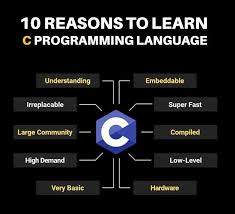
Every C program follows a consistent structure, which makes C code predictable and easy to analyze. Understanding this structure is the first step toward mastering the language.
2.2 The “Hello, World!” Program Explained
Traditionally, learning a new programming language begins with a simple program that outputs text to the screen. In C, this classic example introduces several essential concepts:
- Header files
- The
main()function - Function calls
- Return values
The main() function serves as the entry point of every C program. Execution always begins there, making it the heart of any application written in C.
2.3 Libraries and Header Files
C relies heavily on libraries to extend its functionality. Standard libraries such as stdio.h, stdlib.h, and string.h provide essential tools for input/output, memory management, and string manipulation. Including these libraries allows programmers to use predefined functions efficiently and reliably.
3. Essential Concepts Every C Programmer Must Master
To truly become proficient in C, there are several foundational pillars that must be understood thoroughly. These concepts are what distinguish C from higher-level languages and define its power.
3.1 Data Types and Variables
C provides a set of fundamental data types that allow programmers to work with numbers, characters, and floating-point values. Understanding data types is crucial for efficient memory usage and program correctness.
Key data types include:
intfor integersfloatanddoublefor decimal numberscharfor charactersvoidfor functions that return no value
Choosing the correct data type directly impacts performance and memory efficiency, especially in large-scale or embedded applications.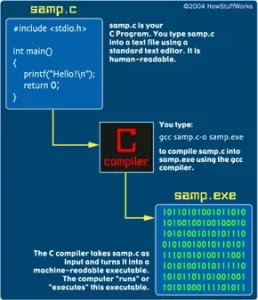
3.2 Pointers: The Heart of C Programming
Pointers are often considered the most challenging concept in C, yet they are also the most powerful. A pointer stores the memory address of another variable, allowing direct access to memory.
Mastering pointers enables:
- Efficient data manipulation
- Dynamic memory allocation
- Creation of complex data structures
- Interaction with hardware and system resources
While intimidating at first, pointers are the key to unlocking C’s full potential. Once understood, they provide a level of control unmatched by most modern languages.
3.3 Manual Memory Management
C does not offer automatic garbage collection. Instead, programmers use functions such as malloc(), calloc(), and free() to allocate and release memory manually.
This approach:
- Improves performance
- Reduces unnecessary memory usage
- Requires careful design to avoid memory leaks
Learning memory management in C builds discipline and awareness that benefits programmers even when working with higher-level languages later.
3.4 Structures and Custom Data Types
Structures (struct) allow developers to group related variables into a single logical unit. This capability is essential for modeling real-world data and building complex applications.
For example, a structure can represent a student, a network packet, or a configuration file. Structures improve code organization, readability, and maintainability without sacrificing performance.
4. Why Learning C in 2026 Is Still a Smart Decision
4.1 The Backbone of Operating Systems
The kernels of major operating systems such as Linux, Windows, and macOS are written primarily in C. This is because C offers the perfect balance between low-level hardware access and high-level readability.
Developers who understand C gain insight into how operating systems manage processes, memory, and hardware resources.
4.2 Embedded Systems and IoT Devices
From smart home appliances and medical devices to automotive systems and industrial controllers, embedded systems rely heavily on C. These environments demand efficiency, reliability, and precise hardware control—areas where C excels.
As the Internet of Things (IoT) continues to expand, demand for C programmers remains strong.
4.3 Game Engines and High-Performance Software
Modern game engines and real-time simulation software depend on C (and C++) for their performance-critical components. Physics engines, rendering pipelines, and memory management systems often rely on C for maximum speed.
4.4 A Foundation for Learning Other Languages
Understanding C makes it easier to learn almost any other programming language. Concepts such as memory layout, stack vs. heap allocation, and pointer arithmetic provide a mental model that enhances overall programming expertise.
5. Common Mistakes Beginners Make and How to Avoid Them
5.1 Syntax Errors and Semicolons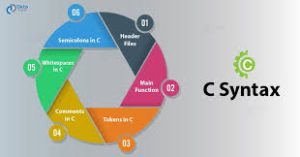
One of the most frequent beginner mistakes is forgetting semicolons at the end of statements. While simple, this error can lead to confusing compiler messages.
5.2 Memory Leaks and Dangling Pointers
Failing to free allocated memory results in memory leaks, which can degrade performance over time. Using pointers incorrectly can also lead to undefined behavior and program crashes.
5.3 Treating C Like a High-Level Language
C does not protect programmers from mistakes. There are no automatic safeguards. This is both a strength and a responsibility. Writing safe and efficient C code requires attention to detail and rigorous testing.
6. Best Practices for Learning and Mastering C
6.1 Practice with Small Projects
Start with simple programs such as calculators, file handlers, or text processors. Gradually move toward more complex applications like data structures and system utilities.
6.2 Read and Analyze Existing Code
Studying open-source C projects helps beginners understand real-world coding patterns, optimization techniques, and best practices.
6.3 Use Modern Tools and Compilers
Modern compilers, debuggers, and static analysis tools make learning C safer and more productive. They help detect memory errors, undefined behavior, and performance issues early.
Conclusion: C as a Timeless Skill for Serious Programmers
Learning C is not about nostalgia—it is about mastery. In 2026 and beyond, C remains a vital language for those who want to understand computers at their core. It teaches discipline, precision, and respect for system resources. While it may not offer the comfort and automation of modern languages, it rewards programmers with unparalleled performance and control.
C is like a high-performance sports car: incredibly powerful, responsive, and efficient—but only in the hands of a skilled driver. For anyone serious about programming, investing time in learning C is not just worthwhile—it is transformative.