
 By admin
The Lunar New Year 2026: Traditions, Symbolism, and Global Significance
Introduction
The Lunar New Year, often referred to as the Chinese New Year or Spring Festival, is one of the most ancient, meaningful, and widely celebrated cultural events in the world. Rooted in thousands of years of history, mythology, astronomy, and social customs, this festival marks not only the beginning of a new year according to the lunar calendar but also a profound spiritual and emotional renewal for millions of people.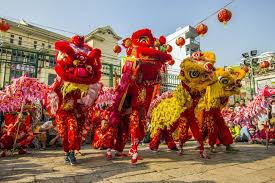
Unlike the Gregorian New Year, which begins on January 1st, the Lunar New Year follows the cycles of the moon. As a result, its date changes every year, usually falling between late January and mid-February. In 2026, the Lunar New Year will be celebrated on Tuesday, February 17, ushering in the Year of the Fire Horse, a sign associated with strength, freedom, passion, and transformation.
Beyond fireworks and red decorations, the Lunar New Year represents family unity, respect for ancestors, the pursuit of prosperity, and the hope for harmony in the year ahead. While its origins are Chinese, the festival has evolved into a global celebration observed across Asia and by diaspora communities worldwide. This article explores the astrological meaning of the Year of the Fire Horse, the core traditions and rituals, the 15-day celebration period, and the global importance of this extraordinary event in the modern world.
Understanding the Lunar Calendar and the Changing Date
Why the Date Changes Every Year
The Lunar New Year is based on a lunisolar calendar, which combines the phases of the moon with the solar year. The new year begins on the new moon that occurs between January 21 and February 20. This astronomical system explains why the date changes annually and why the festival is closely linked to natural cycles.
In 2026, the new moon occurs on February 17, officially marking the beginning of the Lunar New Year celebrations.
The Symbolism of the Lunar Cycle
The moon has long been a symbol of renewal, balance, and continuity in East Asian philosophy. Its cyclical nature reflects the belief that life moves in repeating patterns of endings and beginnings. The Lunar New Year embodies this worldview by encouraging reflection on the past year and preparation for the future with optimism and clarity.
The Year of the Fire Horse (2026)
The Chinese Zodiac System
The Chinese zodiac consists of 12 animal signs, each associated with specific personality traits and energies:
Rat, Ox, Tiger, Rabbit, Dragon, Snake, Horse, Goat, Monkey, Rooster, Dog, and Pig.
Each zodiac year is further influenced by one of the five elements—Wood, Fire, Earth, Metal, and Water—creating a 60-year cycle. In 2026, the zodiac sign is the Horse, combined with the Fire element, making it the Year of the Fire Horse.
Characteristics of the Fire Horse
The Horse is known for its independence, vitality, ambition, and love of freedom. When combined with the Fire element, these qualities are intensified:
- Strong leadership and confidence
- Passion, enthusiasm, and creativity
- Desire for progress and change
- Courage to take risks and challenge limits
The Fire Horse year is often seen as a time of bold decisions, dynamic movement, and personal reinvention. It encourages individuals and societies to act decisively, pursue innovation, and embrace transformation.
Cultural Beliefs and Modern Interpretations
Historically, Fire Horse years were sometimes viewed with caution due to their intense energy. However, modern interpretations emphasize balance, mindfulness, and channeling this powerful force into constructive growth, entrepreneurship, and social advancement.
Duration of the Lunar New Year Celebrations
A 15-Day Festival
The Lunar New Year is not a single-day event but a 15-day celebration, beginning on New Year’s Eve and concluding with the Lantern Festival.
- February 16, 2026 – New Year’s Eve
- February 17, 2026 – Lunar New Year Day
- March 3, 2026 – Lantern Festival
Each day holds symbolic meaning, with specific customs related to family, wealth, health, and spiritual protection.
The Lantern Festival: A Grand Finale
The Lantern Festival marks the end of the celebrations. Colorful lanterns illuminate streets and homes, symbolizing hope, guidance, and the return of light. Traditional riddles, folk performances, and sweet rice dumplings (tangyuan) represent unity and completeness.
Core Traditions and Rituals
Spring Cleaning: Clearing the Past
One of the most important pre-New Year customs is thorough house cleaning. Families clean every corner of their homes to remove bad luck, negative energy, and misfortune from the previous year.
This ritual symbolizes:
- Renewal and purification
- Readiness for new opportunities
- Emotional and spiritual clarity
Once the New Year begins, sweeping is traditionally avoided for several days to prevent “sweeping away” good luck.
The Dominance of Red: Color of Fortune
Red is the most iconic color of the Lunar New Year. It represents:
- Luck and happiness
- Protection from evil spirits
- Prosperity and success
Homes, streets, shops, and temples are decorated with red lanterns, paper cuttings, and couplets featuring auspicious messages. Wearing red clothing during the celebrations is believed to attract positive energy and ward off misfortune.
Red Envelopes (Hongbao): Sharing Prosperity
One of the most beloved traditions is the exchange of red envelopes, known as hongbao. These envelopes contain money and are given by elders to children, unmarried adults, or employees.
The significance of hongbao lies not in the amount of money but in:
- Blessings for wealth and success
- Good health and happiness
- Generosity and goodwill
In modern times, digital red envelopes sent via mobile apps have become increasingly popular, blending tradition with technology.
The Reunion Dinner: A Sacred Family Moment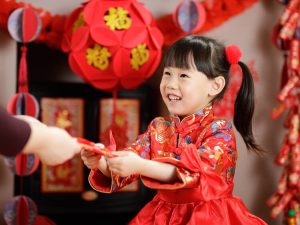
The New Year’s Eve reunion dinner is the most important meal of the year. Families travel long distances to gather around the table, making it a deeply emotional and symbolic event.
Common symbolic dishes include:
- Dumplings – Wealth and prosperity
- Fish – Abundance and surplus
- Rice cakes (nian gao) – Growth and progress
- Long noodles – Longevity and health
This meal reinforces family bonds, respect for elders, and gratitude for shared blessings.
Performances, Fireworks, and Mythology
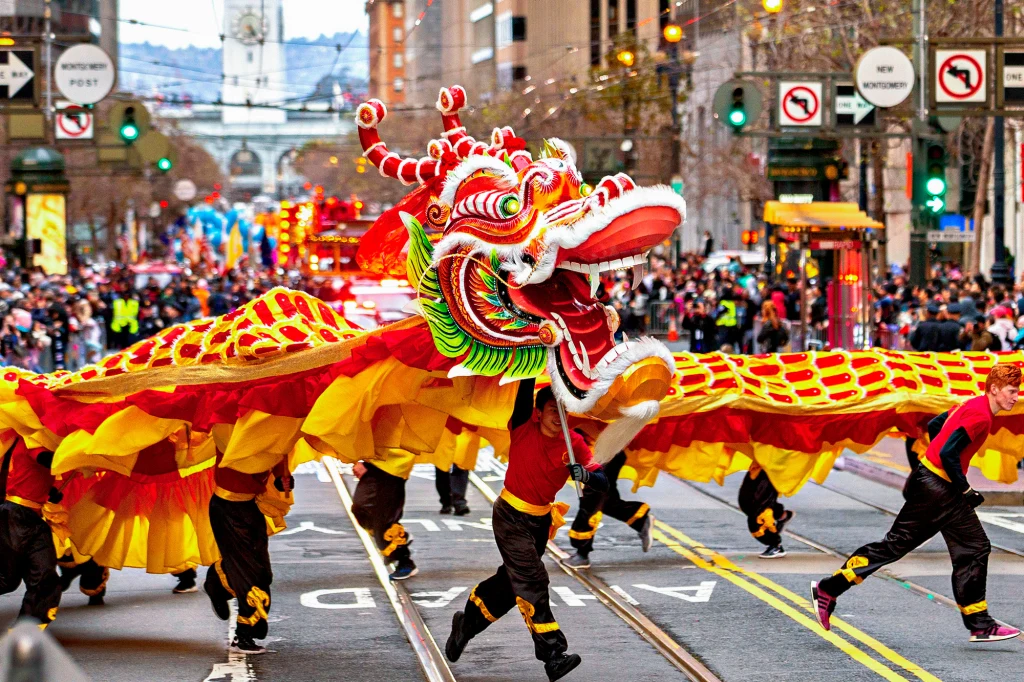
Lion and Dragon Dances
Traditional lion and dragon dances are performed to bring good luck and chase away negative spirits. These vibrant performances are accompanied by drums, gongs, and cymbals, creating an atmosphere of excitement and celebration.
Fireworks and the Legend of Nian
Fireworks are central to the Lunar New Year, rooted in the ancient legend of Nian, a mythical beast believed to terrorize villages. Loud noises, bright lights, and red decorations were said to scare the monster away.
Today, fireworks symbolize:
- Driving away evil
- Celebrating renewal
- Welcoming joy and success
A Global Celebration
Lunar New Year Across Asia
Although Chinese in origin, the Lunar New Year is celebrated across Asia under different names:
- Tết in Vietnam
- Seollal in South Korea
- Tsagaan Sar in Mongolia
Each culture has unique customs, foods, and rituals, yet all share common themes of family, respect, and renewal.
The World’s Largest Annual Human Migration
The Lunar New Year triggers Chunyun, the largest annual human migration on Earth. Hundreds of millions of people travel to reunite with their families, highlighting the festival’s immense social and economic impact.
Celebrations Beyond Asia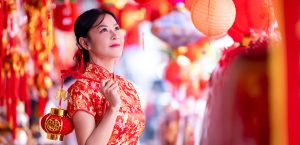
Major cities around the world—such as London, New York, Paris, Sydney, and Singapore—host large-scale Lunar New Year events. These celebrations reflect the festival’s growing global influence and its role in promoting cultural diversity and understanding.
The Lunar New Year in the Modern Era
Tradition Meets Technology
In the digital age, Lunar New Year traditions have evolved:
- Virtual family reunions
- Online red envelopes
- Livestreamed celebrations
Despite modernization, the festival continues to preserve its core values.
Sustainability and Future Trends
Modern celebrations increasingly emphasize eco-friendly decorations, reduced fireworks pollution, and cultural education, ensuring that the Lunar New Year remains meaningful for future generations.
Conclusion
The Lunar New Year 2026, marked by the Year of the Fire Horse, is more than a calendar event—it is a powerful symbol of renewal, courage, and collective hope. Through its rich traditions, deep symbolism, and global reach, the festival continues to unite families, honor heritage, and inspire optimism.
As the world welcomes this dynamic year, the Lunar New Year reminds us of the importance of balance between tradition and progress, community and individuality, reflection and action. Whether celebrated in Asia or across the globe, it remains a timeless celebration of life, resilience, and new beginnings.
How to Buy Authentic Antique Carpets