
 By admin
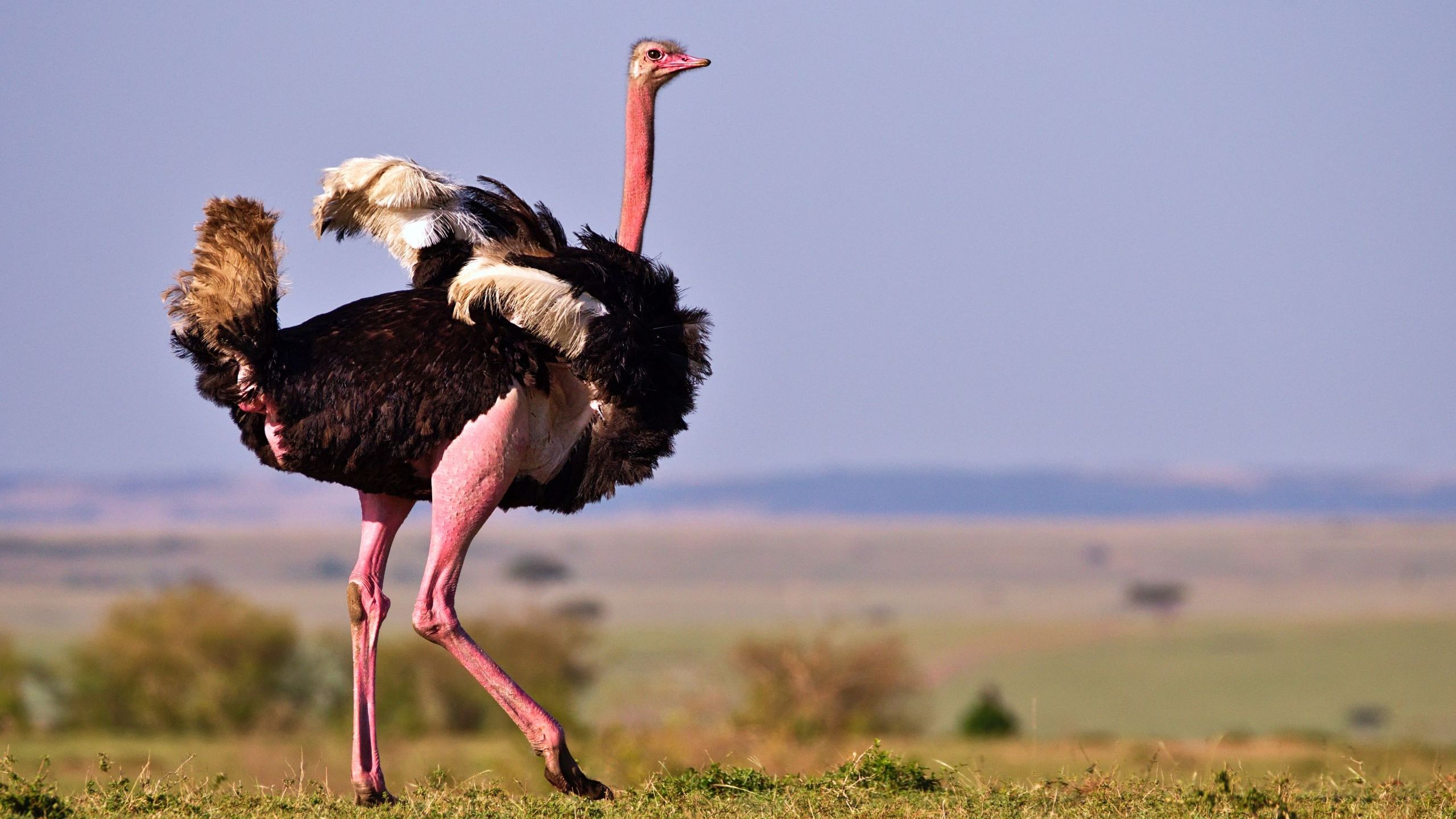
The Ostrich: A Living Marvel of Speed, Strength, and Survival
Introduction
Among all living birds on Earth, none inspires awe quite like the ostrich. Towering over humans, sprinting faster than most land mammals, and laying eggs larger than any other animal, the ostrich is a biological masterpiece shaped by millions of years of evolution. Native to the vast savannas, grasslands, and deserts of Africa, this extraordinary bird defies many traditional notions of what a bird should be. It does not fly, yet it dominates the land. It does not hunt, yet it can defend itself against some of the world’s most dangerous predators.
In recent years, advances in wildlife biology, biomechanics, and conservation science have revealed even more astonishing facts about ostriches. From their record-breaking physical traits to their complex social behavior and ecological importance, ostriches are far more than just “big birds.” They are living records of adaptation, resilience, and survival in some of the harshest environments on the planet.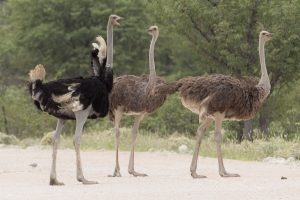
This article explores the ostrich in depth, highlighting its world records, physical adaptations, diet and behavior, myths and misconceptions, species diversity, and conservation status. Through a modern and scientific lens, we uncover why the ostrich remains one of the most fascinating creatures in the avian world.
World Records in the Avian Kingdom
The Largest and Heaviest Living Bird
The ostrich holds an undisputed title: it is the largest and heaviest bird currently alive. Adult females can reach heights of up to 2.75 meters (9 feet), while males are often even taller and more robust. Their weight typically ranges between 90 and 150 kilograms (200 to 330 pounds), making them heavier than any other bird species on Earth.
This massive size is not merely for display. It provides several survival advantages, including deterrence against predators and the ability to travel long distances efficiently. Unlike flying birds, ostriches invest their energy in powerful legs and a strong skeletal structure rather than wings capable of flight.
The Fastest Bird on Land
Although ostriches cannot fly, they have compensated by becoming the fastest birds on land. Thanks to their long, muscular legs and specialized tendons, ostriches can reach sprinting speeds of up to 70 km/h (43 mph). Even more impressive is their endurance: they can maintain a steady cruising speed of around 50 km/h (31 mph) over long distances.
This speed allows ostriches to outrun most predators, including lions, cheetahs, and hyenas. Biomechanical studies show that their stride length can exceed five meters in a single step, and their elastic tendons store and release energy efficiently, reducing fatigue during extended runs.
The Largest Eyes of Any Land Animal
One of the most astonishing facts about ostriches is their eyesight. They possess the largest eyes of any terrestrial animal, measuring approximately 5 centimeters (2 inches) in diameter. Each eye is actually larger than the ostrich’s brain.
These enormous eyes provide exceptional visual acuity and a wide field of view, allowing ostriches to detect predators from several kilometers away. Their keen eyesight is a crucial adaptation in open environments where early detection often determines survival.
The Biggest Eggs in the World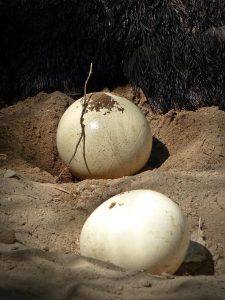
Ostriches lay the largest eggs of any living animal, weighing around 1.5 kilograms (3.3 pounds) each. One ostrich egg is nutritionally equivalent to approximately 24 chicken eggs.
The thick shell, which can be several millimeters thick, protects the developing chick from predators and harsh environmental conditions. Interestingly, while ostrich eggs are the largest in absolute size, they are relatively small compared to the mother’s body mass—an example of evolutionary optimization.
Physical Adaptations and Survival Strategies
Unique Two-Toed Feet
Unlike most birds, which have three or four toes, the ostrich is the only bird with just two toes on each foot. The inner toe is large and hoof-like, providing stability and traction during high-speed running.
This unique foot structure reduces weight and increases efficiency, enabling faster acceleration and improved balance. The design is so effective that it has inspired research in robotics and prosthetic limb engineering.
A Deadly Defense Mechanism
Despite their generally non-aggressive nature, ostriches are capable of formidable defense. A single forward kick from an ostrich can deliver immense force, powerful enough to seriously injure or even kill large predators such as lions—or humans who come too close.
Their sharp claws, combined with strong leg muscles, make them dangerous opponents when threatened, particularly during breeding season when males become highly protective of nests.
Thermal Adaptation to Extreme Environments
Ostriches inhabit regions with extreme temperature variations, from scorching daytime heat to cold desert nights. Their insulating feathers play a critical role in temperature regulation. Unlike the stiff, interlocking feathers of flying birds, ostrich feathers are loose and soft, trapping air for insulation.
Additionally, ostriches regulate body temperature by adjusting wing positions, increasing or reducing exposure to sunlight. Their ability to tolerate such extremes makes them well-suited to Africa’s harsh climates.
Diet, Digestion, and Daily Behavior
A Selective Omnivorous Diet
Ostriches are selective omnivores. Their diet consists primarily of plants, seeds, fruits, leaves, and roots. However, they will also consume insects, small reptiles, and even rodents when available.
This dietary flexibility allows ostriches to survive in environments where food availability changes seasonally. By consuming a wide range of nutrients, they maintain energy levels necessary for growth, reproduction, and long-distance movement.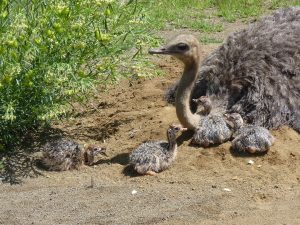
Stone-Assisted Digestion
Like many birds, ostriches lack teeth. To compensate, they swallow small stones, pebbles, and sand, which collect in the gizzard. These materials help grind food mechanically, improving digestion and nutrient absorption.
This adaptation highlights the ostrich’s remarkable ability to use environmental resources to overcome anatomical limitations.
Social Structure and Communal Nesting
Ostriches exhibit complex social behavior. During breeding season, a dominant male establishes a territory and mates with multiple females. Several females lay their eggs in a single communal nest, which the male prepares by digging a shallow pit in the ground.
The dominant female’s eggs are placed at the center of the nest, where they receive the most protection. Both the male and female take turns incubating the eggs—females during the day and males at night, using their darker plumage for camouflage.
Debunking the “Head in the Sand” Myth
One of the most persistent myths about ostriches is that they bury their heads in the sand when frightened. This is entirely false. In reality, ostriches may lie flat on the ground with their necks extended, blending into the landscape and appearing invisible from a distance.
This behavior is a form of camouflage, not cowardice, and reflects the ostrich’s reliance on visual concealment and awareness rather than panic.
Species Diversity and Evolution
Living Ostrich Species
Today, there are two recognized living species of ostrich:
- The Common Ostrich (Struthio camelus) – Widely distributed across Africa, this species is the most well-known and adaptable.
- The Somali Ostrich (Struthio molybdophanes) – Found primarily in the Horn of Africa, it is genetically distinct and recognized as a separate species based on recent genetic research.
These species evolved from ancient flightless birds that once roamed multiple continents, offering insights into avian evolution and continental drift.
Conservation Status and Human Impact
Current Threats
Although ostriches are not currently classified as endangered globally, some populations face significant threats. Habitat loss due to agriculture, climate change, illegal hunting, and egg harvesting has reduced numbers in certain regions.
The Somali ostrich, in particular, is considered more vulnerable due to its limited range and political instability in its native habitats.
Conservation Efforts
Organizations such as the African Wildlife Foundation and other conservation groups work to protect ostrich habitats, promote sustainable land use, and support local communities. Conservation programs focus on education, habitat preservation, and responsible wildlife management.
Sustainable ostrich farming, when ethically managed, has also helped reduce pressure on wild populations by meeting demand for meat, leather, and feathers without overexploitation.
Conclusion
The ostrich is far more than the world’s largest bird—it is a symbol of evolutionary ingenuity and resilience. From its record-breaking size and speed to its remarkable eyesight, powerful defenses, and sophisticated social behavior, the ostrich exemplifies how life adapts to extreme conditions.
Modern scientific research continues to uncover new insights into ostrich biology, biomechanics, and ecology, reinforcing their importance in both natural ecosystems and human understanding of evolution. Protecting ostriches and their habitats is not just about preserving a species; it is about safeguarding a living chapter of Earth’s natural history.
As we move forward in an era of environmental change, the ostrich stands as a reminder that survival depends on adaptability, balance, and respect for the natural world.
The Extraordinary Life Cycle of Ducks