
 By admin
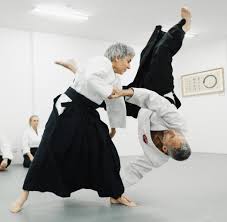
Using Aikido Techniques in Training and Real-Life Self-Defense
Introduction
In any physical confrontation, the difference between victory and defeat can occur within a fraction of a second. A single movement, a moment of hesitation, or a misjudged reaction can determine whether a person successfully defends themselves or becomes vulnerable. For martial artists, especially practitioners of Aikido, the ability to react instinctively and efficiently is developed through disciplined training, repetition, and a deep understanding of technique.
Aikido is a Japanese martial art that focuses on redirecting an opponent’s energy rather than confronting it with brute force. Unlike many combat systems that rely on aggressive strikes or overpowering strength, Aikido emphasizes harmony, balance, and control. Practitioners learn to neutralize attacks using fluid movements, joint locks, throws, and defensive maneuvers designed to subdue an aggressor while minimizing injury.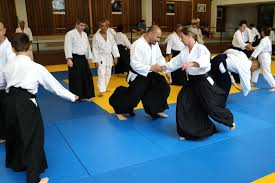
In both training environments and real-life situations, mastering Aikido techniques can greatly enhance a person’s self-defense capabilities. Whether practicing in a dojo or applying techniques during controlled sparring sessions, students gradually develop the reflexes and mental clarity needed to respond effectively under pressure.
This article explores how Aikido techniques are used in practice and combat scenarios, highlighting some of the most important movements, the philosophy behind them, and how consistent training helps practitioners develop both physical skill and mental discipline.
Understanding the Philosophy Behind Aikido
Harmony Instead of Aggression
One of the fundamental principles of Aikido is the concept of blending with an opponent’s energy rather than resisting it. Instead of meeting force with force, practitioners redirect incoming attacks, using the attacker’s momentum to create imbalance and control.
This approach makes Aikido particularly effective for individuals who may not possess significant physical strength. Through proper technique and timing, even a smaller practitioner can successfully neutralize a stronger opponent.
The Meaning of Aikido
The word “Aikido” can be roughly translated as:
- Ai – Harmony or union
- Ki – Energy or spirit
- Do – The way or path
Together, these elements describe a martial art that seeks to harmonize energy and transform conflict into control rather than destruction.
Defensive Rather Than Offensive
Unlike many combat systems, Aikido is primarily defensive. The practitioner does not initiate aggression but instead responds to an attack. The goal is to protect oneself while preventing unnecessary harm to the attacker whenever possible.
The Importance of Training and Practice
Learning in the Dojo
The first step for anyone interested in learning Aikido is joining a dojo, the traditional training hall where martial arts are practiced. Under the guidance of experienced instructors, students begin by learning:
- Proper etiquette and discipline
- Correct posture and balance
- Safe falling techniques (Ukemi)
- Fundamental movements and basic techniques
These foundational skills are essential before attempting more advanced techniques.
Developing Muscle Memory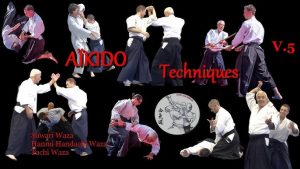
Aikido techniques must be practiced repeatedly to become effective. During training, students work with partners to simulate attacks and defensive responses. Over time, the body begins to internalize these movements, allowing them to be performed instinctively in stressful situations.
Sparring and Controlled Practice
While Aikido training typically avoids aggressive competition, controlled sparring helps students understand timing, distance, and reaction speed. Practicing with partners allows practitioners to refine their technique while maintaining safety and respect.
Essential Aikido Techniques Used in Training and Combat
Aikido includes dozens of techniques designed to neutralize different types of attacks. Some involve throws, others involve joint locks, and some use strikes to disrupt an opponent’s balance.
Below are several key techniques commonly practiced in Aikido training.
Ai Hanmi Iriminage: The Entering Throw
Understanding the Technique
Ai Hanmi Iriminage is a powerful Aikido throw used to neutralize an attacker quickly. The technique involves entering directly into the attacker’s space, controlling their upper body, and directing them to the ground.
How It Works
- The attacker initiates contact, usually grabbing or striking.
- The defender moves forward into the attack rather than retreating.
- The defender controls the attacker’s neck or upper body.
- Using body rotation and leverage, the attacker is guided to the ground.
Practical Application
Iriminage is effective because it disrupts the attacker’s balance immediately. By stepping into the attack and redirecting momentum, the defender can end the confrontation rapidly.
Ai Hanmi Kokyuho: The Power of Breath and Extension
The Role of “Kokyu”
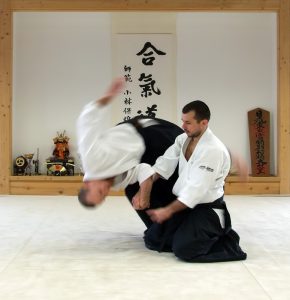
The term Kokyu refers to breath power and coordinated body movement. In Ai Hanmi Kokyuho, the defender extends their arms and body energy to guide the attacker’s movement.
Technique Overview
Although similar to Iriminage, Kokyuho emphasizes extended arm movement and body alignment. The practitioner stretches the arms outward while maintaining balance, using the attacker’s momentum to unbalance them.
Benefits in Training
This technique teaches:
- Proper body extension
- Balance and posture
- Efficient use of energy
It is often practiced early in Aikido training because it helps students understand how energy flows through movement.
Katate Ryotemochi: Defending Against a Weapon
A Defensive Strategy
Katate Ryotemochi is commonly practiced as a response to a one-handed weapon attack, such as a knife. In this technique, the defender uses both hands to control the attacker’s wrist and arm.
Key Elements
- The defender blocks the attacking arm.
- Both hands secure control of the wrist.
- The attacker’s balance is broken.
- The weapon is disarmed.
Real-World Relevance
Although weapon attacks are dangerous, this technique demonstrates how proper control and leverage can prevent serious harm. The emphasis is always on disarming and neutralizing, not escalating violence.
Ushiro Ryokatatori: Controlling from Behind
What Happens When You Gain Position
If the defender manages to move behind the attacker, Ushiro Ryokatatori becomes a useful technique. This maneuver involves grabbing both of the attacker’s shoulders and controlling their upper body.
Strategic Advantage
Being behind an attacker provides several benefits:
- The attacker cannot see the defender easily
- Their balance is compromised
- Control can be maintained with minimal effort
This technique is often used to transition into throws or joint locks.
Ushiro Kubishime: Neutralizing a Dangerous Opponent
A More Advanced Control Technique
In situations where an attacker is extremely aggressive, a stronger control method may be necessary. Ushiro Kubishime involves controlling the neck from behind to temporarily restrict breathing and movement.
Safety Considerations
Because this technique affects breathing and circulation, it must be practiced carefully under supervision. In training, practitioners learn to apply pressure safely without causing harm.
Purpose of the Technique
The goal is not to injure the attacker but to stop the threat long enough to escape or call for assistance.
Striking Techniques in Aikido
Although Aikido is known primarily for throws and joint locks, it also includes striking techniques, known as atemi, used to disrupt an attacker’s balance.
Kata Menuchi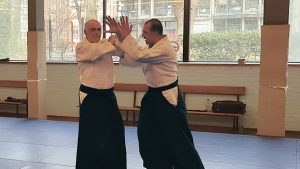
Kata Menuchi involves a slicing hand strike directed toward the center of the forehead. This movement is often used to create a brief distraction, allowing the practitioner to follow up with a controlling technique.
Mune Tsuki
Mune Tsuki is a direct strike aimed at the chest area. Rather than causing serious injury, it is typically used to break the attacker’s concentration and create an opening for a throw or joint lock.
Strikes in Aikido are generally strategic rather than destructive, serving to unbalance the attacker rather than inflict damage.
Aiki Otoshi: The Leg Sweep
Expanding Defensive Options
Many beginners assume that Aikido techniques rely mostly on arm movements. However, the art also includes effective leg techniques.
Aiki Otoshi, often described as a leg sweep, is used to remove the attacker’s base of support.
Execution
- The defender redirects the attacker’s upper body.
- A sweeping motion targets the attacker’s leg.
- The attacker loses balance and falls.
Tactical Advantage
Leg sweeps are effective because they attack the opponent’s foundation. Even a strong attacker cannot maintain stability if their footing is removed.
Sankyo Hold: A Powerful Control Technique
A Technique Used in Law Enforcement
The Sankyo hold is one of the most recognizable Aikido joint locks. It involves twisting the attacker’s wrist and arm in a way that immobilizes them without excessive force.
This technique is widely used in law enforcement training because it allows officers to control a suspect while minimizing injury.
How It Works
- The defender secures the attacker’s wrist.
- The arm is rotated in a spiral motion.
- Pressure is applied to the wrist joint.
- The attacker becomes immobilized.
Practical Applications
Once the attacker is subdued, the defender can maintain the hold until help arrives. This technique is extremely effective for control and restraint.
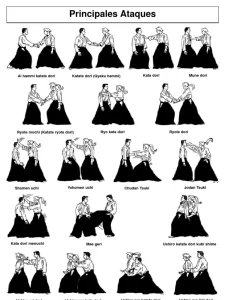
Recognizing the Variety of Aikido Techniques
Aikido includes dozens of techniques, each designed for specific situations and types of attacks. Because many techniques retain their original Japanese names, students must learn to distinguish between them.
Examples include:
- Throws
- Joint locks
- Pins
- Striking techniques
- Defensive redirections
Understanding when and how to apply each technique requires consistent training and experience.
The Role of Mental Discipline in Aikido
Staying Calm Under Pressure
One of the most valuable lessons in Aikido training is learning to remain calm during confrontation. Panic leads to poor decisions, while calm awareness allows practitioners to react effectively.
Situational Awareness
Aikido practitioners are taught to remain aware of their surroundings and avoid unnecessary confrontations whenever possible. Self-defense begins with prevention and awareness, not physical conflict.
Ethical Use of Aikido in Self-Defense
Avoiding Unnecessary Violence
The philosophy of Aikido encourages practitioners to resolve conflict peacefully whenever possible. Techniques are used only when necessary for self-defense.
Do Not Pursue the Attacker
If an attacker retreats after failing to harm the defender, Aikido philosophy suggests not pursuing them. The priority is personal safety rather than revenge.
Seeking Assistance
After a confrontation, the safest action is to contact authorities or seek help rather than escalating the situation.
Conditioning the Mind and Body
Physical Conditioning
Regular Aikido practice strengthens:
- Balance
- Coordination
- Flexibility
- Reaction time
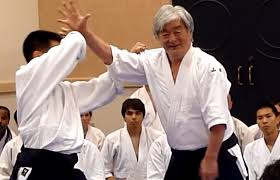
Training also improves cardiovascular fitness and overall physical health.
Mental Growth
Beyond physical ability, Aikido develops:
- Discipline
- patience
- focus
- emotional control
These qualities benefit practitioners not only in martial arts but also in everyday life.
Conclusion
Aikido is far more than a collection of defensive techniques—it is a comprehensive martial art that combines physical skill, mental discipline, and philosophical principles. Through consistent training, practitioners learn how to redirect an opponent’s energy, maintain balance under pressure, and control conflicts without unnecessary violence.
Techniques such as Iriminage, Kokyuho, Katate Ryotemochi, Ushiro Ryokatatori, Aiki Otoshi, and Sankyo illustrate the versatility and effectiveness of Aikido in both training environments and real-life self-defense situations. Each movement emphasizes leverage, timing, and body mechanics rather than brute strength.
Learning Aikido requires patience and dedication. Students begin with basic techniques and gradually develop the reflexes and awareness needed to respond instinctively during confrontations. Training with partners, practicing controlled sparring, and studying the philosophy behind the art all contribute to a deeper understanding of Aikido.
Ultimately, the true goal of Aikido is not to defeat others but to achieve harmony, protect oneself, and maintain peace whenever possible. By mastering both the physical techniques and the ethical principles of the art, practitioners gain not only self-defense skills but also lifelong personal growth.
The Psychology of Physical Fitness