By admin
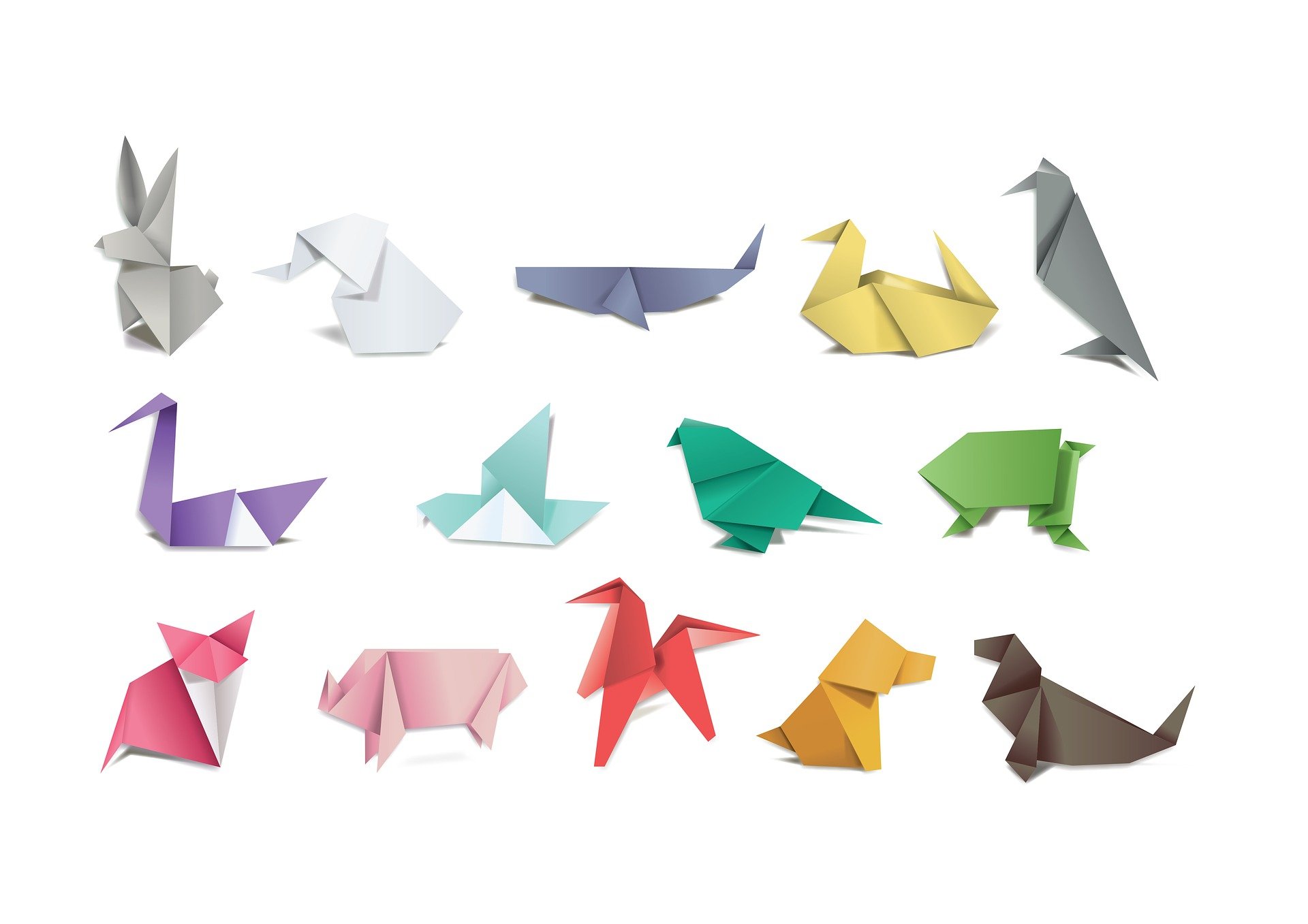
Origami, the traditional Japanese art of paper folding, features a unique vocabulary of terms and techniques essential for mastering this craft. Whether you’re a beginner or looking to refine your skills, understanding these foundational folds will set you on the path to creating stunning paper models. This guide explores essential horizontal and vertical folds with detailed explanations to help you perfect your technique.
The Book Fold
The Book Fold is a foundational technique in origami. To create it:
- Take a rectangular or square piece of paper.
- Fold it vertically down the middle, ensuring the edges align perfectly.
- Open the paper and fold it horizontally down the middle, again aligning the edges.
When executed properly, this results in crisp, clean folds that form the basis of many origami figures. If you do not open the paper after the first fold and proceed directly to the second, you’ll create a Handkerchief Fold—a small square with four layers of paper stacked neatly on top of each other.
The Cupboard Fold
The Cupboard Fold is versatile and often used in intermediate origami designs. Follow these steps:
- Start with a square piece of paper.
- Make the Book Fold and reopen the paper.
- Bring each outer edge inward to meet the central crease line.
This technique divides the paper into four equal vertical strips and serves as a precursor to more intricate folds.
The Fan Fold (Accordion Fold)
The Fan Fold creates a series of alternating mountain and valley folds. Here’s how to make it:
- Use either a square or rectangular piece of paper.
- Begin with a Cupboard Fold and open it.
- Create three valley folds (downward angles) to divide the paper into four equal strips.
- Flip the paper over and fold the outer edges to the nearest lines to form two mountain folds (upward angles).
- Turn the paper over again, refold the Cupboard, and fold the edges to the central crease.
When complete, you’ll have an eight-fold fan, commonly called an accordion fold. This technique is ideal for designs requiring symmetrical pleats.
The Lattice Fold
The Lattice Fold forms a grid of small squares, making it ideal for crafting boxes, houses, and basic animal figures. To create this fold:
- Start with a square piece of paper and make a Cupboard Fold.
- Open the Cupboard and repeat the process horizontally.
- Open the paper to reveal a grid of 16 equal squares.
The Shawl Fold
The Shawl Fold is a diagonal fold used in many origami models. To achieve it:
- Take a square piece of paper.
- Fold it diagonally from one corner to the opposite corner, ensuring perfect alignment of edges and corners.
For a second diagonal fold, always open the paper entirely before starting again to maintain accuracy.
The Envelope Fold
The Envelope Fold is a foundational fold that forms the basis for more advanced designs. Here’s how to make it:
- Begin with a square piece of paper.
- Fold it diagonally in both directions to create an “X” crease pattern.
- Open the paper and fold each corner to meet the center point.
This simple yet versatile fold is the starting point for creating intricate origami shapes.
The Picture Frame Fold
The Picture Frame Fold builds on the Envelope Fold. Follow these steps:
- Create an Envelope Fold.
- Open it and fold each corner to meet the nearest diagonal line.
- Fold all four corners inward again.
The result is a symmetrical frame-like shape, perfect for decorative or structural elements in your origami projects.
Heaven and Hell Fold
The Heaven and Hell Fold is a playful and dynamic fold often used in children’s crafts. To create it:
- Start with an Envelope Fold.
- Turn the paper over and fold each corner to the center again.
- Flip the paper back and open the pockets on the other side.
Traditionally made using red and blue paper, this fold resembles a hand puppet or simple animal head. It gets its name from the contrasting colors, symbolizing opposites.
Tips for Perfect Origami Folds
- Use High-Quality Paper: Origami paper is thin and durable, ensuring clean folds without tearing.
- Work on a Flat Surface: A stable, flat surface helps maintain precision.
- Press Firmly but Gently: Crisp folds are essential, but excessive force can damage the paper.
- Practice Patience: Mastery comes with repetition; take your time to refine each fold.
- Follow Diagrams Carefully: Many origami patterns rely on step-by-step diagrams—pay close attention to each step.
Applications of Basic Folds
- Boxes and Containers: The Lattice Fold is perfect for creating sturdy, symmetrical boxes.
- Animal Figures: The Heaven and Hell Fold can be adapted for simple animal shapes.
- Decorative Elements: The Fan and Picture Frame folds add visual interest to greeting cards and decorations.
By mastering these basic origami folds and techniques, you’ll build a strong foundation for tackling more complex designs. Remember, the beauty of origami lies in its simplicity and the endless possibilities it offers. Happy folding!