
 By admin

BYD (Build Your Dreams): The Chinese Electric Mobility Giant Reshaping the Global Automotive Landscape
Introduction
The global automotive industry is undergoing one of the most profound transformations in its history. Electrification, digitalization, and sustainability are redefining how vehicles are designed, manufactured, and used. At the forefront of this revolution stands BYD (Build Your Dreams), a Chinese technology conglomerate that has rapidly evolved from a battery manufacturer into the world’s leading producer of electric vehicles (EVs) and advanced energy storage solutions.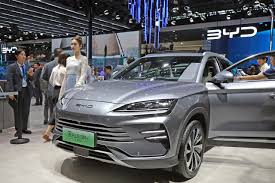
In recent years, BYD has captured global attention by surpassing Tesla in electric vehicle sales, solidifying its position as a dominant force in the EV market. Its success is not accidental; it is the result of decades of investment in research and development, vertical integration, and a relentless focus on technological innovation. From cutting-edge battery technologies like the Blade Battery to advanced hybrid systems and ultra-fast charging solutions, BYD is redefining what electric mobility can achieve.
Beyond China, BYD’s international expansion has been swift and strategic. The company is now firmly established in Europe, Latin America, Southeast Asia, and Africa, with Morocco emerging as a key market in North Africa. With a growing lineup of electric and plug-in hybrid vehicles tailored to diverse consumer needs, BYD is positioning itself as a serious contender for leadership in emerging and developed markets alike.
This article provides an in-depth exploration of BYD’s rise, its most popular vehicle models, its groundbreaking technologies, and its growing influence in Morocco and beyond. It also examines how BYD is shaping the future of sustainable mobility on a global scale.
1. BYD: From Battery Pioneer to Global EV Leader
1.1 The Origins of BYD
Founded in 1995 in Shenzhen, BYD initially focused on the production of rechargeable batteries for consumer electronics. At a time when Japan dominated the battery market, BYD disrupted the industry with cost-efficient manufacturing and rapid innovation. This early expertise in battery technology would later become the foundation of its success in electric mobility.
In 2003, BYD entered the automotive sector by acquiring a struggling state-owned automaker. What followed was an ambitious transformation: BYD leveraged its battery know-how to develop electric and hybrid vehicles long before EVs became mainstream globally.
1.2 Vertical Integration as a Competitive Advantage
One of BYD’s most distinctive strengths is its high level of vertical integration. Unlike many automakers that rely heavily on third-party suppliers, BYD designs and manufactures most of its key components in-house, including batteries, electric motors, power electronics, and semiconductors.
This approach allows BYD to: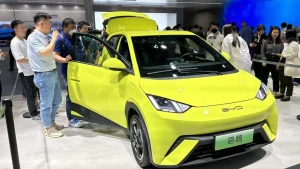
- Reduce production costs
- Accelerate innovation cycles
- Improve supply chain resilience
- Maintain strict quality and safety standards
In a world affected by supply chain disruptions and semiconductor shortages, BYD’s self-reliance has proven to be a decisive advantage.
2. Popular BYD Vehicle Models: A Diverse and Competitive Lineup
BYD offers one of the most comprehensive portfolios of electric and plug-in hybrid vehicles on the market today. From compact SUVs to premium sedans and family-oriented hybrids, its models are designed to meet a wide range of consumer expectations.
2.1 BYD ATTO 3: The Electric SUV for Everyday Mobility
The BYD ATTO 3 is a fully electric compact SUV that has gained strong popularity in international markets, including Morocco. Designed for urban and suburban drivers, it combines modern aesthetics with practicality and advanced technology.
Key highlights:
- 100% electric powertrain
- Contemporary, sporty design
- Spacious interior with smart infotainment features
- Strong safety credentials and driver-assistance systems
The ATTO 3 is often praised for offering excellent value for money, making electric mobility more accessible to a broader audience.
2.2 BYD SEAL: Performance and Elegance in an Electric Sedan
The BYD SEAL is a high-performance electric sedan built on BYD’s advanced e-Platform 3.0. Competing directly with premium EV sedans, the SEAL offers a refined driving experience and impressive efficiency.
Notable specifications: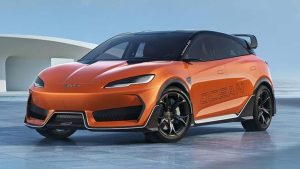
- WLTP range of up to 570 km (Design version)
- Aerodynamic design inspired by ocean aesthetics
- Advanced driver assistance systems
- High-quality interior materials and digital cockpit
The SEAL demonstrates BYD’s ability to blend performance, luxury, and sustainability in a single vehicle.
2.3 BYD SEAL U DM-i: Redefining the Family Hybrid SUV
The BYD SEAL U DM-i represents the brand’s ambition to dominate the plug-in hybrid (PHEV) segment. Recently launched in Morocco, this family-oriented SUV is designed to meet the needs of drivers seeking flexibility, efficiency, and long-distance capability.
Key advantages:
- Plug-in hybrid system with combined range exceeding 1000 km
- Predominantly electric driving for daily use
- Low fuel consumption and reduced emissions
- Spacious cabin and advanced safety technologies
The SEAL U DM-i is particularly appealing in markets where charging infrastructure is still developing, offering the best of both electric and conventional mobility.
2.4 BYD HAN: Premium Electric Luxury
The BYD HAN is a flagship electric sedan that showcases the brand’s premium ambitions. Known for its elegant design, smooth ride, and refined interior, the HAN competes with established luxury brands.
Core features include:
- High-performance electric drivetrain
- Sophisticated suspension tuning
- Advanced safety and autonomous features
- Premium interior comfort
The HAN reflects BYD’s confidence in delivering luxury without compromising sustainability.
2.5 BYD TANG: A Spacious and Efficient Electric SUV
The BYD TANG is a larger SUV designed for families and long-distance travelers. It offers a balance between performance, interior space, and energy efficiency.
Strengths of the BYD TANG:
- Spacious seating and cargo capacity
- Strong electric performance
- High safety ratings
- Modern infotainment and connectivity features
The TANG appeals to consumers seeking versatility and comfort in an all-electric package.
2.6 BYD SEALION 7: The Future of Electric SUVs
Unveiled at the Auto Expo 2025 in Morocco, the BYD SEALION 7 is a high-performance electric SUV coupé that represents the next generation of BYD design and engineering.
Key characteristics: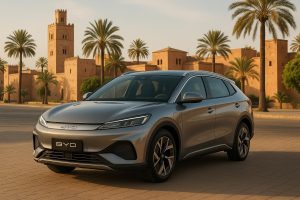
- 100% electric powertrain
- Estimated range of around 502 km
- Sporty coupé-inspired styling
- Advanced aerodynamics and intelligent systems
The SEALION 7 underscores BYD’s commitment to innovation and its ambition to lead the premium electric SUV segment.
3. Key Technological Innovations Driving BYD’s Success
3.1 Blade Battery: A New Benchmark in Safety and Durability
The Blade Battery is one of BYD’s most significant technological breakthroughs. Based on lithium iron phosphate (LFP) chemistry, it offers enhanced safety, longevity, and thermal stability.
Key benefits:
- Exceptional resistance to overheating and thermal runaway
- Longer lifespan compared to conventional lithium-ion batteries
- Structural integration using Cell-to-Body (CTB) technology, enhancing vehicle rigidity and safety
The Blade Battery has set new industry standards and is increasingly being adopted across BYD’s vehicle lineup.
3.2 Super DM (Dual Mode) Technology
BYD’s Super DM (Dual Mode) technology powers its plug-in hybrid vehicles. This intelligent system seamlessly combines an efficient internal combustion engine with a powerful electric motor.
Advantages include:
- Electric-first driving experience
- Ultra-low fuel consumption
- Extended total driving range
- Smooth and responsive performance
Super DM technology makes BYD’s PHEVs particularly attractive in transitional markets moving toward full electrification.
3.3 1 MW Ultra-Fast Charging Technology
One of BYD’s most recent innovations is its 1 megawatt (MW) charging technology, a potential game-changer for the EV industry.
Key implications: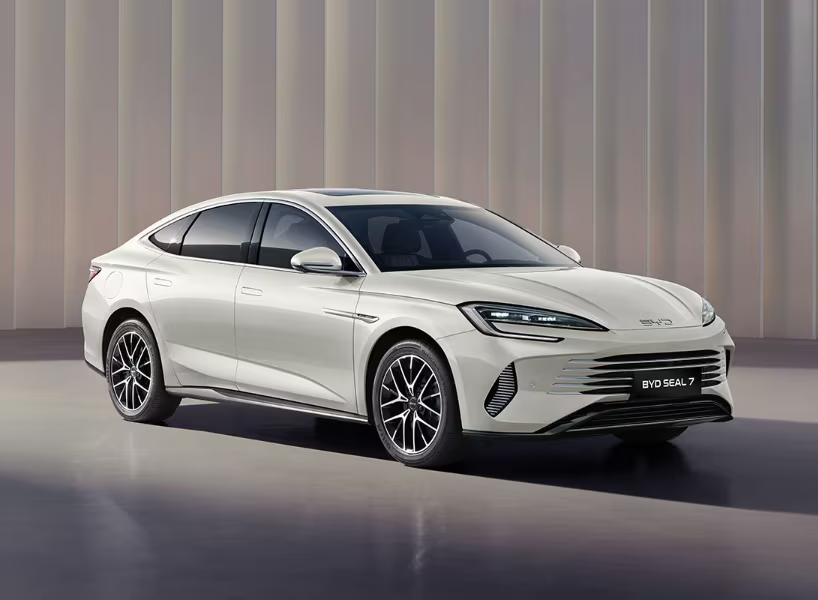
- Up to 400 km of range added in just 5 minutes
- Drastically reduced charging times
- Enhanced convenience for long-distance travel
If widely deployed, this technology could eliminate one of the biggest barriers to EV adoption: charging anxiety.
4. BYD in Morocco: A Strategic Market for North Africa
Morocco is emerging as a regional hub for sustainable mobility, thanks to supportive government policies, growing environmental awareness, and expanding charging infrastructure. BYD’s entry into the Moroccan market reflects its long-term vision for Africa.
With models like the ATTO 3, SEAL, and SEAL U DM-i, BYD is addressing the needs of Moroccan consumers by offering reliable, efficient, and technologically advanced vehicles. The brand’s presence also aligns with Morocco’s ambitions to reduce carbon emissions and promote renewable energy.
Conclusion
BYD’s journey from a modest battery manufacturer to a global leader in electric vehicles and clean energy solutions is a testament to the power of innovation, strategic vision, and technological excellence. By surpassing Tesla in EV sales and continuously pushing the boundaries of battery safety, charging speed, and vehicle efficiency, BYD has established itself as a transformative force in the automotive industry.
Its diverse vehicle lineup, groundbreaking technologies like the Blade Battery and Super DM system, and ambitious international expansion—particularly in markets like Morocco—position BYD as a key architect of the future of sustainable mobility.
As the world accelerates toward electrification, BYD is not merely adapting to change; it is actively shaping it. With its commitment to building dreams through technology, BYD is poised to remain at the forefront of the global transition to cleaner, smarter, and more efficient transportation.
BlueGPT and the Rise of Intelligent Automation