
 By admin
Why Don’t Ships Sink Even Though They Are Made of Metal?
Introduction
When most people think of metal, they imagine something solid, heavy, and dense—something that sinks instantly if placed in water. If you drop a steel rod into the ocean, it goes straight down. Yet massive ships, made almost entirely of steel and weighing tens of thousands of tons, float effortlessly on the surface of the sea. From cruise liners carrying thousands of passengers to cargo ships transporting enormous loads across the world, these engineering marvels defy what seems like common sense.
So, why don’t ships sink even though they are made of metal? The answer lies in the principles of physics, engineering, and design. Concepts like density, buoyancy, Archimedes’ principle, and modern shipbuilding techniques all play a crucial role in keeping these massive structures afloat. This article will explain the science behind floating ships, explore how engineers use these principles, and reveal how safety measures ensure stability even in rough seas.
The Science of Floating: Archimedes’ Principle
Archimedes’ Discovery
Over 2,000 years ago, the Greek mathematician Archimedes discovered the fundamental principle that explains why objects float. Known as Archimedes’ principle, it states:
An object submerged in a fluid experiences an upward force equal to the weight of the fluid it displaces.
In simple terms, if the upward buoyant force acting on an object is greater than its weight, the object floats. If the force is smaller, the object sinks.
Application to Ships
A steel block sinks because its weight is far greater than the buoyant force generated by the small amount of water it displaces. However, when that same steel is shaped into the wide, hollow form of a ship, it displaces a much larger volume of water. The displaced water creates an upward buoyant force strong enough to counteract the ship’s weight.
This explains why ships, despite being made of heavy metals, float on water: it’s not about the material alone, but about the distribution of weight and the volume of displaced water.
Density and Ship Design
The Role of Density
Density is defined as mass divided by volume. Water has a density of about 1,000 kilograms per cubic meter. If an object’s average density is less than that, it will float.
A solid piece of steel has a much higher density than water. But when that steel is engineered into a ship, it encloses a vast amount of air within its hull. The combination of steel and air reduces the average density of the entire structure, making it less than the density of water.
Why Shape Matters
A ship’s hull is designed with a specific shape that maximizes water displacement. The wide base and hollow interior allow the ship to push away enough water to generate sufficient buoyancy. This is why ships are built tall and broad rather than compact and solid.
Stability at Sea
The Concept of Center of Gravity and Center of Buoyancy
Two important factors determine whether a ship remains upright:
- Center of Gravity (CG): The point where the ship’s mass is concentrated.
- Center of Buoyancy (CB): The point where the buoyant force acts.
For stability, the center of buoyancy must be below the center of gravity but aligned in such a way that if the ship tilts, buoyancy restores it to an upright position. Engineers carefully balance these forces to prevent ships from capsizing.
Ballast and Weight Distribution
Ships often use ballast tanks filled with water or other materials to balance weight and improve stability. Cargo is also loaded strategically to maintain equilibrium. Without this balance, even a floating ship could tip over in strong winds or waves.
Engineering Innovations in Modern Shipbuilding
Use of Advanced Materials
While steel remains the primary material for ship construction, modern shipbuilders use lightweight alloys, reinforced composites, and corrosion-resistant materials to enhance strength while reducing unnecessary weight. This ensures better buoyancy and fuel efficiency.
Double Hulls and Safety Measures
Many modern vessels are built with double hulls for extra safety. These not only protect against leaks in case of damage but also improve the ship’s buoyancy by trapping additional air pockets inside.
Hydrodynamic Design
Today’s ships are designed with computer simulations and hydrodynamic testing. Their shapes are optimized to minimize water resistance, improve stability, and enhance buoyancy even under extreme conditions.
Ships and Extreme Conditions
Storms and Rough Seas
In violent storms, ships rely on their structural design and weight distribution to survive. The hull’s curvature helps waves roll past rather than crash directly. The metacentric height (a measure of stability) is carefully calculated to ensure that the ship returns upright even after being tilted.
Ice and Heavy Cargo
Icebreaker ships have reinforced hulls designed to push through frozen waters without sinking. Cargo ships, on the other hand, must consider how heavy containers affect buoyancy. Engineers calculate load limits to prevent ships from becoming too heavy and losing flotation.
Everyday Examples of Buoyancy
Cruise Ships
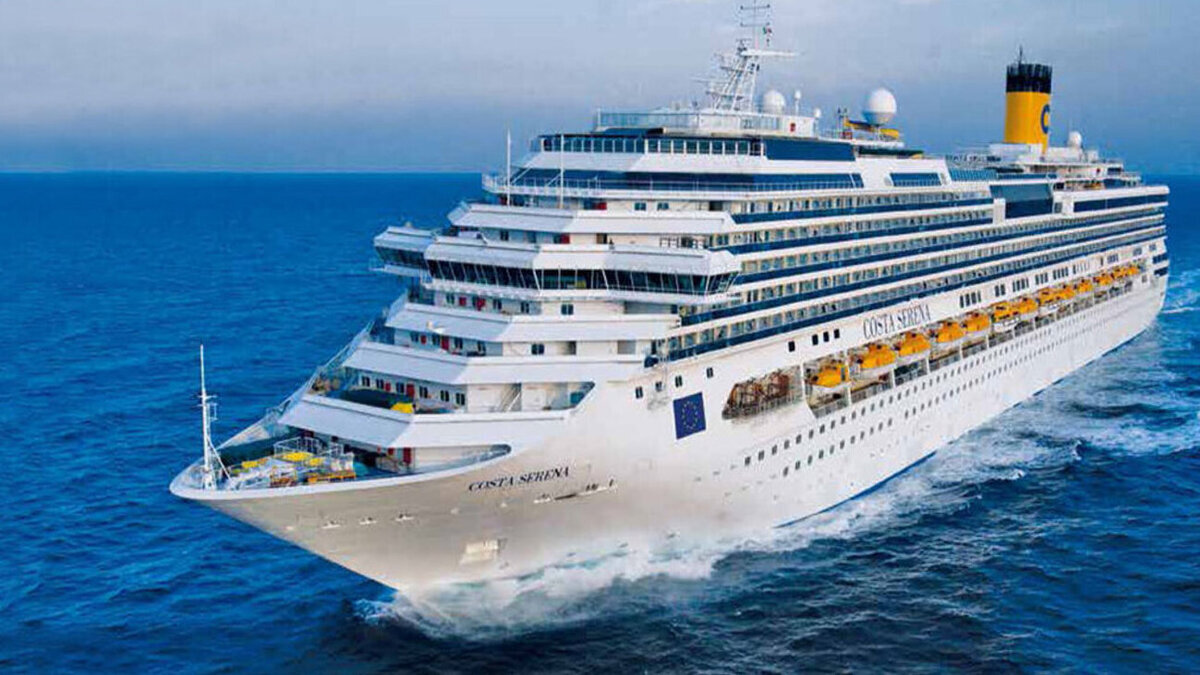
Cruise ships, some of which carry over 6,000 passengers, are floating cities. Their immense weight is distributed across enormous hulls that displace millions of liters of water, allowing them to stay afloat.
Aircraft Carriers
Military aircraft carriers are among the largest ships ever built, weighing up to 100,000 tons. Yet, they float because their massive, flat-bottomed hulls push away enough seawater to balance their enormous weight.
Submarines
Submarines operate differently. They can sink or float by adjusting ballast tanks. When tanks are filled with water, the submarine becomes denser and sinks. When filled with air, it becomes less dense and rises to the surface.
Misconceptions About Ships and Floating
“Heavy Things Always Sink”
Not true—what matters is average density, not just weight. A giant ship floats while a small stone sinks, simply because of how their weight is distributed relative to volume.
“Ships Float Because of Air Inside”
Air contributes, but the real reason is displacement of water and Archimedes’ principle. Even without sealed air pockets, as long as the hull pushes away enough water, the ship will float.
Environmental and Future Challenges
Green Shipbuilding
Modern shipbuilding faces challenges related to climate change and sustainability. Engineers are now designing ships that not only float safely but also reduce fuel consumption and carbon emissions. Materials like carbon-fiber composites and lightweight alloys help achieve these goals.
Autonomous Ships
With advancements in technology, fully autonomous ships are being developed. These vessels rely on the same principles of buoyancy but incorporate AI navigation, advanced sensors, and optimized hull designs for efficiency and safety.
Conclusion
Ships float not because they magically resist the pull of gravity, but because of the clever application of physics, engineering, and design. Archimedes’ principle, density, buoyancy, and modern technology all combine to make it possible for enormous metal ships to glide across oceans.
The next time you see a massive cruise ship, an aircraft carrier, or a cargo ship carrying thousands of containers, remember that it stays afloat thanks to ancient scientific principles applied with modern engineering genius. Far from being a paradox, the floating ship is a testament to humanity’s ability to harness the laws of nature to conquer the seas.
Oxygen: The Gas That Powers Life on Earth