
 By admin
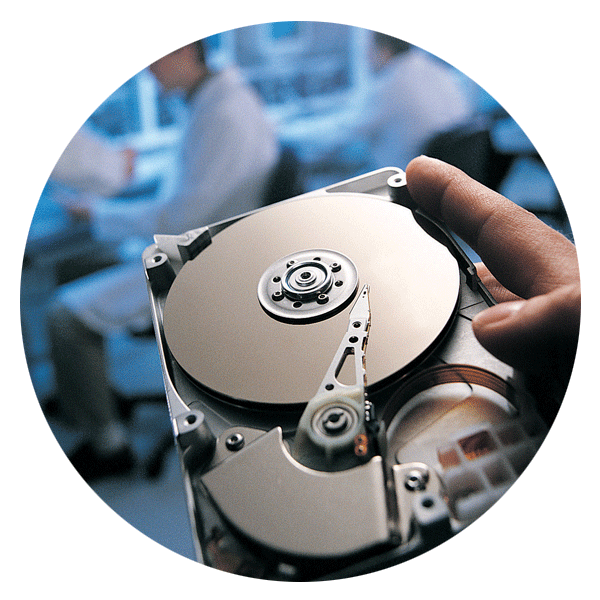
In the realm of data recovery, the importance of clean rooms cannot be overstated. But what exactly are clean rooms, and why are they pivotal in the process of retrieving lost or inaccessible data? This article delves deep into the concept of clean rooms, their construction, and their critical role in data recovery operations.

Understanding Clean Rooms
A clean room is a controlled environment designed to minimize airborne particulates such as dust, microbes, and other contaminants. These specialized rooms play a vital role in industries where even microscopic particles can lead to significant issues, such as pharmaceuticals, semiconductor manufacturing, biotechnology, and, notably, data recovery.
Key Features of Clean Rooms
Clean rooms are meticulously constructed to achieve unparalleled cleanliness. They utilize a variety of filtration systems and processes to control the particulate levels:
- Air Filtration Systems: Clean rooms are equipped with high-efficiency particulate air (HEPA) filters that trap dust and airborne contaminants. Incoming air is rigorously filtered, and internal air undergoes continuous purification to eliminate particles generated within the room itself.
- Laminar Flow Benches: Specific workstations inside clean rooms are further shielded by localized filters to maintain ultra-clean conditions.
- Airlocks and Protective Gear: Entry to clean rooms is via airlocks to prevent outside contaminants from entering. Staff are required to wear protective clothing, including gloves, face masks, and coveralls, to ensure minimal contamination.
Classification of Clean Rooms
Clean rooms are categorized into classes based on the permissible particle count per cubic meter and the maximum particle size allowed. For example:
- Class 1: Permits no more than 1,000 particles per cubic meter.
- Class 100: Allows up to 100,000 particles per cubic meter.
By comparison, a typical room’s particle density might exceed 35 million particles per cubic meter. Data recovery centers often operate within Class 100 clean rooms, which provide an exceptionally controlled environment for handling delicate storage devices.
Why Are Clean Rooms Essential for Data Recovery?
The intricate construction of modern storage devices necessitates clean room conditions for effective data recovery. Dust, electrostatic discharges, and other disturbances can irreparably damage storage media, rendering data recovery efforts futile. Below are some specific reasons clean rooms are indispensable in data recovery:
Prevention of Contamination
Hard disk drives (HDDs) and solid-state drives (SSDs) contain highly sensitive components, particularly the disk platters in HDDs. These platters store the magnetic images of your data. Even a single microscopic dust particle can:
- Scratch the platter surface.
- Disrupt the read/write head’s operation.
- Cause permanent data loss.
Increasing Data Density
With each new generation of storage devices, data is stored more densely on the platters. This heightened data density amplifies the need for pristine environments during recovery efforts. Any contamination can compromise the integrity of densely packed data, making recovery exceedingly challenging or impossible.
Warranty and Manufacturer Specifications
Storage device manufacturers often void warranties if the device is opened outside a controlled environment or by unauthorized personnel. Authorized data recovery centers are mandated to operate in clean rooms that meet stringent standards to maintain the warranty. This ensures the device’s integrity is preserved during recovery.
Clean Room Data Recovery Process
The process of clean room data recovery involves meticulous steps to ensure the highest chances of success. Let’s examine the stages:
Opening the Drive in a Clean Room
Storage devices are only opened in a clean room to prevent contamination. Once inside, the device is carefully dismantled to access its internal components. This is a critical step as mishandling or exposure to contaminants can result in irreversible damage.
Protection Against Environmental Factors
During the recovery process, the device is safeguarded against:
- Electrostatic Discharges: Special anti-static tools and surfaces are used to prevent electrical damage.
- Physical Shocks: The delicate components are handled with precision to avoid physical impacts.
- Temperature Fluctuations: Stable temperatures are maintained to ensure optimal conditions for data recovery.
- Electrical Disturbances: Specialized equipment prevents voltage spikes or surges from affecting the device.
Continuous Monitoring
Particle density within the clean room is constantly monitored using advanced particle counters. These devices ensure that the environment consistently meets Class 100 standards, or even better, during the entire recovery operation.
Specialized Equipment and Techniques
Data recovery professionals employ cutting-edge tools and techniques, including:
- Microscopic analysis to assess physical damage.
- Custom-built imaging tools to extract data from damaged sectors.
- Proprietary software solutions to reconstruct corrupted or lost files.
The Evolution of Data Storage and Its Impact on Clean Room Requirements
The evolution of storage technology has significantly influenced clean room requirements. As storage devices become more compact and data density increases, the tolerances for contaminants diminish. Here’s why:
- Higher Data Sensitivity: With advancements in storage technologies, even the smallest imperfection can compromise the entire device.
- Complex Mechanical Components: HDDs feature precision-engineered moving parts, such as the read/write head, which operate at nanometer scales. Dust or debris can obstruct their functionality.
- Increased Data Recovery Challenges: The demand for advanced recovery techniques necessitates environments free from any external interference.
The Future of Clean Room Data Recovery
As storage devices continue to evolve, so too will the clean room standards and technologies. Emerging trends include:
- Class 10 Clean Rooms: Many data recovery centers aim to achieve Class 10 conditions, reducing particles to fewer than 10,000 per cubic meter, a significant improvement over Class 100 environments.
- Automated Monitoring: Advanced sensors and AI-driven monitoring systems ensure consistent adherence to clean room standards.
- Nanotechnology Integration: The rise of nanotechnology in storage devices will demand even stricter clean room conditions for handling and recovery.
Conclusion
Clean rooms are the cornerstone of successful data recovery operations. By providing a controlled, contaminant-free environment, they ensure the integrity of sensitive storage media and maximize the chances of recovering lost data.
In an era where data storage devices are becoming increasingly sophisticated and densely packed, the role of clean rooms is more critical than ever. Class 100 clean rooms, with particle densities reduced by 350 times compared to normal rooms, are now standard in data recovery centers. Looking ahead, these facilities are poised to achieve even greater levels of precision and cleanliness, paving the way for advancements in data recovery technology.
For businesses and individuals alike, clean room data recovery represents the gold standard in safeguarding and restoring invaluable digital assets. By understanding its significance and adhering to stringent protocols, the industry continues to deliver unparalleled solutions in the face of ever-evolving challenges.