
 By admin
The Modern Laser Printer: A Professional Guide to Performance, Cost Efficiency, and Home Office Supremacy
Introduction: The Reinvention of a Printing Powerhouse
For many years, the laser printer was perceived as an exclusive tool reserved for large corporations, legal firms, and government offices—an expensive, bulky machine hidden away in dedicated copy rooms. Inkjet printers, by contrast, were marketed as affordable and accessible solutions for everyday home use. However, this long-standing perception no longer reflects reality. Over the past decade, rapid technological advancements, manufacturing efficiency, and fierce market competition have dramatically reshaped the laser printer landscape.
Today’s modern laser printer is compact, affordable, energy-efficient, and remarkably versatile. Entry-level models are now available at prices comparable to mid-range inkjet printers, while offering superior speed, reliability, and long-term cost savings. As remote work, digital learning, and home-based businesses continue to expand globally, the demand for dependable, professional-grade printing at home has never been greater.
Despite these advancements, outdated myths persist—claims that laser printers are expensive to maintain, unsuitable for home environments, or limited in functionality. This comprehensive guide aims to dismantle those misconceptions and provide a modern, data-driven evaluation of why laser printers have become the dominant choice for document-centric users in the 2020s and beyond. By examining technology, performance, total cost of ownership, and real-world use cases, this article reveals why the laser printer is no longer a luxury, but a strategic investment in productivity and efficiency.
Understanding Laser Printing Technology: Precision Engineered for Excellence
The Science Behind Laser Printing
Laser printing is based on an electrophotographic process that uses static electricity, heat, and fine toner particles to produce precise, high-quality prints. Unlike inkjet printers, which spray liquid ink onto paper, laser printers rely on a dry printing process that ensures consistent output and exceptional durability.
The Five-Step Laser Printing Process Explained
- Charging Phase
A photoreceptor drum inside the printer is uniformly charged with static electricity. - Imaging (Writing) Phase
A laser beam scans across the drum, selectively neutralizing areas that correspond to the text or image being printed, forming an invisible electrostatic pattern. - Developing Phase
Positively charged toner particles are attracted to the negatively charged areas of the drum, making the image visible. - Transfer Phase
The toner image is transferred from the drum onto paper using an opposing electrical charge. - Fusing Phase
Heated rollers permanently bond the toner to the paper fibers, producing a finished print that is immediately dry, smudge-resistant, and water-resistant.
This refined process enables laser printers to deliver consistently sharp text, precise line work, and professional-grade documents at remarkable speeds.
Print Quality and Durability: Why Laser Output Stands the Test of Time
One of the most defining advantages of laser printers is the durability of their output. Since toner is fused to paper using heat, printed documents are resistant to smearing, fading, and moisture. This makes laser printing ideal for contracts, legal documents, invoices, academic papers, and archival materials.
Text clarity is another standout feature. Laser printers produce crisp, uniform characters with clean edges, even at small font sizes. This precision is particularly valuable for professional and academic environments where readability and presentation quality matter.
Total Cost of Ownership (TCO): The Economics That Matter Most
Beyond the Purchase Price
While upfront cost is often the primary factor influencing printer purchases, it rarely reflects the true expense of ownership. The total cost of ownership (TCO) includes consumables, maintenance, energy consumption, and replacement frequency over the printer’s lifespan.
Laser printers excel in this area, offering predictable and significantly lower long-term costs compared to inkjet alternatives.
Toner vs. Ink: A Clear Financial Advantage
Inkjet cartridges may appear cheaper initially, but their low page yields result in frequent replacements and higher cost per page.
- Monochrome Laser Toner Cartridge
Average cost: $50–$80
Page yield: 1,500–3,000 pages
Cost per page: 1.5–2.5 cents - Inkjet Black Ink Cartridge
Average cost: $20–$35
Page yield: 150–500 pages
Cost per page: 5–12 cents
Over time, these differences become substantial. For users printing several hundred pages per month, a laser printer can save hundreds of dollars annually in consumables alone.
No Drying, No Clogging
Unlike ink, toner does not dry out. Laser printers can sit unused for weeks or months and still perform flawlessly. This reliability is especially valuable for home users and small businesses with intermittent printing needs.
Performance Metrics: Speed, Efficiency, and Reliability
Print Speed (Pages Per Minute)
Laser printers are designed for efficiency. Even entry-level models typically offer print speeds of 20–25 pages per minute, while mid-range and business-class models can exceed 40 pages per minute. This performance is consistent regardless of document length.
First Page Out Time (FPOT)
Modern laser printers boast first-page-out times as low as 5–8 seconds. This near-instant responsiveness enhances productivity, particularly in busy work environments where time matters.
Duty Cycle and Longevity
Laser printers are engineered for high-volume use. Monthly duty cycles often range from 5,000 to 30,000 pages, far exceeding those of typical inkjet printers. This robust design translates into fewer breakdowns, lower maintenance requirements, and longer operational life.
Modern Features: Laser Printers in the Smart Home Office Era
Monochrome vs. Color Laser Printers
- Monochrome Laser Printers
Ideal for text-heavy printing, offering the lowest cost per page and fastest speeds. - Color Laser Printers
Perfect for presentations, charts, marketing materials, and educational content. While color toner costs more, modern models have significantly improved efficiency and affordability.
All-in-One Laser Printers
Multifunction laser printers combine printing, scanning, copying, and sometimes faxing in a single device. Features such as automatic document feeders (ADF), duplex scanning, and high-resolution flatbed scanners make them indispensable for home offices and small businesses.
Wireless and Cloud Connectivity
Today’s laser printers support Wi-Fi, Ethernet, and mobile printing technologies such as Apple AirPrint and manufacturer-specific apps. Many models integrate directly with cloud services like Google Drive, Dropbox, and OneDrive, enabling seamless document workflows.
Energy Efficiency and Sustainability
Modern laser printers incorporate advanced sleep modes, instant warm-up technology, and energy-efficient components. Many manufacturers offer toner recycling programs, significantly reducing environmental impact.
Consumables and Maintenance: What Users Should Know
Toner Cartridges and Drum Units
Some laser printers integrate the drum unit with the toner cartridge, simplifying replacement. Others use separate drum units designed to last tens of thousands of pages, reducing long-term costs.
Page Yield and Coverage
Manufacturers calculate toner yield based on 5% page coverage. Heavier text or graphics will reduce actual yield, but laser printers still outperform inkjets in efficiency.
Who Should Choose a Laser Printer?
Laser Printers Are Ideal If You: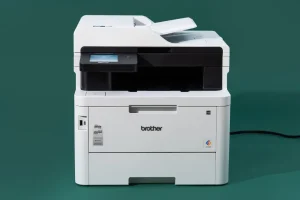
- Print primarily text-based documents
- Require fast, consistent output
- Print in moderate to high volumes
- Want low long-term operating costs
- Need reliable performance without frequent maintenance
Inkjet Printers May Be Better If You:
- Print high-quality photos regularly
- Print very infrequently
- Require ultra-compact portability
- Prioritize the lowest upfront cost
Conclusion: Why the Laser Printer Dominates the Modern Workspace
The transformation of the laser printer is one of the most compelling success stories in consumer technology. No longer confined to corporate environments, today’s laser printers deliver professional-grade performance at accessible prices, making them the gold standard for document printing in home offices, educational settings, and small businesses.
When evaluated through the lenses of speed, reliability, print quality, and total cost of ownership, the laser printer consistently outperforms inkjet alternatives for document-focused users. In an era defined by remote work, digital productivity, and cost-conscious decision-making, the modern laser printer stands not as a relic of the past, but as an essential tool for the future.
Inside Today’s Wireless Systems