
 By admin
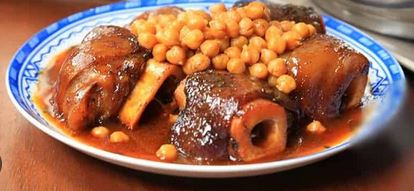
Moroccan Cow Trotters with Chickpeas (Kra’in bil Hummus): A Traditional Culinary Masterpiece
Moroccan cuisine is renowned worldwide for its rich flavors, aromatic spices, and diverse dishes that reflect a blend of Berber, Arab, and Andalusian influences. Among the most iconic and heartwarming recipes is the traditional dish known as “Kra’in bil Hummus” or Moroccan Cow Trotters with Chickpeas. This hearty and flavorful dish combines tender cow trotters, slow-cooked chickpeas, and an exquisite array of Moroccan spices to create a meal that is both comforting and deeply satisfying. In this article, we will explore the origins, preparation, and cultural significance of this beloved Moroccan specialty.
Origins and Cultural Significance
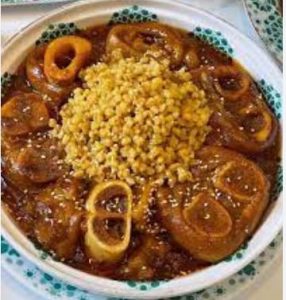
Moroccan Cow Trotters with Chickpeas is a dish deeply rooted in Morocco’s culinary heritage. It is often prepared during special occasions, religious celebrations, and family gatherings. The dish is particularly popular in rural areas, where it is cherished for its nutritional value and ability to bring families together around a shared table.
Cow trotters, or “kar’in,” are considered a delicacy in Moroccan cuisine. They are highly valued for their gelatinous texture and rich flavor, which become more pronounced when slow-cooked. Combined with chickpeas, this dish provides a perfect balance of protein, fiber, and essential nutrients, making it a wholesome meal that has sustained generations.
The Key Ingredients
To make Moroccan Cow Trotters with Chickpeas, a combination of fresh and aromatic ingredients is required. Each component plays a vital role in creating the dish’s signature taste and texture. Here are the primary ingredients:
- Cow Trotters: The star of the dish, cow trotters are thoroughly cleaned and prepped before cooking. They are rich in collagen and impart a unique, velvety texture to the dish.
- Chickpeas: Soaked overnight, chickpeas are a crucial element that adds creaminess and a nutty flavor to the stew.
- Spices: Moroccan cuisine is synonymous with spices, and this dish is no exception. Key spices include cumin, paprika, turmeric, ginger, cinnamon, and black pepper.
- Garlic and Onion: These aromatics provide a savory base and enhance the overall flavor profile.
- Preserved Lemon: A quintessential Moroccan ingredient, preserved lemon adds a tangy and slightly salty dimension to the dish.
- Fresh Herbs: Parsley and cilantro are used as garnishes to add freshness and a pop of color.
- Olive Oil: High-quality olive oil is used to sauté the aromatics and enrich the stew.
Step-by-Step Preparation
The preparation of Moroccan Cow Trotters with Chickpeas is a labor of love. While the process requires time and patience, the end result is undoubtedly worth the effort. Here is a detailed guide to making this dish:
- Preparing the Cow Trotters
- Begin by thoroughly cleaning the cow trotters. Use a knife to scrape off any impurities and wash them under cold running water.
- Place the trotters in a large pot of boiling water and blanch them for 5-10 minutes. This step helps remove any remaining impurities and prepares the trotters for cooking.
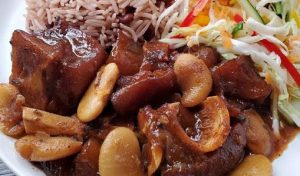
- Cooking the Stew
- In a large, heavy-bottomed pot or traditional Moroccan tagine, heat olive oil over medium heat.
- Add finely chopped onions and minced garlic. Sauté until the onions become translucent and aromatic.
- Stir in the spices: cumin, paprika, turmeric, ginger, cinnamon, and black pepper. Allow the spices to toast slightly to release their full flavor.
- Add the cow trotters to the pot, ensuring they are well-coated with the spice mixture.
- Pour in enough water to cover the trotters. Bring the mixture to a boil, then reduce the heat to low and cover the pot.
- Allow the trotters to simmer gently for 3-4 hours, or until they become tender and gelatinous. Check occasionally and add more water if needed.
- Adding the Chickpeas
- While the trotters are cooking, drain and rinse the soaked chickpeas.
- Add the chickpeas to the pot during the last hour of cooking. They should absorb the flavorful broth and become soft and creamy.
- Final Touches
- Slice the preserved lemon and add it to the pot, allowing it to infuse the stew with its tangy flavor.
- Adjust the seasoning with salt and pepper to taste.
- Garnish with freshly chopped parsley and cilantro before serving.
Serving Suggestions
Moroccan Cow Trotters with Chickpeas is traditionally served with warm, crusty bread, such as khobz or batbout. The bread is used to scoop up the stew, making utensils unnecessary. A side of fresh green salad or steamed vegetables can also complement the dish beautifully.
For a truly authentic experience, serve the dish in a communal tagine or a large bowl placed at the center of the table. Family and friends can gather around, sharing the meal and enjoying the communal spirit that Moroccan cuisine embodies.
Health Benefits
Beyond its delicious taste, Moroccan Cow Trotters with Chickpeas offers several health benefits:
- Rich in Collagen: Cow trotters are an excellent source of collagen, which supports joint health, skin elasticity, and gut health.
- High in Protein: Both the cow trotters and chickpeas provide a substantial amount of protein, essential for muscle repair and overall body function.
- Packed with Fiber: Chickpeas are high in dietary fiber, promoting healthy digestion and helping to regulate blood sugar levels.
- Nutrient-Dense: The dish is loaded with vitamins, minerals, and antioxidants from the spices, herbs, and preserved lemon.
Modern Variations and Tips
While the traditional recipe remains beloved, some modern variations have emerged to suit contemporary tastes and lifestyles. Here are a few ideas:
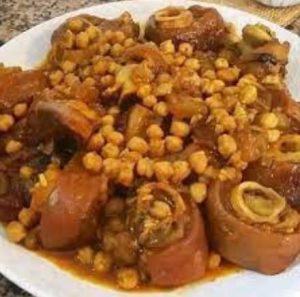
- Pressure Cooker Shortcut: To reduce cooking time, use a pressure cooker to prepare the cow trotters and chickpeas. This method can significantly cut down on the simmering process while preserving the dish’s rich flavors.
- Vegetarian Alternative: For those who prefer a plant-based option, substitute the cow trotters with hearty vegetables like carrots, potatoes, and zucchini. The spices and chickpeas will still create a flavorful and satisfying dish.
- Spice Adjustments: Feel free to experiment with the spice levels to suit your palate. Adding a pinch of chili powder can introduce a subtle heat for those who enjoy spicier food.
Conclusion
Moroccan Cow Trotters with Chickpeas is a culinary treasure that showcases the artistry and tradition of Moroccan cooking. Its rich flavors, tender textures, and nutritional benefits make it a dish worth savoring. Whether you are preparing it for a special occasion or simply to enjoy a comforting meal, this recipe is sure to leave a lasting impression.
As you embark on your culinary journey to recreate this traditional Moroccan dish, remember that patience and love are the key ingredients. Gather your loved ones, savor each bite, and celebrate the rich heritage that Moroccan cuisine has to offer.
Mouth-Watering Lobster Recipes