
 By admin
The Timeless Legacy of Marie Antoinette’s Diamond Earrings
Introduction
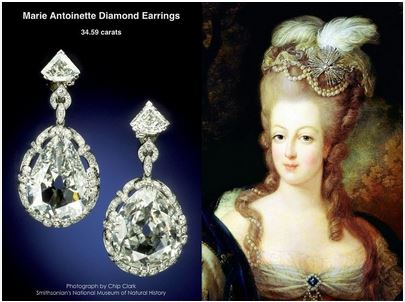
Marie Antoinette, the ill-fated Queen of France, remains one of history’s most intriguing figures. Known for her opulent lifestyle and extravagant tastes, she has been the subject of numerous myths and controversies. Contrary to popular belief, she never uttered the infamous phrase, “Let them eat cake.” Instead, she was a complex woman caught in the turmoil of the French Revolution, ultimately meeting her tragic end at the guillotine in 1793. Among her many possessions, her jewelry collection was legendary, yet she often favored simplicity in her fashion choices. One of the most famous pieces linked to her legacy is a pair of exquisite diamond earrings, now housed in the Smithsonian Institution. These earrings not only represent the grandeur of the 18th-century French monarchy but also hold an intriguing journey through history, connecting some of the most prominent aristocratic families and legendary jewelers.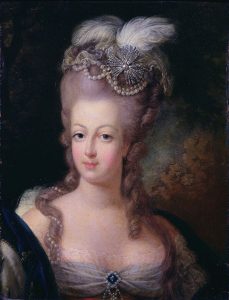
The Origins of the Marie Antoinette Earrings
The Diamonds’ Beginnings
The extraordinary diamonds in Marie Antoinette’s earrings are believed to have originated from either India or Brazil, the only major diamond sources in the 18th century. Their large size and exceptional clarity suggest that they were among the most valuable gems of their time. Crafted into elegant pear-shaped stones, they weighed 14.25 and 20.34 carats, respectively, making them truly remarkable pieces of jewelry.
The Queen’s Affection for the Earrings
Despite her affinity for luxurious adornments, Marie Antoinette was known to favor these diamond earrings above all others. Many historical accounts suggest that she wore them frequently, even in moments of great political unrest. The earrings, a gift from her husband, King Louis XVI, were a symbol of their royal stature and the splendor of the Bourbon monarchy. However, as France spiraled into revolution, the safety of such opulent possessions became uncertain.
The Fate of the Earrings During the French Revolution
The Attempted Escape and Confiscation
In June 1791, Marie Antoinette and King Louis XVI attempted to flee France in what became known as the Flight to Varennes. Their plan was foiled, and they were captured, leading to their eventual imprisonment and execution. During this desperate attempt, many of the queen’s precious jewels, including the diamond earrings, were seized or secretly transported to trusted allies. Some sources claim that these earrings were removed from her possession at this critical time.
Transfer to Russian Nobility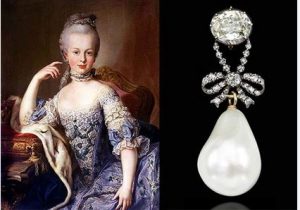
Following the revolution, the earrings found their way into the hands of Grand Duchess Tatiana Yousupoff, a member of one of Russia’s wealthiest aristocratic families. The Yousupoffs were known for their vast collection of precious gemstones, and these earrings became one of their prized possessions. For over a century, they remained within the family, passed down through generations.
The Journey Through the 20th Century
Pierre Cartier and the Yousupoff Affidavit
In 1928, renowned jeweler Pierre Cartier acquired the earrings from the Yousupoff family. At the time of purchase, Russian Princess Zenaide Yousupoff and her son, Prince Felix Yousupoff, provided an affidavit affirming the earrings’ authenticity and their historical connection to Marie Antoinette. The document attested that the diamonds had never been reset in the 100 years they were in the family’s possession, further cementing their provenance.
Acquisition by Marjorie Merriweather Post
Later in 1928, American businesswoman and philanthropist Marjorie Merriweather Post purchased the earrings from Cartier. As one of the wealthiest women of her era, Post had a deep appreciation for historical artifacts and exquisite jewelry. Her acquisition of the Marie Antoinette earrings added another layer of prestige to her already impressive collection.
The Harry Winston Restoration
In 1959, legendary jeweler Harry Winston reset the diamonds in platinum replicas of their original silver settings. The new design retained the classic elegance of the earrings while ensuring their durability. The triangular tops of the earrings were crafted by Cartier, Inc., preserving the grandeur of the 18th-century royal style.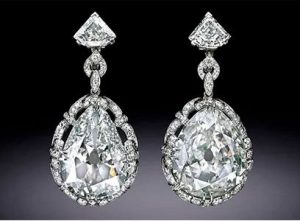
The Final Home: Smithsonian Institution
A Gift to the Nation
In 1964, Marjorie Merriweather Post’s daughter, Eleanor Barzin, donated the earrings to the Smithsonian Institution. Along with the earrings, the original silver settings were also donated, allowing historians and gemologists to study their craftsmanship. Today, these extraordinary diamonds remain part of the Smithsonian’s National Gem Collection, offering the public a glimpse into the opulent world of French royalty.
The Cultural and Historical Significance
The Marie Antoinette earrings are more than just exquisite pieces of jewelry; they are artifacts of a bygone era. Their journey from the French court to Russian nobility, through the hands of legendary jewelers, and ultimately to a public museum, underscores their enduring allure. As relics of one of history’s most famous queens, they continue to captivate historians, jewelry enthusiasts, and visitors from around the world.
Conclusion
Marie Antoinette’s diamond earrings serve as a timeless reminder of the grandeur and tragedy of her life. These jewels, once adored by the queen, have transcended centuries, preserving a piece of history that speaks to the opulence of the French monarchy and the resilience of art and craftsmanship. Today, they stand as one of the most famous artifacts in the Smithsonian Institution, ensuring that the legacy of Marie Antoinette continues to enchant generations to come.
Sustainable Fashion in New Zealand