
 By admin
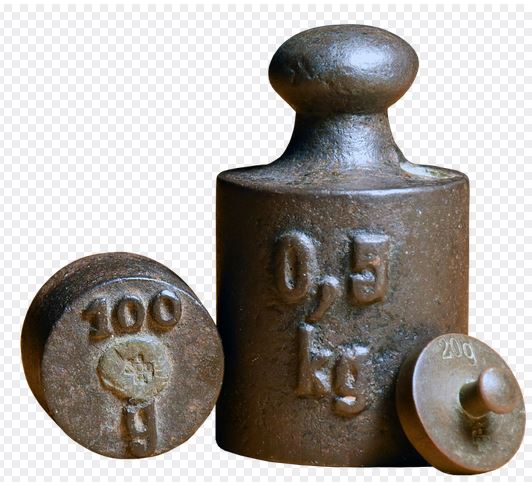
How People Measured the First Kilogram: The Birth of Modern Mass Measurement
Introduction: The Weight of a Revolution
The kilogram is the cornerstone of mass measurement in the metric system and plays a vital role in science, commerce, and daily life. But have you ever wondered: how did people weigh the very first kilogram? What was used to define it before the era of digital precision and atomic constants?
Understanding the origin of the kilogram requires a journey back to the Enlightenment era, when rational thought began to shape systems of measurement. Prior to the 18th century, units of mass varied widely from region to region. Merchants, scientists, and governments struggled with inconsistent standards, leading to confusion and inefficiency.
This article dives into the fascinating history of how the kilogram came to be. It explores the scientific, political, and technological efforts that led to its definition, how the first standard kilogram was created, and how it evolved into the modern, precise measurement we rely on today. By the end, you’ll not only understand how people weighed the first kilogram, but also why it continues to matter in our digital and data-driven world.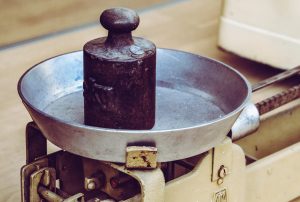
1. Before the Kilogram: Chaos in the Scales
1.1 Local Standards and Confusion
Before the metric system, people used a multitude of local units like the pound, stone, and grain. These varied not only from country to country but even between neighboring towns. A “pound” in France was different from one in England or Germany. This inconsistency created problems in trade, science, and engineering, where accuracy and consistency were crucial.
1.2 Early Attempts at Standardization
Several ancient civilizations tried to establish standards. The Egyptians used stones of known weight, while the Greeks and Romans relied on coins and bronze standards. But even these systems were prone to change due to wear and manipulation.
It wasn’t until the scientific awakening of the 17th and 18th centuries that the idea of a universal, reproducible unit of mass gained traction.
2. The Metric Revolution: Enlightenment and Precision
2.1 The French Revolution and the Metric Dream
In the wake of the French Revolution (1789), there was a strong push for rational, scientific systems to replace the patchwork of feudal standards. The newly formed French Republic wanted to create a measurement system “for all people, for all time.”
In 1795, France introduced the metric system, including the kilogram as the base unit of mass. The vision was to base all units on natural constants, making them universally applicable and scientifically grounded.
2.2 Defining the Kilogram: A Liter of Water
The kilogram was originally defined as the mass of one liter of water at its melting point (0°C). This was chosen for its simplicity and natural origin. Since a liter is defined as a cube of water 10 cm on each side, it made sense geometrically and practically.
But there was a major problem: measuring the exact mass of water, under precisely defined conditions, with 18th-century instruments, was nearly impossible to do consistently. Variations in temperature, impurities, and air pressure introduced errors.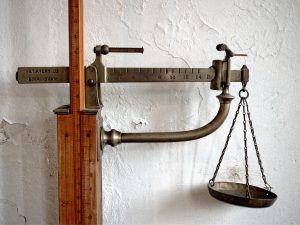
3. The Birth of the First Kilogram Prototype
3.1 Creation of the Kilogram des Archives
To create a reliable and reproducible standard, the French commissioned a physical object to embody the kilogram. In 1799, a platinum cylinder was crafted and became known as the Kilogram of the Archives. It was deposited at the French National Archives and served as the official reference.
This was a pivotal moment: mass now had a physical standard that could be stored, protected, and used as a benchmark for future measurements.
3.2 Why Platinum?
Platinum was chosen because of its high density, resistance to corrosion, and stability over time. These qualities ensured the kilogram wouldn’t change due to environmental factors. Later, platinum-iridium alloys became the standard for even greater durability.
4. The International Kilogram and Global Standardization
4.1 The International Prototype Kilogram (IPK)
In 1889, at the first General Conference on Weights and Measures (CGPM), the International Prototype of the Kilogram (IPK) was created. This new cylinder, made of 90% platinum and 10% iridium, was declared the official standard of mass for the world. It was stored at the International Bureau of Weights and Measures (BIPM) in Sèvres, France, under strict conditions.
Multiple copies were distributed to various countries, and all other mass measurements were calibrated against the IPK.
4.2 The Problem with Physical Standards
Despite its precision, the IPK had a critical flaw: it was still a physical object. Over time, it was discovered that the mass of the IPK and its copies had changed minutely—possibly due to surface contamination, cleaning, or loss of atoms.
These tiny changes were enough to introduce uncertainty into scientific research and advanced engineering, where even a nanogram could matter.
5. The New Definition: From Artifact to Atom
5.1 Redefining the Kilogram with the Planck Constant
After decades of planning, the kilogram was officially redefined in 2019, no longer based on a physical object, but on a fundamental constant of nature—the Planck constant (h).
This shift marked a historic moment: the kilogram, like the meter (now defined by the speed of light), became rooted in the unchanging laws of physics.
5.2 The Kibble Balance: A Marvel of Precision
The tool used to measure the kilogram in terms of the Planck constant is the Kibble balance (formerly called the Watt balance). This complex electromechanical device compares mechanical power (from a known mass) to electrical power (calculated via quantum effects). It allows for astonishing precision without needing a physical reference weight.
6. Why It Still Matters Today
6.1 Everyday Impact
While it might seem like high-level science, precise mass measurement impacts everyday life—whether in medicine (dosing of drugs), industry (manufacturing tolerances), food packaging, or environmental monitoring.
6.2 Scientific Advancements and Global Consistency
The 2019 redefinition ensures that mass is measured the same way—down to the atomic level—no matter where or when. It supports fields like nanotechnology, quantum computing, and aerospace engineering, where ultra-precise measurements are crucial.
Conclusion: From Water to Quantum Waves
The question “How did people weigh the first kilogram?” opens the door to a story of human curiosity, scientific innovation, and global cooperation. From water in a glass container to vibrating atoms in a lab, the journey of the kilogram reflects our ongoing pursuit of accuracy and universal understanding.
What began as a cylinder of platinum in Revolutionary France has now transformed into a definition tied to the quantum fabric of the universe. This evolution ensures that as our science advances, our systems of measurement remain as reliable and universal as ever.
Understanding Remote Battery Attacks
Why Apple Products Are Expensive?