
 By admin

Introduction
Creating a beautiful and thriving garden isn’t just about choosing the prettiest flowers at your local nursery. The key to a successful garden lies in selecting the right plants for your specific conditions. Factors like soil type, sun exposure, drainage, and garden layout play a crucial role in how well your plants will grow. With proper planning and a deeper understanding of your garden’s microclimate, you can transform any outdoor space into a lush, balanced sanctuary.
In this comprehensive guide, we’ll walk you through how to assess your garden environment, test your soil, and strategically choose plants that will thrive year-round. Whether you’re a beginner gardener or looking to refine your green space, this article will help you make informed, sustainable, and visually appealing planting decisions.
Understanding Your Garden’s Environment
1. Evaluate Light Conditions
The first step in selecting the best plants is understanding how much sunlight your garden receives throughout the day. Observe different sections in the morning, afternoon, and evening.
- Full Sun Areas: Get at least 6–8 hours of direct sunlight per day. Ideal for sun-loving perennials and annuals like lavender, salvia, and zinnias.
- Partial Shade Areas: Receive 3–6 hours of sun. Perfect for plants like hydrangeas, astilbe, and ferns.
- Full Shade Areas: Less than 3 hours of sunlight. Opt for shade-tolerant varieties such as hostas, heucheras, and impatiens.
Use this light mapping to decide where to plant different types of greenery.
2. Assess Soil Drainage and Texture
Good soil structure is vital to plant health. Check whether your soil is:
- Well-drained: Water is absorbed quickly, and roots are less prone to rot.
- Clay-heavy or compacted: Holds water and may cause root suffocation.
- Sandy: Drains fast but may lack nutrients.
- Loamy: The ideal blend with balanced drainage and fertility.
To test drainage, dig a hole about 12 inches deep and fill it with water. If it drains within a few hours, your soil is well-drained.
3. Understand Your Garden’s Exposure
Your garden’s location—whether it’s sheltered or exposed—impacts plant health. Windy spots can dry out plants quickly, especially tall ones. Use hedges or screens to create microclimates where more delicate plants can thrive.
Test and Optimize Your Soil
4. Determine Soil pH Level
Soil pH affects nutrient availability. Most garden plants prefer slightly acidic soil (pH 6.0–6.8), but some like blueberries and azaleas require even more acidic conditions. Conversely, lavender and lilacs prefer alkaline soil.
Use a home testing kit or send a sample to a lab. Based on results:
- Add lime to raise pH (reduce acidity).
- Add sulfur to lower pH (increase acidity).

- Incorporate organic matter like compost to improve fertility and texture regardless of pH.
5. Enrich with Nutrients
Your plants will only be as healthy as your soil. If test results show deficiencies:
- Use organic compost to enrich soil naturally.
- Add specific fertilizers depending on your plants’ needs (e.g., nitrogen for leafy greens, phosphorus for blooms).
- Consider mulching to retain moisture and regulate soil temperature.
Choosing the Right Plants for the Right Places
6. Select Plants by Sun/Shade Tolerance
Match plants to the light conditions you’ve charted:
- For Sunny Areas: Marigolds, echinacea, daylilies, and roses.
- For Partial Shade: Foxglove, columbine, begonias.
- For Full Shade: Ferns, lungwort, Japanese forest grass.
7. Pick Plants Based on Moisture Needs
Identify wet and dry zones in your garden:
- Drought-Tolerant Plants: Sedum, Russian sage, agave—great for sunny, dry areas.
- Moisture-Loving Plants: Canna lilies, elephant ears—suitable for areas with poor drainage or near water features.
8. Consider Soil Compatibility
Rather than extensively modifying your soil, it’s more practical to choose plants that naturally thrive in it. For instance:
- Clay soils suit asters, daylilies, and black-eyed Susans.
- Sandy soils benefit from coastal plants like yucca or sea holly.
- Alkaline soils are perfect for clematis and dianthus.
Plan Your Layout Strategically
9. Group Plants for Cohesion
Resist the urge to buy one of everything. Instead, group plants in odd numbers (threes or fives) for visual balance. Mass planting creates rhythm and unity in design.
- Color Grouping: Use color theory to select harmonious shades (e.g., purples and blues for cool tones or oranges and yellows for warmth).
- Height and Layering: Place taller plants in the back (or center of round beds) and gradually decrease height toward the front.
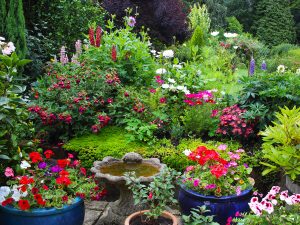
English domestic garden and patio with flowerbeds and pots full of brightly coloured summer flowers, fuchsias, cosmos flowers, dahlias, geraniums, roses, calibrachoa and lupins, in horizontal format. Haslemere, Surrey, England, UK. - Seasonal Interest: Combine early bloomers with late-flowering varieties, and include evergreens for winter color.
10. Use Texture and Foliage for Visual Interest
Don’t rely solely on flowers for beauty. Choose plants with interesting leaves—silver, variegated, or purple foliage adds dimension.
- Examples: Dusty miller (silvery foliage), coleus (variegated colors), and heuchera (deep burgundy).
- Contrast: Pair broad-leaved plants with fine-textured ones like grasses for a more dynamic look.
11. Avoid Planting Too Close to Trees
Trees are resource hogs. Their roots absorb most nutrients and water, often leaving nearby plants starved. When planting near trees, opt for shallow-rooted ground covers like vinca minor or ajuga that can tolerate competition.
Creating a Harmonious Color Scheme
12. Coordinate Bloom Colors
Visual harmony in your garden depends heavily on how you coordinate flower colors:
- Complementary Colors: Purple and yellow, blue and orange—create strong visual contrast.
- Analogous Colors: Red, orange, and yellow—create a warm, unified look.
- Monochromatic Scheme: Different shades of one color for a minimalist aesthetic.
13. Think Seasonally
Consider not just how the garden looks now, but how it will evolve:
- Spring: Tulips, daffodils, and pansies.
- Summer: Zinnias, roses, and coreopsis.
- Autumn: Sedum, chrysanthemums, and ornamental grasses.
- Winter: Evergreens, holly, and plants with colorful stems like dogwood.
Conclusion
Designing the perfect garden is a blend of science, art, and planning. By understanding your garden’s sun patterns, soil structure, moisture levels, and layout potential, you can make informed choices that ensure your plants thrive. Grouping plants wisely, using color strategically, and working with your garden’s natural conditions will result in a space that is not only visually stunning but also sustainable and easy to maintain.
Invest time in the planning phase, and your garden will reward you with years of vibrant color, texture, and serenity. So next time you visit the nursery, you’ll do so not on impulse—but with a vision.
The Benefits of Gardening for Kids