
 By admin

Why Is the Sloth So Lazy That It’s Literally Named After Laziness?
Introduction
When we hear the word sloth, images of a slow-moving creature hanging lazily from a tree immediately come to mind. This animal is so synonymous with inactivity that its name literally comes from one of the seven deadly sins—sloth, meaning extreme laziness. But is the sloth truly lazy? Or is there more to this animal’s sluggish behavior than meets the eye?
In this article, we delve into the fascinating world of the sloth—exploring the evolutionary reasons behind its slow movements, its biological adaptations, and the myths versus reality surrounding its so-called laziness. With recent research shedding new light on this unusual mammal, it’s time we look at the sloth not as a symbol of slothfulness, but as a marvel of survival and efficiency.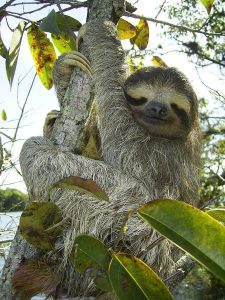
The Sloth: An Overview
What is a Sloth?
Sloths are tree-dwelling mammals native to Central and South America. They are known for their slow movements, unique anatomy, and symbiotic relationships with other species. Sloths belong to the suborder Folivora, and there are two main families: two-toed sloths (Choloepodidae) and three-toed sloths (Bradypodidae). Despite their similar names and habits, these two types evolved separately and have distinct physical traits.
Evolutionary Background
Sloths have been around for over 60 million years, and their ancestors were surprisingly large—some prehistoric sloths, like Megatherium, were the size of elephants. Over time, sloths evolved to adapt to a life high in the trees, trading speed and size for stealth and energy conservation. This evolutionary path shaped the sloth into what we see today: a master of slow living in a fast-paced jungle.
Why Are Sloths So Slow?
Metabolism and Diet
The sloth’s notorious slowness is not laziness—it’s biology. Sloths have one of the slowest metabolic rates among mammals. This slow metabolism is closely linked to their low-calorie diet, which consists mainly of leaves that are low in nutrients and difficult to digest.
Sloths have multi-chambered stomachs, similar to cows, that slowly ferment the leaves they eat. Digestion can take up to a month, and their body temperature fluctuates with the environment, making them ectothermic-like in behavior. Simply put, sloths move slowly because their bodies are designed to conserve energy at all costs.
Energy Conservation as a Survival Strategy
Moving slowly has surprising advantages. Sloths are nearly invisible to predators such as jaguars, eagles, and snakes. Their moss-covered fur and minimal movement make them blend seamlessly into the rainforest canopy. By avoiding sudden movements and staying high in trees, they reduce the risk of being spotted and eaten. Their lifestyle is less about laziness and more about energy-efficient survival.
Unique Adaptations of the Sloth
Claws and Limbs
Sloths have long, curved claws that allow them to hang effortlessly from branches. Their powerful grip can support their body weight even when unconscious. Unlike most mammals, their limbs are adapted for hanging rather than walking. On land, sloths are clumsy and vulnerable, but in the trees, they are perfectly suited for their environment.
Slow But Not Stupid
Contrary to popular belief, sloths are not dumb. Their brains are small, but they are surprisingly good at navigating their environment. Recent studies have shown that sloths have spatial memory and the ability to remember specific tree routes. While they may not be quick learners, they are efficient and consistent in their behavior.
Symbiotic Relationships
One of the most fascinating facts about sloths is the miniature ecosystem in their fur. Their coarse hair hosts algae, which gives the sloth a greenish tint that enhances camouflage. These algae provide nutrients to moths and beetles that also live in the fur. In return, moths contribute nitrogen-rich waste that feeds the algae. This symbiotic relationship is unique in the animal kingdom.
Debunking the Myths About Sloths
Myth 1: Sloths Are Lazy
Laziness implies a choice not to act, but sloths are acting exactly as nature intended. Their behavior is optimized for survival, not comfort. They spend most of their time resting because they have to conserve the little energy they derive from their food.
Myth 2: Sloths Sleep All Day
While it’s true sloths can sleep up to 15–20 hours a day in captivity, wild sloths sleep much less—only about 8 to 10 hours. The difference is due to stimulation and the need to stay alert to predators in their natural environment.
Myth 3: Sloths Are Useless
Far from it. Sloths play a crucial role in the ecosystem. They contribute to seed dispersal, serve as habitats for other species, and help balance the food chain. They’re slow, yes, but certainly not useless.
Recent Discoveries and Conservation Efforts
Advances in Sloth Research
Modern technology has allowed scientists to track sloths in the wild using GPS and motion sensors. These studies have revealed new behaviors such as nighttime movement patterns, maternal bonding, and territorial behaviors. Sloths are proving to be more complex than once thought.
Conservation Challenges
Despite their peaceful nature, sloths are under threat from deforestation, road development, and human encroachment. Many sloths die trying to cross roads or are electrocuted by power lines. Wildlife conservation groups are now building “sloth crossings”, bridges made of rope that allow sloths to safely navigate fragmented forests.
What You Can Do
You can support sloth conservation by:
-
Supporting organizations like the Sloth Conservation Foundation.
-
Avoiding petting zoos that exploit sloths.
-
Promoting sustainable tourism in Central and South America.
Conclusion
The sloth may have been unfairly branded as the poster child for laziness, but the truth is far more inspiring. These gentle creatures are expert energy conservers, evolutionary survivors, and ecosystem allies. Their slow movements are not a weakness but a strength that allows them to thrive in the treetops of the rainforest.
Far from being lazy, the sloth is a symbol of patience, balance, and quiet resilience. So the next time someone calls you a “sloth,” take it as a compliment—you might just be surviving smarter, not harder.