
 By admin
Do Cell Towers Above Our Homes Really Cause Cancer? Separating Myth from Science
Introduction
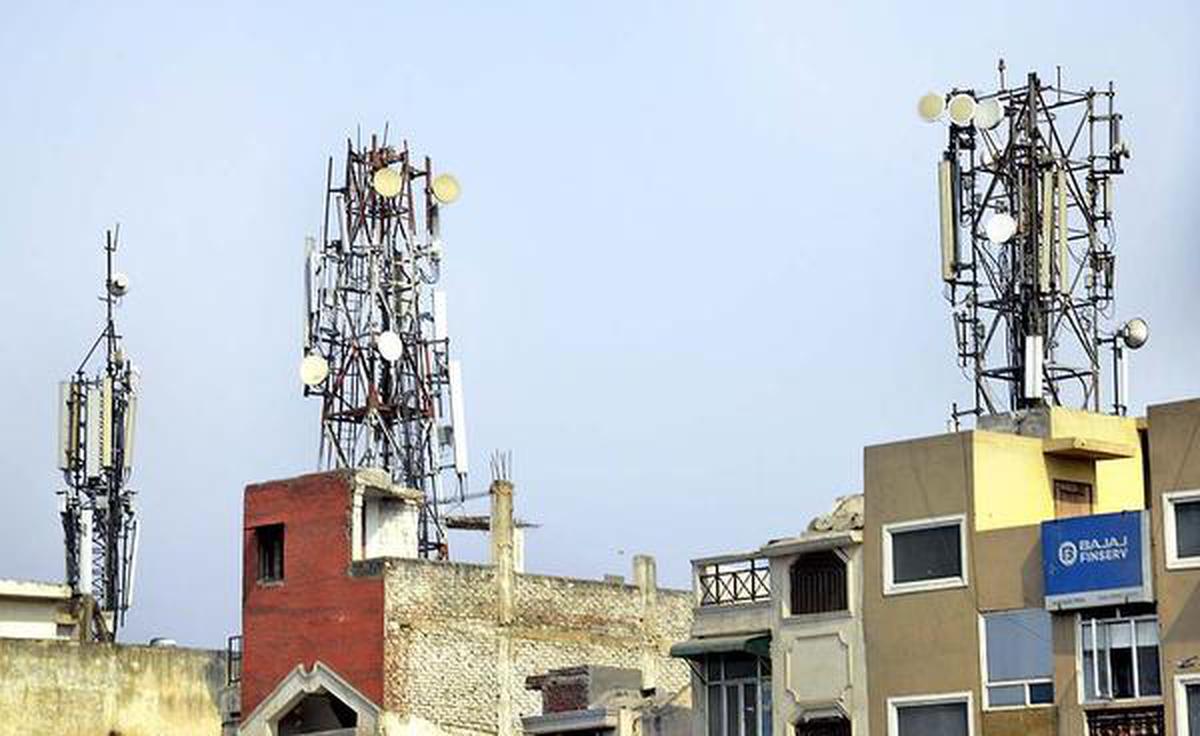
In many neighborhoods around the world, people often glance at the tall antennas or mobile towers perched above residential buildings and wonder: “Are these towers safe? Could they cause cancer?” This concern has grown in recent decades, especially as mobile phone networks have rapidly expanded and 5G technology has introduced new types of antennas in urban spaces.
The fear stems from the idea that constant exposure to electromagnetic fields (EMFs) emitted by these towers could harm human health, especially when they are located close to bedrooms, schools, and rooftops. With cancer being one of the most feared diseases in modern society, the suspicion of a potential link between cell towers and cancer has fueled public debates, protests, and even lawsuits against telecommunication companies.
But how much of this fear is based on scientific evidence, and how much is influenced by misinformation and uncertainty? In this article, we will break down what modern research says about the potential health risks of cell towers, explore why they are placed in residential areas, and provide clarity to separate myth from fact.
Understanding Cell Towers and Electromagnetic Fields
What Are Cell Towers?
Cell towers, also known as base stations, are tall structures that house antennas for transmitting and receiving radiofrequency (RF) signals. These towers are essential for mobile phone communication, internet connectivity, and wireless data transmission. Without them, the fast, uninterrupted communication we rely on today would not be possible.
What Kind of Radiation Do They Emit?
Cell towers emit non-ionizing radiation in the form of radiofrequency waves. Unlike ionizing radiation (such as X-rays or gamma rays) that can directly damage DNA and cause mutations, non-ionizing radiation does not have enough energy to break chemical bonds in human cells. Instead, it generates low levels of heat, similar to how a microwave oven works but at a much weaker intensity.
Do Cell Towers Cause Cancer? The Scientific Evidence
Early Concerns and Public Fear
When mobile communication technology first spread in the late 20th century, scientists and health authorities began investigating whether constant exposure to RF radiation could pose risks, including cancer. Several animal and human studies were conducted to examine potential long-term effects.
The Position of the World Health Organization (WHO)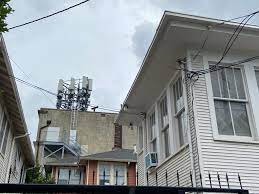
The World Health Organization (WHO) has repeatedly stated that there is no conclusive evidence linking cell tower exposure to cancer. However, in 2011, the International Agency for Research on Cancer (IARC), a branch of WHO, classified RF radiation as “possibly carcinogenic to humans” (Group 2B). This category is the same one that includes coffee and pickled vegetables. Importantly, “possibly carcinogenic” does not mean “proven to cause cancer,” but rather that more research is needed to rule out potential risks.
Large-Scale Studies and Results
- Interphone Study (2010): A multinational research project across 13 countries found no clear evidence linking mobile phone usage or tower exposure to increased brain cancer risk.
- Danish Cohort Study: One of the largest and longest-running studies, it examined more than 350,000 people over two decades and found no significant link between mobile phone use and cancer.
- National Toxicology Program (NTP) Study, USA: Some animal studies suggested a slight increase in tumors with extremely high levels of RF exposure, but these levels were much higher than those emitted by typical cell towers.
The Consensus Among Experts
Most health organizations, including the U.S. Food and Drug Administration (FDA), Federal Communications Commission (FCC), and European Commission on Health, maintain that exposure from cell towers is far below harmful levels. The radiation emitted decreases significantly with distance, meaning even people living under or near towers receive much lower exposure than safety thresholds allow.
Why Are Cell Towers Placed on Rooftops and Near Homes?
Demand for Connectivity
Modern life depends on high-speed mobile data, seamless phone calls, and reliable internet access. To achieve this, mobile operators need to install towers close to where people live and work.
Urban Planning Challenges
Cities are crowded, and free-standing towers are not always practical. Rooftops provide the perfect height for antennas without the need to build separate tall structures. This is why many cell towers are installed on residential and commercial buildings.
Safety Regulations
Governments regulate the placement and operation of cell towers. In most countries, strict exposure limits are enforced based on international safety standards. These limits are designed to ensure that even people living directly under a tower are not exposed to harmful levels of radiation.
The Difference Between Cell Towers and Mobile Phones
Many people do not realize that mobile phones themselves emit more radiation than towers—especially when held close to the head during a call. While towers transmit signals at a distance, your phone increases its power output when the signal is weak, meaning your personal device often exposes you to higher levels of RF radiation than the tower does.
Paradoxically, removing towers from neighborhoods could worsen exposure because phones would need to work harder to connect, thereby emitting stronger radiation.
5G Networks: Are They More Dangerous?
The Rise of 5G Concerns
With the rollout of 5G networks, concerns about radiation risks resurfaced. Many feared that higher-frequency waves used in 5G could pose greater dangers.
What the Research Says
5G operates at higher frequencies but still within the non-ionizing radiation spectrum. Current scientific reviews indicate that 5G exposure remains well within international safety limits. Additionally, 5G antennas are typically smaller and lower-powered than traditional 4G towers, further reducing risk.
Public Perception vs. Scientific Reality
Why Do People Still Worry?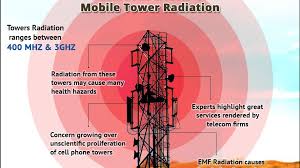
- Cancer Fear: Because cancer has multiple causes and is still not fully understood, people often suspect environmental factors like EMFs.
- Misinformation: Viral social media posts, conspiracy theories, and unverified claims often fuel unnecessary panic.
- Visibility of Towers: A tower on a rooftop is a constant reminder, unlike invisible pollutants like car exhaust or industrial smoke, which often have greater proven health impacts.
Psychological Effects of Fear
Living in constant fear of a nearby cell tower can itself harm health, increasing stress, anxiety, and sleep problems. This is known as the “nocebo effect”—when expecting harm leads to real symptoms, even without an actual cause.
How to Minimize Risks If You’re Concerned
- Follow Trusted Sources: Rely on WHO, FDA, and national health agencies rather than social media claims.
- Reduce Phone Radiation: Use hands-free devices or speaker mode to limit direct exposure.
- Encourage Transparency: Support stricter monitoring and public communication from telecom companies and governments.
- Stay Informed About New Research: Science evolves, and ongoing studies continue to assess long-term effects.
Conclusion
The belief that cell towers above our homes cause cancer is widespread but not supported by scientific evidence. While concerns are understandable, modern research consistently shows that RF exposure from towers is far below dangerous levels. Organizations worldwide, including WHO and FDA, have not found proof of cancer risk from living near these antennas.
Cell towers are essential for connectivity, and their placement in residential areas is driven by necessity, not negligence. In fact, stronger networks may reduce individual exposure by lowering the radiation emitted by our own phones.
Rather than fearing these structures, communities should focus on demanding transparency, strict compliance with safety regulations, and continued scientific investigation. For now, the evidence suggests that the tower above your house is unlikely to be the silent danger many believe it to be.