
 By admin

What Made the World Turn Toward Artificial Intelligence?
Introduction
Artificial intelligence (AI) has rapidly become the most transformative force of the 21st century. In less than a decade, it shifted from being a futuristic concept to an essential tool embedded in nearly every sector of society. From healthcare and education to elections and global security, AI is now at the heart of human progress and global competition.
The world did not simply turn toward AI out of curiosity. It was necessity. The need to process massive amounts of data, compete in the digital economy, innovate faster, and respond to global crises pushed governments, industries, and individuals to embrace AI technologies.
By 2025, AI has become not only a driver of productivity but also a political, ethical, and social issue, reshaping the way humanity lives and interacts. In this expanded analysis, we will explore why the world has embraced AI so decisively, with modern examples from 2024–2025 across elections, education, medicine, and beyond.
The Evolution of Artificial Intelligence
From Concept to Global Adoption
Artificial intelligence was first envisioned in the mid-20th century, when mathematicians and computer scientists like Alan Turing asked whether machines could “think.” Early progress was slow due to limited computing power. But by the early 21st century, advances in machine learning, neural networks, and natural language processing opened the door to practical applications.
The Turning Point of the 2020s
The 2020s marked a turning point. AI breakthroughs such as large language models (LLMs) and generative AI gave rise to powerful tools like ChatGPT, Gemini, and Claude. These models transformed everyday activities—writing, customer service, coding, and even creative design.
By 2024–2025, AI is no longer a background tool but a frontline technology integrated into healthcare, elections, education, transportation, and climate action.
Global Drivers Behind the Shift
1. Economic Competitiveness in the Digital Era
AI is the new oil of the global economy. Governments and corporations invest billions in AI to maintain competitiveness. Reports predict AI could contribute over $15 trillion to the world economy by 2030, reshaping industries such as finance, retail, and manufacturing.
Subpoint: Reshaping the Workforce
AI does not simply replace jobs—it transforms them. By 2024, many organizations adopted AI copilots to assist employees with data analysis, research, and reporting. Instead of eliminating workers, AI freed them from repetitive tasks, allowing them to focus on creative and strategic roles.
2. The Explosion of Big Data
The digital age generates unprecedented volumes of data—estimated at over 328 million terabytes daily. This includes information from smartphones, social media, IoT devices, e-commerce, and medical systems.
Humans cannot process such vast data manually. AI, however, can. For example, in 2024, Alibaba and Amazon used AI-driven analytics to stabilize global supply chains disrupted by geopolitical tensions, saving billions in logistics and ensuring product delivery.
3. Healthcare and Medicine in 2024–2025
Healthcare is one of the most visible beneficiaries of AI.
-
Early Diagnostics: AI now detects cancers, heart disease, and even neurological disorders years earlier than traditional methods. In 2025, AI-assisted MRI and CT scan analysis improved accuracy rates by nearly 20% compared to human radiologists alone.
-
Drug Discovery: Pharmaceutical companies like Moderna and BioNTech use AI to accelerate vaccine and cancer therapy development, reducing timelines from years to months.
-
Telemedicine Expansion: In rural areas of Africa and Asia, AI chatbots and diagnostic apps provide access to healthcare where doctors are scarce.
-
Pandemic Preparedness: Post-COVID, AI is central to predicting outbreaks. In 2024, AI systems successfully modeled the spread of avian flu variants, enabling faster response strategies.
AI in medicine shows why the world embraced this technology: it saves lives and makes healthcare more accessible.
4. Education and Personalized Learning
Education is undergoing a profound shift thanks to AI.
-
AI Tutors: Platforms like Khanmigo (Khan Academy) and Duolingo Max provide real-time, adaptive learning experiences tailored to each student’s pace and style.
-
Automated Administration: Universities increasingly rely on AI to handle admissions, grading, and plagiarism detection.
-
Global Access: In 2024, UNESCO highlighted how AI-enabled platforms helped bridge the education gap in low-income countries by providing free tutoring resources to millions of students.
By 2025, AI is not just a support tool in classrooms—it is a core educational partner, reshaping how knowledge is delivered and consumed.
5. Elections and Political Influence (2024–2025 Example)
AI is transforming politics, with both positive and negative consequences.
-
Positive Use: During the 2024 U.S. presidential primaries, AI tools were deployed to fact-check political debates in real time, helping voters identify misinformation. In Europe, AI chatbots helped citizens understand complex policy issues before elections.
-
Negative Use: At the same time, deepfake videos and AI-generated propaganda became major thr
-
eats. Disinformation campaigns in 2024 elections in several countries raised urgent debates about AI regulation in politics.
-
Policy Impact: In response, the European Union AI Act and similar national regulations in 2025 introduced rules requiring transparency for AI-generated political content.
Elections highlight why AI cannot be ignored: it influences democracy itself.
6. Climate Change and Sustainability
Climate change is one of humanity’s greatest threats, and AI is becoming a powerful ally.
-
Smart Energy Grids: In 2025, cities like Singapore and Dubai implemented AI systems to optimize electricity distribution, reducing energy waste by up to 15%.
-
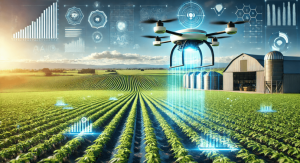
Precision Agriculture: Farmers worldwide use AI drones and sensors to manage water use and improve crop yields.
-
Disaster Prediction: AI-driven climate models now forecast hurricanes, floods, and wildfires weeks in advance, saving thousands of lives.
-
Corporate Sustainability: Companies like Google use AI to make data centers carbon-neutral, reducing global emissions.
7. Security, Defense, and Cyber Risks
AI plays a critical role in global security.
-
Cybersecurity: AI systems detect and neutralize cyber threats faster than human analysts. By 2025, financial institutions use AI to stop fraud in real time.
-
Military Use: Autonomous drones and AI-driven surveillance raise ethical concerns, but nations continue to invest heavily to maintain military advantage.
-
AI-Enabled Crime: Hackers now exploit AI to create advanced phishing scams and malware, forcing governments to adopt stricter cyber defense measures.
Ethical and Social Implications
1. Job Displacement and Inequality
While AI creates new job categories, millions of traditional roles—especially in manufacturing and routine services—are disappearing. Governments now focus on reskilling programs to prepare citizens for AI-driven economies.
2. Privacy and Data Ethics
AI relies on personal data, raising concerns about mass surveillance and misuse. In 2025, the EU’s AI Act became the world’s most comprehensive AI regulation, setting global standards for transparency, fairness, and accountability.
3. Algorithmic Bias
AI systems can inherit human biases, leading to discrimination in hiring, lending, and law enforcement. Global organizations now call for ethical AI training datasets to ensure fairness.
4. Control and Transparency
As AI systems grow more autonomous, the “black box problem” becomes urgent: How do we ensure AI’s decisions are explainable? Transparency in AI is now a top demand from both governments and civil societies.
Why the World Cannot Ignore AI
Artificial intelligence is no longer a futuristic option—it is the backbone of modern civilization. Its integration into healthcare, education, politics, and the economy makes it indispensable. Nations that fail to embrace AI risk economic stagnation and reduced influence in the global arena.
At the same time, societies must address the ethical, social, and political challenges AI brings. The real question is not whether the world should turn toward AI, but how humanity can shape AI responsibly to ensure it benefits everyone.
Conclusion
The global shift toward artificial intelligence is driven by necessity: the need for innovation, efficiency, security, and survival in an increasingly complex world. From elections in 2024 to healthcare breakthroughs in 2025, AI has proven its value as both a problem-solver and a disruptor.
Yet, the power of AI comes with responsibility. Governments, companies, and individuals must collaborate to establish ethical guidelines, fair access, and transparent systems. If managed wisely, AI can unlock unprecedented opportunities and create a more sustainable and equitable future.
The world turned toward AI not simply because it could—but because it had to. The stakes of the 21st century demanded nothing less.