
 By admin
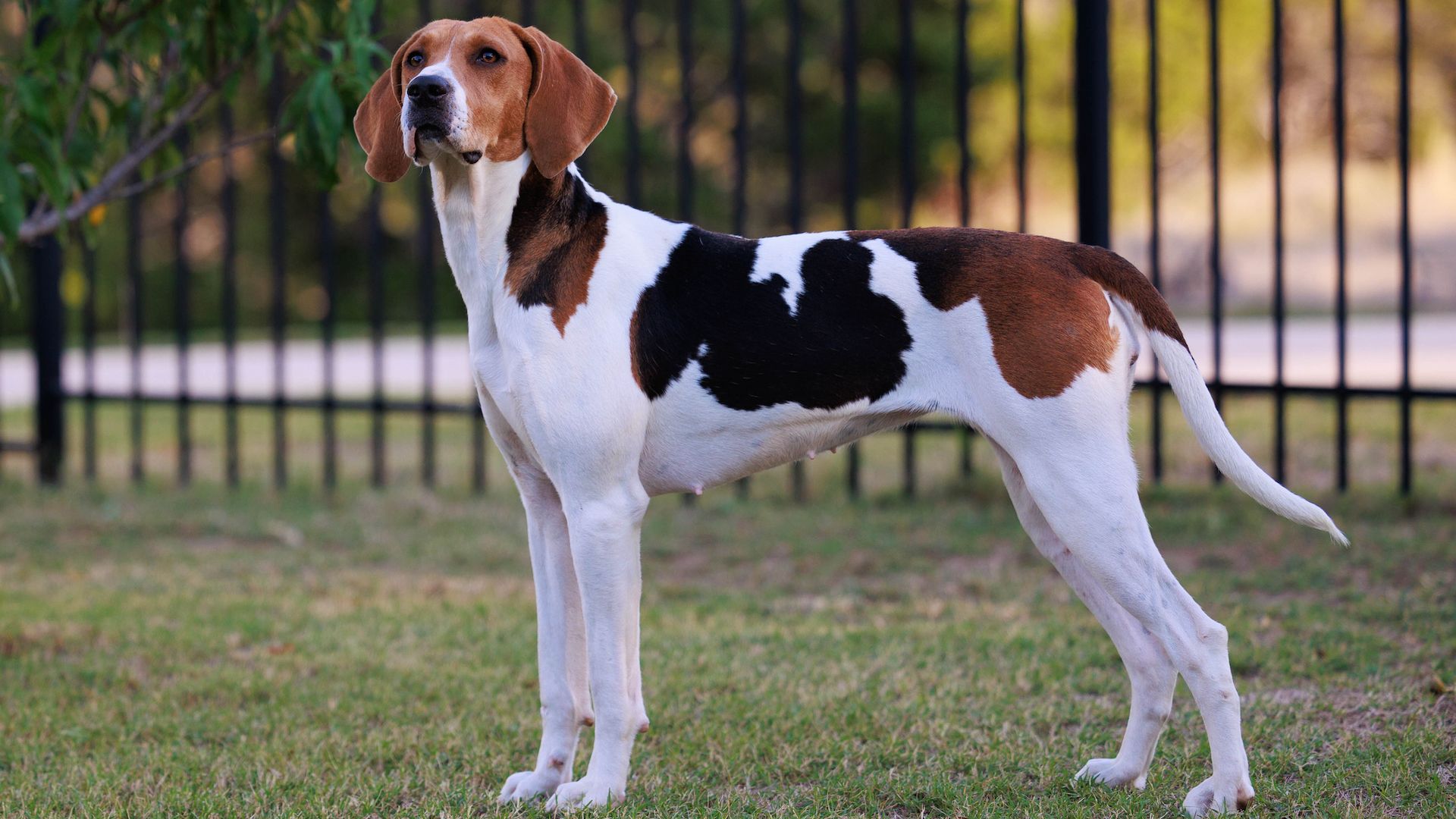
The Foxhound: A Legacy of Endurance, Heritage, and Unmatched Hunting Precision
Introduction
Among the great canine breeds shaped by centuries of human purpose and cultural tradition, the Foxhound stands as one of the most distinguished and scientifically refined. Developed deliberately in Britain during the late seventeenth century, the Foxhound was engineered to meet the specific demands of fox hunting, a sport that had replaced deer hunting after political and environmental changes dramatically altered the wildlife landscape. Unlike many breeds formed through gradual natural selection or accidental crossbreeding, the Foxhound was carefully designed to combine exceptional scenting ability, sustained running endurance, cooperative pack behavior, and a rugged physical structure capable of enduring long pursuits across unforgiving terrain.
Today, the Foxhound is not merely a relic of historical hunting culture. It remains a distinctive breed valued for its athletic ability, working intelligence, and social pack instincts. While still used in organized trail hunts and working packs, the Foxhound has also, though more rarely, transitioned into the roles of house companion, show dog, and active sporting partner. Understanding this breed requires exploring its origin, physical structure, temperament, training needs, and evolving place in modern society.
This article examines the Foxhound in depth—from its historical creation to its present-day adaptability—offering insight into what makes it one of the most purpose-built and enduring athletic dogs in the world.
- Origins and Historical Significance of the Foxhound
A Purpose-Built Hunting Companion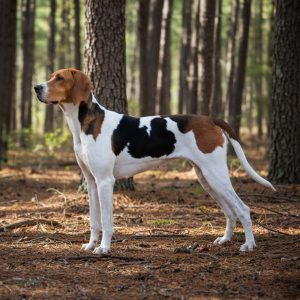
The Foxhound emerged in a period when fox hunting became the primary mounted sport of the British aristocracy. The Southern Hound, prized for scenting ability, and the Greyhound, valued for speed, were among the foundation breeds used to develop a hound capable of:
- Tracking faint scent trails across multiple miles
- Running with speed and stamina equal to horses
- Functioning cooperatively in large packs
- Remaining strong, agile, and injury-resistant
The creation of the Foxhound is widely considered the first documented scientific dog breeding project, where breeders recorded pedigrees, analyzed performance traits, and refined breeding choices based on physical and behavioral evaluations.
Cultural Role in the British Countryside
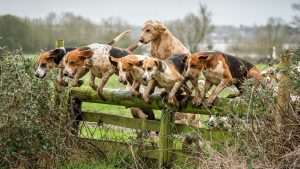
Foxhounds became central to the social and cultural identity of rural Britain. The sight and sound of a pack in full chase was celebrated in art, literature, and tradition. Their purpose was not merely functional—they symbolized heritage, hierarchy, and camaraderie among hunting communities.
Even though the Hunting Act 2004 restricted traditional fox hunting with live quarry in the United Kingdom, Foxhound packs adapted to new formats such as:
- Trail hunting (following artificial scent trails)
- Drag hunting (pursuing predetermined cloth scent lines)
The tradition, discipline, and athleticism of the Foxhound were thus preserved.
- Physical Structure: Built for Endurance and Precision
- Head and Sensory Capabilities
The Foxhound’s head is designed for function rather than ornamentation.
| Trait | Purpose |
| Broad skull and long nasal cavity | Enhances scent detection and airflow |
| Large, open nostrils | Maximizes scent particle capture |
| Low-set, close-hanging ears | Funnels ground scents while preventing debris intrusion |
| Deep-set, alert eyes | Protects from underbrush and conveys focus |
The overall expression of the Foxhound is one of intensity and resolve, often projecting a sense of determination unmatched by domestic pet breeds.
- Body, Chest, and Musculature
The Foxhound’s physique is designed for endurance running, not merely sprinting.
- Long, clean neck: Allows comfortable “stooping” to follow scent trails.
- Well-laid-back shoulders: Enable long, efficient strides.
- Deep chest: Provides expanded lung capacity for oxygen intake.
- Level, muscular back: Ensures transmission of power between front and hind limbs.
This structure allows the Foxhound to run for hours without fatigue, even on varied terrain.
- Legs and Feet: The Foundation of Endurance
The Foxhound’s front and rear limbs are straight, powerful, and balanced.
- Forelegs support weight endurance
- Hind legs deliver forward propulsion
- Feet are compact and cat-like, enabling:
- Shock absorption
- Stability on uneven surfaces
- Reduced injury risk
Well-formed feet are considered a hallmark of a true working Foxhound.
- Coat and Color Patterns
The coat is:
- Short
- Dense
- Weather-resistant
- Easy to maintain
Common coloration patterns include:
- Belvoir Tan
- Black, White, and Tan Tricolor
- Badger Pied
- Lemon Pied
- Hare Pied
Historically, the clarity of white patches allowed riders to see hounds at long distances during hunts.
III. Temperament and Behavioral Characteristics
Pack Mentality
The Foxhound is deeply pack-oriented. It works best when surrounded by other dogs. This trait is beneficial in hunting but requires thoughtful management in home environments.
Intelligence and Independence
Foxhounds are intelligent, yet their problem-solving instincts are scent-driven rather than obedience-focused. They can be:
- Independent in thought
- Easily distracted by scents
- Highly persistent once motivated
Compatibility with Humans and Other Pets
Foxhounds are typically:
- Gentle with children
- Warm toward familiar people
- Friendly with other dogs
However, their prey drive means careful introductions are necessary with small pets.
- Training and Daily Care Requirements
Exercise Needs
A Foxhound cannot thrive without extensive physical activity. Recommended daily exercise time:
- 2 to 4 hours, ideally including running
They excel in:
- Trail running
- Hiking
- Long-distance jogging
- Agility and scent-based activities
Training Approach
Effective training must emphasize:
- Positive reinforcement
- Patience
- Consistent structure
- High-value motivation (usually scent-based rewards)
Recall training is especially challenging for this breed.
Living Environment
Best suited for:
- Rural homes
- Properties with large enclosed land
- Active families or working dog settings
Not suited for:
- Small apartments
- Sedentary lifestyles
- Owners seeking a low-maintenance companion
- English Foxhound vs American Foxhound
| Feature | English Foxhound | American Foxhound |
| Build | Heavier and more muscular | Taller and leaner |
| Primary Selection | Pack endurance | Speed and agility |
| Head Shape | Broader | More refined |
| Working Terrain | Fields and open countryside | Rougher and varied landscapes |
Both breeds share ancestry but reflect different hunting traditions and environments.
Conclusion
The Foxhound is a living symbol of intentional breeding, athletic stamina, and traditional working purpose. Its origin reflects not just a need for hunting efficiency but a broader cultural heritage linked to rural life and community identity. While the modern world continues to evolve and fox hunting practices change, the Foxhound’s spirit, drive, athleticism, and distinctive presence endure.
For the right environment—one that respects its need for movement, companionship, and structure—the Foxhound remains a remarkable and rewarding canine companion. Whether racing across open fields, participating in trail hunts, or sharing active adventures with committed owners, the Foxhound continues to embody the pinnacle of canine endurance and purpose-driven design.
The Fierce Survivor of the Animal Kingdom