
 By admin
The Argan Tree: Morocco’s Unique Gift for Health, Beauty, and Economic Resilience
Introduction
The argan tree (Argania spinosa), endemic to southwestern Morocco, is more than an iconic landscape feature — it is a living system that links ecology, traditional knowledge, public health, beauty industries, and rural economies. For centuries local Berber communities have relied on the argan forest for food, fuel, fodder, and particularly the production of argan oil, a product that in recent decades has become a globally prized ingredient in culinary and cosmetic markets. This article examines the biological uniqueness of the argan tree, the composition and health benefits of argan fruit and oil, its applications in skincare and cosmetics, and the socio-economic and environmental impacts of argan cultivation and commercialization. Finally, it outlines current challenges and opportunities for ensuring the argan ecosystem and the communities that depend on it thrive into the future.
1. Botanical and ecological significance
1.1. A tree adapted to harsh environments
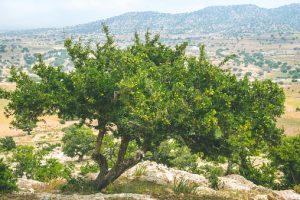
Argania spinosa is a drought-tolerant, slow-growing evergreen shrub or small tree native to semi-arid zones of southwestern Morocco. Its deep-rooting system and hardy physiology enable it to stabilize soils, reduce erosion, and survive extended dry seasons — traits that make it a keystone species in preventing desertification across fragile landscapes.
1.2. Endemism and biodiversity value
The argan forest is an endemic ecosystem found primarily in the Souss-Massa and Essaouira regions of Morocco. Because the tree and its specialized associated flora and fauna evolved together, conserving argan woodlands supports biodiversity that is not replicated elsewhere. The UNESCO designation of parts of the argan forest as a Biosphere Reserve reflects its unique ecological value and the need for integrated conservation and development strategies.
1.3. Carbon sequestration and climate resilience
Although argan trees are not the fastest carbon accumulators, their longevity, widespread canopy cover in native stands, and ability to survive in marginal soils contribute meaningfully to local carbon storage and to microclimate stabilization. Protecting and expanding argan woodlands is a practical component of nature-based climate resilience in southwest Morocco.
2. The argan fruit and oil: composition and health benefits
2.1. From fruit to oil — traditional processing
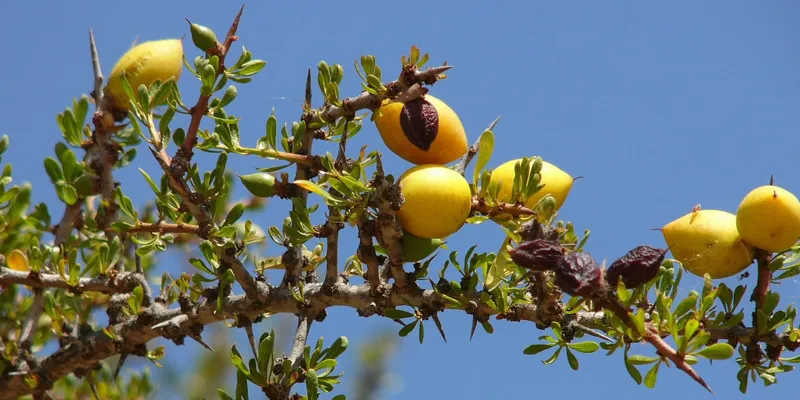
The argan fruit is oval, with a fleshy pulp that surrounds a hard nut containing one to three oil-rich kernels. Traditional processing involves drying the fruit, removing the pulp, cracking the hard nuts by hand, roasting kernels for culinary oil (or leaving them unroasted for cosmetic oil), grinding, and pressing to extract oil. For centuries, women’s cooperatives have been central to this artisanal production model.
2.2. Nutritional profile and culinary uses
Argan oil is prized as a healthy edible oil. Its fatty acid profile is characterized by:
- High monounsaturated fats, primarily oleic acid (omega-9).
- Significant polyunsaturated fats, notably linoleic acid (omega-6).
- A favorable ratio of unsaturated to saturated fats, comparable to olive oil.

Beyond macronutrients, argan oil contains tocopherols (vitamin E variants), sterols, and polyphenols — antioxidants that help reduce oxidative stress. In Moroccan cuisine, argan oil is used as a finishing oil for salads, couscous, and amlou (a spread of argan oil, almonds, and honey), delivering both flavor and nutritional benefits.
2.3. Cardiometabolic and systemic health considerations
The oil’s lipid profile and antioxidant content suggest cardiovascular benefits when used to replace saturated fats. Regular consumption as part of a balanced diet may contribute to improved lipid profiles and decreased LDL oxidation. Additionally, polyphenols and vitamin E may have anti-inflammatory effects, although clinical evidence varies and further randomized trials are needed to quantify long-term outcomes in diverse populations.
3. Argan oil in cosmetics and dermatology
3.1. Skin health and barrier support
Cosmetic (unroasted) argan oil is rich in vitamin E, essential fatty acids, and phenolic compounds that support skin barrier function, improve skin hydration, and may reduce transepidermal water loss. Studies and user reports indicate that topical application can soothe dry skin, improve elasticity, and contribute to an even skin tone when used consistently.
3.2. Anti-inflammatory and antioxidant effects
The phenolic and tocopherol content of argan oil imparts antioxidant properties that help neutralize free radicals on the skin surface. This can reduce oxidative damage from environmental stressors (UV exposure, pollution) that accelerate visible aging. Some evidence suggests argan oil may assist in reducing inflammation related to mild dermatitis, but it is not a substitute for medical therapies in chronic inflammatory skin diseases.
3.3. Hair and nail care
Argan oil is widely marketed for hair smoothing, shine enhancement, and split-end reduction. Its fatty acids can penetrate the hair shaft to condition and increase manageability. Applied to nails and cuticles, argan oil helps maintain hydration and reduce brittleness.
3.4. Safety and allergenicity
Argan oil is generally well tolerated; allergic reactions are rare but possible, especially in individuals with nut allergies. Patch testing is recommended for users with known sensitivities. Purity matters — high-quality, cold-pressed, unadulterated cosmetic argan oil reduces the risk of irritation from additives or contaminants.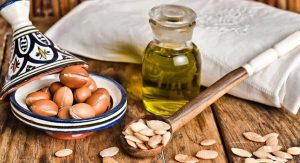
4. Socio-economic impact and community economics
4.1. Women’s cooperatives and income generation
The modern argan economy has mobilized local communities — particularly women — through cooperatives that produce and sell argan oil. These cooperatives provide meaningful employment, financial independence, and social capital. Revenues from argan products contribute to household income, enable reinvestment in education and healthcare, and empower women as economic actors and custodians of traditional knowledge.
4.2. Value chain and market dynamics
Argan products now enter both domestic and international markets. The value chain spans raw fruit collection, kernel cracking, cold-press extraction, refining, packaging, and branding. Value is added through quality certification (organic, fair trade), traceability, and premium positioning in beauty and gourmet food segments. Export demand has grown steadily, creating opportunities and risks: while demand strengthens local income, it can incentivize over-exploitation if not managed sustainably.
4.3. Tourism and cultural heritage
Argan forests contribute to cultural tourism. Visitors attracted to the landscape, traditional production demonstrations, and cooperative shops provide an additional revenue stream. Cultural recognition of Berber heritage and artisanal skills enhances the social value of argan production beyond monetary measures.
5. Conservation, governance, and sustainable management
5.1. Threats: overgrazing, land conversion, and climate change
Despite its resilience, the argan ecosystem faces threats. Overgrazing by livestock reduces regeneration of young trees; agricultural expansion and land-use change can fragment forests; and climate change may increase drought frequency, stressing trees and reducing yields. Unregulated harvesting and speculative demand can also put pressure on wild stands.
5.2. Policy frameworks and community-led stewardship
Morocco has implemented governance measures — including the establishment of the Arganeraie Biosphere Reserve and regulatory frameworks for argan forest protection — that balance conservation and development. Community-based management and participatory approaches, where local stakeholders have rights and responsibilities for resource stewardship, tend to outperform top-down regulations. Supporting capacity building for cooperative governance and sustainable harvesting techniques is essential.
5.3. Sustainable certification and supply-chain transparency
Labels such as organic, fair-trade, and geographic indication (GI) can help maintain ecological and social standards while commanding price premiums. Traceability systems and transparent supply chains help consumers make ethical choices and provide incentives for sustainable practices upstream. Investments in cold-pressing infrastructure and value-added processing within producing regions increase local retention of benefits.
6. Innovation and diversification opportunities
6.1. Research into agronomy and domestication
Although primarily wild-harvested, selective domestication, nursery practices, and improved propagation techniques can increase productive capacity while reducing pressure on wild stands. Research into drought-resistant genotypes, soil management, and regenerative agroforestry systems can integrate argan trees with crops and pastoral systems, enhancing resilience and diversified income.
6.2. Product innovation beyond oil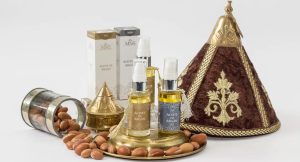
Beyond traditional culinary and cosmetic oils, argan derivatives and by-products — such as cosmetics formulations, nutraceuticals, protein-rich press cake for animal feed, or bioactive extracts — create new markets. Developing high-quality, science-backed cosmetic formulations that highlight argan’s bioactive compounds can position Moroccan producers in competitive global niches.
6.3. Digital marketing and e-commerce
Direct-to-consumer channels and storytelling that emphasize provenance, cooperative impact, and ecological stewardship can increase margins for producers. E-commerce platforms, social media marketing, and certification badges allow small cooperatives to reach international customers with lower transaction friction than traditional export routes.
7. Challenges and ethical considerations
7.1. Risk of commodification and cultural loss
Rapid commodification risks detaching argan production from its cultural context. Ensuring that commercialization respects local traditions, compensates artisans fairly, and protects intellectual and cultural heritage is an ethical imperative.
7.2. Equity and benefit sharing
Not all community members benefit equally from the argan boom. Male-dominated traders, intermediaries, or external investors may capture disproportionate profits. Transparent benefit-sharing mechanisms and policies that prioritize local ownership and reinvestment are critical to equitable development.
7.3. Quality control and fraud
As argan oil’s market value rises, instances of adulteration or mislabeling occur. Strengthening testing laboratories, standardizing quality metrics, and providing clear labeling protect consumers and reputable producers alike.
Conclusion
The argan tree — a native Moroccan treasure — is simultaneously ecological guardian, nutritional resource, cosmetic marvel, and a cornerstone of rural livelihoods. Its fruit and oil embody centuries of traditional knowledge that, when combined with modern science, sustainable governance, and inclusive commercial models, can deliver lasting benefits for health, beauty, and economic resilience. The future success of argan-dependent systems will depend on balancing market growth with conservation, ensuring equitable benefit distribution (especially empowering female producers), and investing in research and value-added innovation that keep more of the value within producing communities. With thoughtful stewardship, argan can continue to be a model for how endemic natural resources support both biodiversity and human well-being.
20 Foods That Boost Hair Health