
 By admin
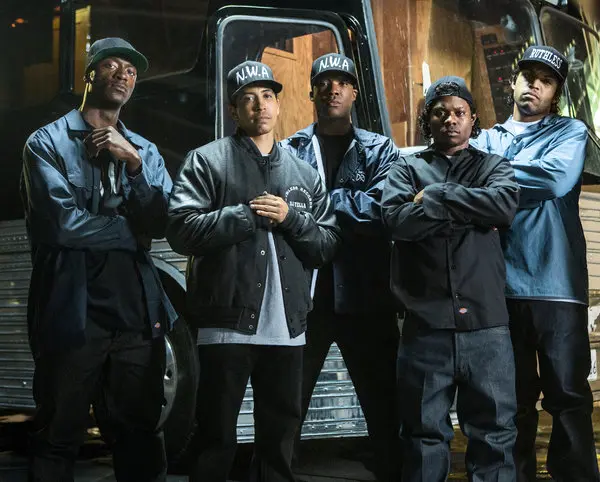
Reconstructing the Gangster: How Hip-Hop Redefined the Identity of Street Culture
Introduction: Beyond the Stereotype
Since its emergence in the late 20th century, hip-hop has functioned as both an art form and a powerful socio-political movement. It was born in the Bronx, New York City, in the 1970s—a creative explosion born out of poverty, discrimination, and cultural resilience. Over time, hip-hop diversified into many subgenres, with gangster rap becoming the most controversial and influential among them. Critics have long accused gangster rap of glorifying violence, drugs, materialism, and sexual promiscuity, framing it as a negative social force.
Yet, many hip-hop artists have consistently rejected this narrative, using their lyrics as instruments of social critique, empowerment, and identity reconstruction. Rather than glorifying vice, these artists often highlight systemic injustices and use the language of the streets to challenge dominant cultural narratives.
This article explores how hip-hop, particularly gangster rap, redefines the stereotypes imposed upon it—turning accusations of immorality and criminality into a critique of systemic inequality. Through this transformation, hip-hop reconstructs the very meaning of what it means to be a “gangster” in modern America.
1. The Birth and Misrepresentation of Gangster Rap
1.1 Defining the Subgenre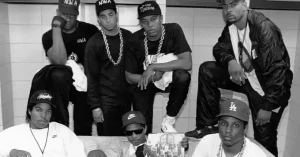
Gangster rap, sometimes called hardcore rap, is a subgenre of hip-hop that draws upon vivid portrayals of street life, crime, and resistance. According to Encyclopedia Britannica, it is often associated with four key themes: violence, drugs, materialism, and sexuality. While these elements are frequently cited as evidence of moral decay, in reality they are symbolic representations of survival and rebellion within marginalized communities.
1.2 Media Panic and Moral Outrage
The late 1980s and 1990s saw gangster rap thrust into the national spotlight. Artists such as N.W.A, Ice-T, Tupac Shakur, and The Notorious B.I.G. became icons of both admiration and controversy. Following the tragic deaths of Tupac and Biggie, mainstream media and political groups launched campaigns blaming hip-hop for promoting violence and corrupting youth.
However, as scholar Peter Slaughter (1997) observed, this media moral panic often conflated all hip-hop with gangster rap, unfairly stereotyping the entire culture as criminal. The genre became a scapegoat for deeper social issues—poverty, racial inequality, and institutional neglect.
1.3 America’s Fascination with Violence
Critics such as Angela Whaley have argued that the genre’s popularity reflects not a degeneration of Black culture, but rather America’s own fascination with sex, drugs, and violence. In this light, gangster rap merely mirrors the very society that condemns it—a nation built on spectacle and contradiction.
2. Hip-Hop as a Tool for Social Resistance
2.1 The Psychology of Group Identity
Social psychologist Henri Tajfel’s theory of social identity provides a useful framework for understanding hip-hop’s defiance. Tajfel argued that marginalized groups often face two choices: to accept an inferior status or to challenge it by redefining their group identity. Hip-hop clearly chose the latter. Through music, fashion, and performance, artists crafted an alternative social narrative—one that embraces authenticity, resilience, and self-determination.
2.2 Lyrics as Cultural Rebellion
Hip-hop lyrics function as textual acts of protest, exposing hypocrisy and reclaiming agency. The artists do not simply reflect their environment; they reinterpret it, creating what scholars now call a form of “counter-storytelling.” By reclaiming pejorative terms and flipping stereotypes, they turn linguistic weapons into tools of empowerment.
3. Reconstructing the Gangster Identity
Hip-hop’s most radical act is not its portrayal of urban life but its redefinition of the “gangster” archetype. Instead of glorifying criminal behavior, artists reinterpret it as a metaphor for survival, power, and political resistance in a hostile world.
3.1 Violence: The Mirror of a Violent Society
Hip-hop has often been accused of inciting violence, yet artists frequently use the concept of violence as a mirror reflecting systemic brutality.
In “Violence,” Tupac Shakur exposes hypocrisy by highlighting how American history itself is steeped in violence:
“Look through our history, America’s the violent one.”
Here, Tupac reframes aggression not as inherent to Black culture but as a learned behavior from a violent nation. His verses suggest that urban unrest is a response to societal oppression, not its cause.
Similarly, Eminem in “Who Knew” questions the selective moral outrage of a society that tolerates violent films and war but demonizes rap lyrics:
“So who’s bringin’ the guns in this country? I couldn’t sneak a plastic pellet gun through customs over in London.”
The point is clear: mainstream violence is normalized, while urban expression is criminalized.
Rakim, in “Casualties of War,” connects this hypocrisy to America’s foreign policy:
“President Bush said attack… flashback to Nam, I might not make it back.”
By comparing street conflict to global warfare, Rakim exposes how state-sanctioned violence often surpasses anything described in rap.
Dr. Dre, in “The Watcher,” expands the critique by turning the lens on law enforcement:
“Cops is anxious to put people in handcuffs… keep us trapped in the same place we raised in.”
For Dre, violence is not born in the streets—it is imposed by systemic oppression. In all these examples, violence becomes a symbol of resistance and survival, not glorification.
3.2 Drugs: The Economics of Survival
Drugs are another recurring theme in hip-hop, but not for the reasons critics assume. Artists often expose how drug economies arise from economic exclusion, not moral failure.
Jay-Z, in “Justify My Thug,” addresses this paradox:
“Mr. President, there’s drugs in our residence… Every other corner there’s a liquor store—what is up?”
He challenges political hypocrisy—how the same system that condemns dealers profits from liquor sales and pharmaceutical empires.
Nas, in “I Want to Talk to You,” reimagines drug dealing as a grim necessity born from inequality:
“Imagine your kids gotta sling crack to survive.”
Talib Kweli takes it further in “Manifesto,” accusing the CIA of facilitating the drug trade:
“Like the C.I.A. be bringin’ in crack cocaine… it’s all capitalism.”
These lyrics expose institutional complicity and redefine the drug narrative as a systemic issue rather than a moral one. The Geto Boys, with biting irony, declare in “Damn It Feels Good to Be a Gangster” that even political leaders act like drug lords—underscoring that corruption is not confined to the streets.
3.3 Materialism: The American Mirror
Hip-hop is often accused of materialism, yet this too is a reflection of America’s capitalist obsession. In “Respiration,” Black Star (Mos Def and Talib Kweli) depict how the poor are lured into the same consumerist dream:
“The cost of living is preposterous… stay alive, you play or die, no options.”
Here, materialism becomes a survival strategy, not a lifestyle choice.
Kanye West, in “All Falls Down,” critiques the “American Dream” itself:
“It seems we living the American dream, but the people highest up got the lowest self-esteem.”
West reveals that materialism is an inherited societal pathology—a desperate attempt to prove worth in a system that devalues people of color.
Similarly, Xzibit, in “Los Angeles Times,” argues that youth learn materialism from their surroundings:
“Sex, power, and wealth—forget everything else.”
In all these examples, rappers use materialism as a metaphor for systemic desire, exposing capitalism’s spiritual emptiness.
3.4 Sex and Society’s Obsession
Sexual content in hip-hop has long sparked criticism, but artists argue that mainstream culture itself commodifies sexuality.
In “Pussy Galore,” The Roots expose the pervasiveness of sexualized marketing:
“Promotin’ everything, from liquor to nicotine… you gotta show a little skin to get them listening.”
Their words highlight how sex is a universal marketing tool, not a hip-hop invention.
Talib Kweli, in “Get By,” connects this obsession to media imagery:
“The TV got us reachin’ for stars… some people get breast enhancements and penis enlargers.”
Kweli’s lyrics suggest that television defines desirability, shaping unrealistic standards that society blames on hip-hop.
Thus, hip-hop redefines sexual expression not as degradation but as a commentary on the sexual commodification of modern culture.
4. The Modern Legacy: Hip-Hop’s Ongoing Reconstruction
4.1 From the 1990s to the 2020s
Modern hip-hop artists like Kendrick Lamar, J. Cole, and Little Simz continue this process of identity reconstruction. Lamar’s “Alright” became a protest anthem for the Black Lives Matter movement, echoing Tupac’s resilience. J. Cole’s “Neighbors” tells the story of racial profiling, while Little Simz explores womanhood and power through introspective storytelling.
These contemporary artists prove that hip-hop’s core mission remains resistance and redefinition. It is a space where marginalized voices can rewrite their narratives and transform oppression into art.
4.2 The Cultural Reclamation of “Gangster”
Today, the term “gangster” no longer simply means criminal—it has evolved into a symbol of authenticity, independence, and defiance. The reconstruction of this term represents a cultural triumph: hip-hop has reclaimed a label used to stigmatize and turned it into a badge of survival and pride.
Conclusion: Who Are the Real Gangsters?
Through its lyrics and cultural influence, hip-hop has successfully deconstructed and reconstructed the image of the gangster. The artists’ ability to expose the hypocrisies of mainstream society—its violence, greed, addiction, and lust—has turned the mirror back on America itself.
By reinterpreting accusations of immorality as reflections of systemic injustice, hip-hop proves itself not as a cause of corruption but as a voice of truth from the margins. The question that emerges, as the article’s title suggests, remains timeless:
Who are the real gangsters—the ones who rap about violence, or the systems that perpetuate it?
Understanding the Roots of Violence