
 By admin
Introduction
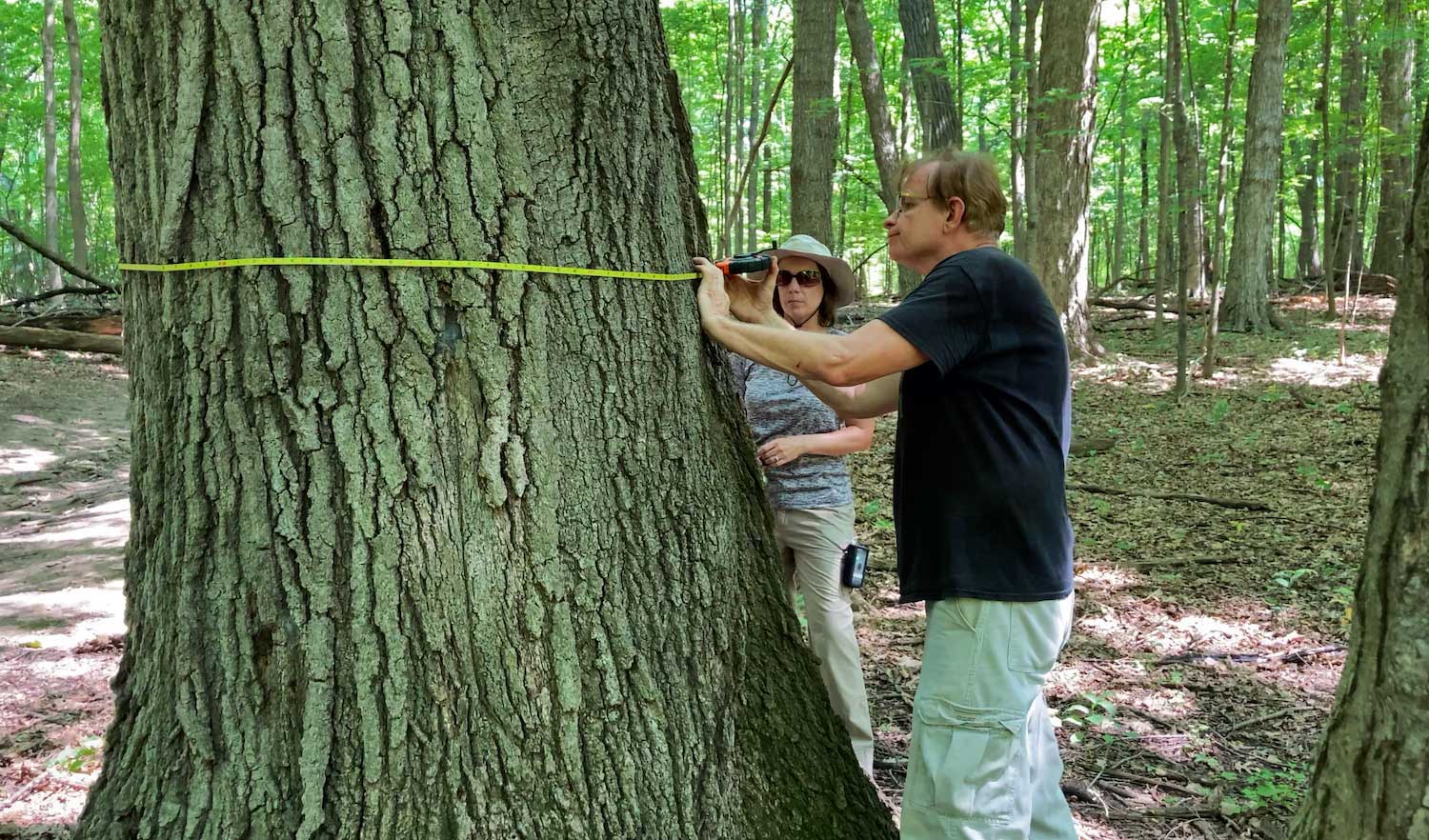
Trees are among the oldest living organisms on Earth. Some species live for hundreds, even thousands of years, quietly recording the history of their environment in the patterns of their growth. But how do scientists determine the exact age of a tree without simply guessing? More importantly, what can we learn from knowing how old a tree is? From environmental data to climate change insights, measuring tree age goes far beyond mere curiosity—it’s a window into the Earth’s ecological and climatic past.
In this article, we’ll explore the modern scientific methods used to determine tree age, delve into what we can learn from tree rings and other indicators, and examine how this knowledge benefits various scientific and ecological fields. Whether for climate research, conservation, or understanding biodiversity, aging trees plays a vital role in managing and protecting our planet.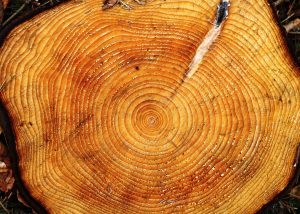
1. Methods of Determining Tree Age
1.1 Dendrochronology: The Science of Tree Rings
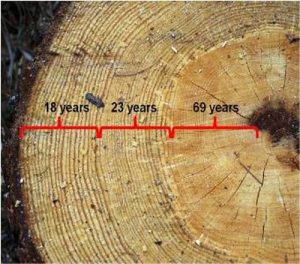
Dendrochronology is the most widely used and accurate method for determining the age of trees. Each year, a tree adds a layer of growth, forming what is known as a “growth ring.” These rings vary in size, color, and density depending on the species and growing conditions.
How It Works:
-
A special tool called an increment borer is used to extract a narrow core from the trunk.
-
The core sample reveals alternating light and dark rings—each pair representing one year of growth.
-
By counting these rings, scientists determine the tree’s age without cutting it down.
Key Advantages:
-
Non-destructive
-
Provides climate data for each year of the tree’s life
-
Can detect events like droughts, fires, or disease outbreaks
1.2 Carbon Dating (Radiocarbon Dating)
For dead trees or wood samples too ancient for ring counting, scientists use carbon-14 dating. Organic material, including wood, contains small amounts of the radioactive isotope carbon-14. As the tree ages—and especially after it dies—the isotope decays at a predictable rate.
Uses of Carbon Dating in Tree Age:
-
Useful for dating prehistoric trees or wooden artifacts
-
Provides a range rather than a precise year
-
Commonly used in archaeology and paleobotany
1.3 Counting Whorls in Conifers
In some coniferous trees, such as pines or firs, branches form in distinct circular patterns called whorls. Counting these whorls from the base upwards can help estimate age—especially in younger trees.
Limitations: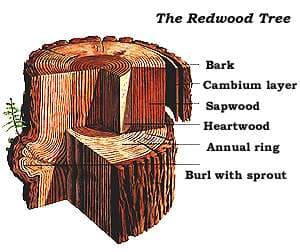
-
Only accurate in early years
-
Branch whorls may be lost or malformed over time
1.4 Estimating Age from Diameter and Species Growth Rate
When it’s not possible to access the core or count whorls, researchers can estimate tree age based on species-specific growth rates and trunk diameter. While this method is less precise, it’s useful in forests where direct sampling isn’t feasible.
2. What We Learn from Tree Age Data
Understanding how old a tree is goes far beyond satisfying scientific curiosity. Tree age data provides insights into the environment, climate history, forest health, and much more.
2.1 Reconstructing Climate History
One of the most powerful applications of tree aging is the reconstruction of past climate conditions, known as paleoclimatology.
Insights from Tree Rings:
-
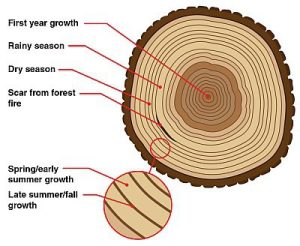
Wide rings = years of plentiful rainfall and favorable conditions
-
Narrow rings = drought or environmental stress
-
Fire scars or frost damage indicate extreme weather events
This information allows scientists to chart historical weather patterns and understand long-term climate change.
2.2 Monitoring Environmental Changes
Tree age and ring patterns can signal changes in:
-
Air quality
-
Soil pollution
-
Forest management practices
-
Ecosystem disruptions (e.g., logging, grazing)
Long-living trees act as “living archives” of environmental shifts, allowing researchers to measure the impact of industrialization and deforestation.
2.3 Forest Management and Conservation
Knowing the age distribution within a forest is vital for:
-
Planning sustainable logging practices
-
Protecting ancient or endangered tree species
-
Ensuring biodiversity balance
Forest managers use age data to determine when and how to harvest wood, replant, or allow natural regrowth.
2.4 Archaeological and Historical Research
Ancient wooden structures and artifacts can be dated using dendrochronology, offering insights into human history, migration, and settlement patterns. Tree-ring dating has been used to:
-
Date Viking ships and Native American dwellings
-
Analyze old buildings and furniture
-
Confirm timelines of historical events
3. Technological Advances in Tree Age Research
3.1 Remote Sensing and Satellite Imagery
Modern forestry incorporates remote sensing tools, such as drones and satellites, to estimate tree age and canopy health across large areas. Using multispectral and infrared imaging, scientists can map forest structure and estimate maturity.
3.2 Artificial Intelligence in Forest Analysis
Machine learning algorithms now analyze growth patterns, ring density, and forest data, making predictions faster and more accurately than manual methods.
Applications Include:
-
Age modeling for inaccessible areas
-
Predictive analytics for future forest growth
-
Automated anomaly detection (e.g., early signs of disease)
4. The Importance of Ancient Trees
Ancient trees, sometimes thousands of years old, play a unique role in ecosystems. Species like the bristlecone pine or giant sequoia are not only biological wonders but also:
-
Carbon sinks that help mitigate climate change
-
Habitats for diverse wildlife
-
Pillars of cultural and historical significance
Preserving these trees is critical for scientific research and ecological health.
5. Challenges in Tree Age Determination
Despite technological progress, aging trees isn’t always easy. Some obstacles include:
-
Hollow or decayed cores in older trees
-
Multiple trunks or irregular growth due to trauma
-
Environmental variables affecting ring clarity
In such cases, researchers combine methods or use proxy data from nearby trees to make accurate assessments.
Conclusion
Determining the age of a tree is a complex and fascinating process that involves both traditional techniques and cutting-edge technology. From the study of tree rings to radiocarbon dating and AI modeling, scientists have developed a toolkit that not only tells us how old a tree is but also reveals centuries of environmental history. Understanding tree age supports critical work in climate science, conservation, archaeology, and sustainable forest management.
As we face increasing environmental challenges, trees continue to be silent storytellers of our planet’s past. By unlocking their secrets, we gain the knowledge needed to protect the natural world and secure a sustainable future.
Inside the Brain of a Self-Driving Car