
 By admin
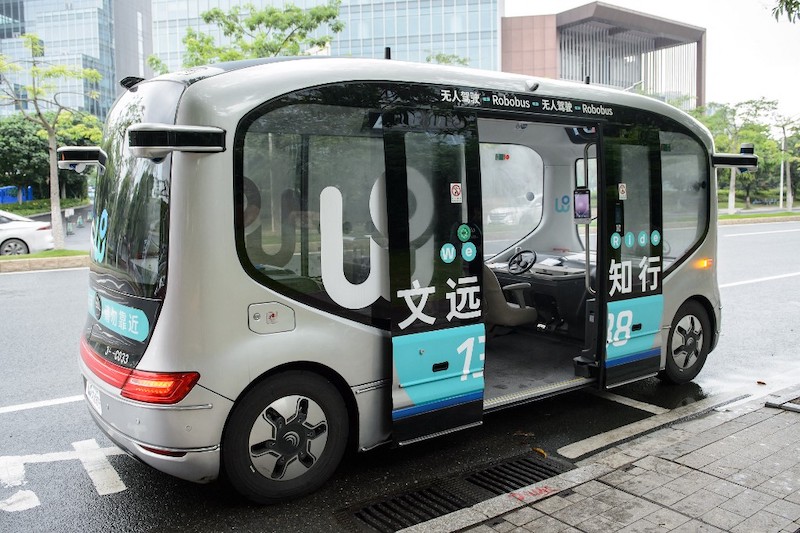
How Do Self-Driving Cars Work and Avoid Vehicles and Pedestrians?
Introduction
Self-driving cars, also known as autonomous vehicles (AVs), are transforming the transportation landscape. Once a futuristic dream, these vehicles are now being tested and used on public roads, guided not by human drivers but by sophisticated technologies that perceive the environment, make decisions, and control movement.
A key question many people ask is: How do self-driving cars actually work? More specifically, how do they detect and avoid other vehicles, pedestrians, and obstacles in real-time? The answers lie in a complex integration of sensors, artificial intelligence (AI), and machine learning algorithms.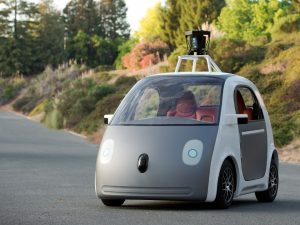
In this article, we will explore the inner workings of autonomous vehicles, focusing on their sensory systems, decision-making capabilities, and how they ensure safety by avoiding collisions. This comprehensive guide provides over 1500 words of expert insight into the rapidly evolving world of self-driving technology.
What Are Self-Driving Cars?
Definition and Levels of Autonomy
Self-driving cars are vehicles capable of sensing their environment and navigating without human input. The Society of Automotive Engineers (SAE) has defined six levels of automation:
-
Level 0: No automation – full human control.
-
Level 1: Driver assistance (e.g., adaptive cruise control).
-
Level 2: Partial automation – the vehicle can control both steering and acceleration/deceleration under certain conditions.
-
Level 3: Conditional automation – the car can manage most aspects of driving, but human intervention is still required.
-
Level 4: High automation – the vehicle can operate without human input in specific environments.
-
Level 5: Full automation – no human input required at all times.
Most self-driving cars currently being tested fall between Level 3 and Level 4, with companies like Waymo, Tesla, and Cruise leading the charge.
The Technology Behind Self-Driving Cars
Sensor Systems: The Eyes of the Vehicle
Self-driving cars rely on a combination of sensors to perceive their surroundings. These include:
1. LiDAR (Light Detection and Ranging)
LiDAR uses laser pulses to create detailed 3D maps of the environment. It helps the car measure distances with high precision, detecting obstacles, lane markings, and road features.
2. Radar (Radio Detection and Ranging)
Radar sensors emit radio waves to detect the speed and distance of nearby objects, especially useful in poor weather conditions or detecting fast-moving vehicles.
3. Cameras
Cameras provide visual data for object recognition and classification, such as reading traffic signs, recognizing traffic lights, identifying pedestrians, and monitoring road conditions.
4. Ultrasonic Sensors
Typically used for close-range detection, such as during parking, these sensors help the vehicle detect curbs, other cars, and nearby objects.
Sensor Fusion: Creating a Unified View
Each type of sensor has its strengths and limitations. By using sensor fusion, the self-driving system integrates data from LiDAR, radar, cameras, and ultrasonic sensors to create a comprehensive and reliable model of the vehicle’s environment.
How Self-Driving Cars Perceive and Interpret the Environment
Object Detection and Classification
Advanced machine learning algorithms enable AVs to identify and classify objects such as cars, bicycles, animals, and pedestrians. Using deep neural networks, these systems analyze images and sensor data to understand context, motion patterns, and the potential for collision.
Predictive Modeling
Once objects are detected, the car must predict their movement. For example, if a pedestrian is walking toward a crosswalk, the car anticipates whether the person will cross the street. Predictive models use past and present data to forecast behavior, allowing the AV to adjust speed or change lanes preemptively.
High-Definition Mapping and Localization
Self-driving cars often rely on high-definition (HD) maps that include precise road geometry, lane details, and infrastructure data. Combined with GPS and real-time sensor data, these maps help vehicles determine their exact location and navigate complex environments accurately.
Decision-Making and Path Planning
The Role of Artificial Intelligence
AI is the brain of a self-driving car. It processes sensor data, applies traffic rules, analyzes risks, and selects the optimal course of action. Key AI-driven components include:
-
Perception systems for environmental understanding.
-
Prediction modules for anticipating the behavior of other road users.
-
Planning systems that decide how to react—whether to accelerate, brake, or change direction.
Path Planning Algorithms
Path planning involves determining the safest and most efficient route from the vehicle’s current location to its destination. These algorithms take into account:
-
Road curvature and terrain.
-
Traffic laws and signals.
-
The behavior of nearby vehicles and pedestrians.
-
Sudden changes in the environment, like a cyclist swerving.
These systems must adapt in real-time, recalculating paths to avoid hazards and maintain smooth driving.
Collision Avoidance Techniques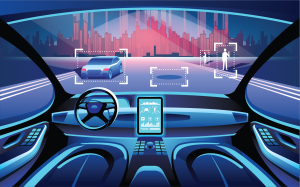
Emergency Braking Systems
When a potential collision is detected, autonomous vehicles are equipped with automatic emergency braking (AEB) systems. These activate instantly to prevent or reduce the severity of a crash.
Lane-Keeping and Obstacle Avoidance
Using a combination of sensors and mapping, AVs can stay centered in their lanes and steer around unexpected obstacles. Lane-keeping systems are especially vital on highways, while urban environments require complex obstacle-avoidance strategies.
Redundancy and Fail-Safe Protocols
To ensure maximum safety, AVs include redundant systems. For example, if one sensor fails, others can compensate. Some vehicles have backup braking and steering systems to prevent accidents in the event of software or hardware failure.
Real-World Challenges and Solutions
Weather and Environmental Conditions
Rain, snow, fog, and glare can impair sensor performance. Developers are improving sensor calibration and applying advanced AI training using simulated weather conditions to help vehicles adapt.
Unpredictable Human Behavior
One of the biggest challenges is predicting the often erratic behavior of humans. Pedestrians may jaywalk, drivers may run red lights, or cyclists may swerve. AI systems are being trained on millions of data points to improve behavioral predictions.
Infrastructure Limitations
Not all roads are designed for AVs. Inconsistent lane markings, outdated maps, and a lack of connected infrastructure can hinder performance. Partnerships between tech companies and governments are focusing on upgrading roads and integrating Vehicle-to-Infrastructure (V2I) communication.
Companies Leading the Way in Self-Driving Technology
Tesla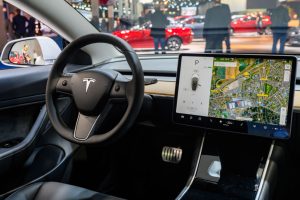
Tesla uses its Autopilot and Full Self-Driving (FSD) systems, which rely heavily on cameras and neural networks. Tesla cars collect real-world driving data to improve their algorithms over time.
Waymo
A subsidiary of Alphabet Inc., Waymo uses a combination of LiDAR, radar, and cameras. Its robotaxi service is already operational in parts of Phoenix, Arizona.
Cruise, Aurora, and Others
Cruise (backed by General Motors), Aurora, Zoox (owned by Amazon), and others are actively developing and testing autonomous vehicle platforms, focusing on urban mobility and logistics.
The Future of Self-Driving Cars
Regulatory and Ethical Considerations
Governments worldwide are developing regulations to guide the safe deployment of AVs. Issues such as liability in accidents, data privacy, and ethical decision-making (e.g., in crash scenarios) are under active discussion.
Autonomous Public Transport and Delivery
Beyond private cars, self-driving technology is being applied to public buses, shuttles, and delivery robots. These innovations promise to improve efficiency and reduce emissions in urban centers.
Integration with Smart Cities
As cities become more connected, self-driving vehicles will integrate with smart traffic lights, IoT sensors, and other digital infrastructure. This Vehicle-to-Everything (V2X) communication will lead to smoother traffic flow and reduced congestion.
Conclusion
Self-driving cars represent one of the most significant technological advancements of the 21st century. By combining powerful sensors, artificial intelligence, machine learning, and real-time data processing, these vehicles can safely navigate complex environments, detect and avoid obstacles, and revolutionize how we think about mobility.
While challenges remain—such as unpredictable human behavior and regulatory hurdles—the progress made in recent years is remarkable. As the technology matures, autonomous vehicles are poised to become a standard mode of transport, improving safety, efficiency, and accessibility for millions around the world.
Is IQ the True Measure of Human Intelligence?