
 By admin
Nestled within the rugged mountains of southern Jordan, the ancient city of Petra stands as a testament to human ingenuity and resilience. Known as the “Rose-Red City” for the vibrant hues of its sandstone cliffs, Petra is a UNESCO World Heritage Site and one of the New Seven Wonders of the World. This extraordinary archaeological site, once the thriving capital of the Nabataean kingdom, captivates visitors with its stunning architecture, intricate carvings, and rich historical significance. In this article, we delve into the fascinating history, architectural marvels, and enduring legacy of Petra, a city that continues to inspire awe and admiration.
A Glimpse into Petra’s History
Petra’s origins date back to around the 4th century BCE when it was established by the Nabataeans, a nomadic Arab tribe. Strategically located along vital trade routes connecting Arabia, Egypt, and the Levant, Petra quickly became a bustling center for commerce and culture. The Nabataeans were masterful traders, and their city flourished as a hub for spices, incense, and other luxury goods.
At its peak, Petra was home to approximately 30,000 inhabitants. The city’s prosperity allowed the Nabataeans to develop advanced water management systems, including aqueducts, reservoirs, and cisterns, enabling them to thrive in the arid desert environment. However, Petra’s prominence began to decline after the Roman annexation in 106 CE and the shift of trade routes. By the 7th century, the city was largely abandoned and lost to history until its rediscovery by Swiss explorer Johann Ludwig Burckhardt in 1812.
Architectural Marvels of Petra
One of Petra’s most remarkable features is its rock-cut architecture. The Nabataeans carved monumental structures directly into the sandstone cliffs, blending Hellenistic styles with indigenous designs. Here are some of the most iconic landmarks within Petra:
Al-Khazneh (The Treasury)
Arguably Petra’s most famous monument, Al-Khazneh is a breathtaking façade that greets visitors at the end of the Siq, a narrow gorge that serves as the city’s main entrance. Standing over 39 meters tall, the Treasury is adorned with intricate carvings of deities, mythical figures, and ornamental details. While its exact purpose remains debated, it is widely believed to have been a royal tomb or a temple.
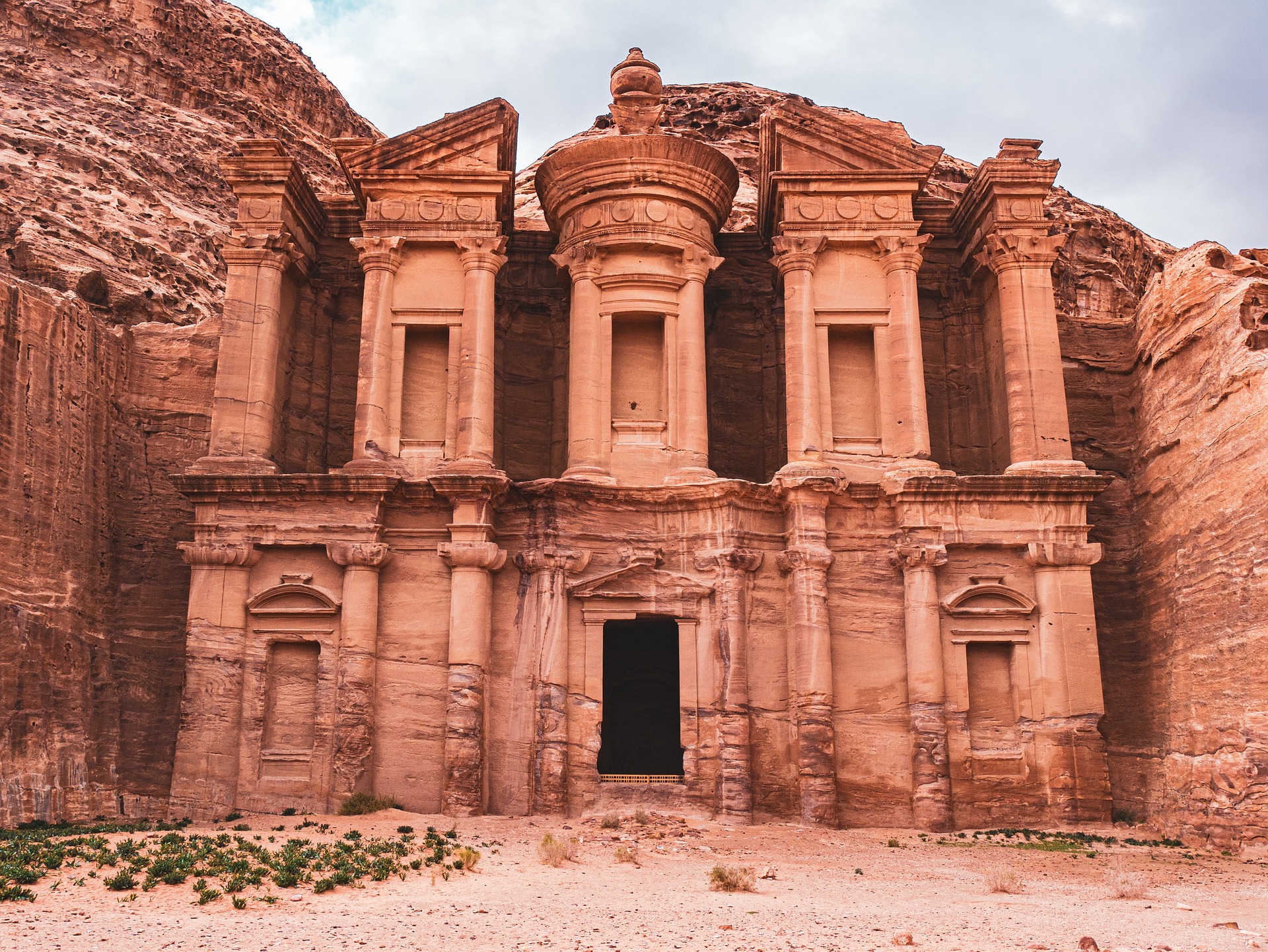
The Monastery (Ad-Deir)
The Monastery is another monumental structure that rivals the Treasury in grandeur. Located high in the mountains and accessible via a challenging hike, this colossal façade measures 47 meters wide and 48 meters tall. Its massive doorway and relatively simple interior suggest it was used for religious purposes, possibly as a Christian church during the Byzantine era.
The Royal Tombs
Petra’s Royal Tombs are a series of intricately carved mausoleums that line the cliffs overlooking the city center. These include the Urn Tomb, the Silk Tomb, the Corinthian Tomb, and the Palace Tomb. Each tomb showcases unique architectural styles and reflects the wealth and status of its occupants.
The Great Temple Complex
Spanning an area of approximately 7,560 square meters, the Great Temple Complex is one of the largest freestanding structures in Petra. Believed to have served as a political or religious center, the complex features a grand staircase, courtyards, and columns adorned with Nabataean and Greco-Roman influences.
The Siq
The Siq itself is an attraction, offering a dramatic introduction to Petra. This narrow, winding canyon stretches for about 1.2 kilometers and is flanked by towering cliffs. Along the Siq, visitors can observe ancient carvings, water channels, and niches dedicated to deities.
Cultural and Historical Significance
Petra’s cultural significance lies not only in its architectural wonders but also in its role as a melting pot of civilizations. The city’s strategic location facilitated cultural exchange between diverse peoples, including Arabs, Greeks, Romans, and Egyptians. This fusion is evident in the art, architecture, and inscriptions found throughout Petra.
Additionally, Petra’s advanced engineering systems highlight the Nabataeans’ ingenuity. Their ability to harness and store water in a harsh desert environment underscores their mastery of hydraulic technology and urban planning.
Petra Today: A Modern-Day Treasure
Today, Petra is a major tourist destination, attracting hundreds of thousands of visitors annually. The site’s inclusion in the UNESCO World Heritage list in 1985 and its designation as one of the New Seven Wonders of the World in 2007 have solidified its status as a global icon.
Tourists can explore Petra on foot, by horseback, or via camel rides, immersing themselves in its timeless beauty. Highlights of a visit include witnessing the Treasury illuminated by candlelight during the Petra by Night experience, hiking to the Monastery for panoramic views, and discovering hidden treasures such as the High Place of Sacrifice and Little Petra.
Challenges and Preservation Efforts
Despite its enduring allure, Petra faces significant challenges. Natural erosion, flash floods, and human activity threaten the integrity of its monuments. Increased tourism has also raised concerns about wear and tear on the fragile sandstone structures.
Efforts to preserve Petra include initiatives by the Jordanian government and international organizations. Conservation projects focus on stabilizing structures, managing visitor impact, and promoting sustainable tourism practices. Education and community involvement play vital roles in safeguarding Petra’s legacy for future generations.
Conclusion
Petra is more than an archaeological site; it is a symbol of cultural heritage and human achievement. Its breathtaking architecture, rich history, and enduring mystique make it a treasure of global significance. As visitors marvel at the Rose-Red City’s wonders, they are reminded of the resilience and creativity of the Nabataeans, whose legacy continues to inspire awe and admiration.
Whether you are an avid historian, an architecture enthusiast, or a curious traveler, Petra offers an unforgettable journey through time. Its unique blend of natural beauty and human ingenuity ensures that it remains one of the most iconic and cherished landmarks in the world.
Norway : Society and Quality of Life