
 By admin
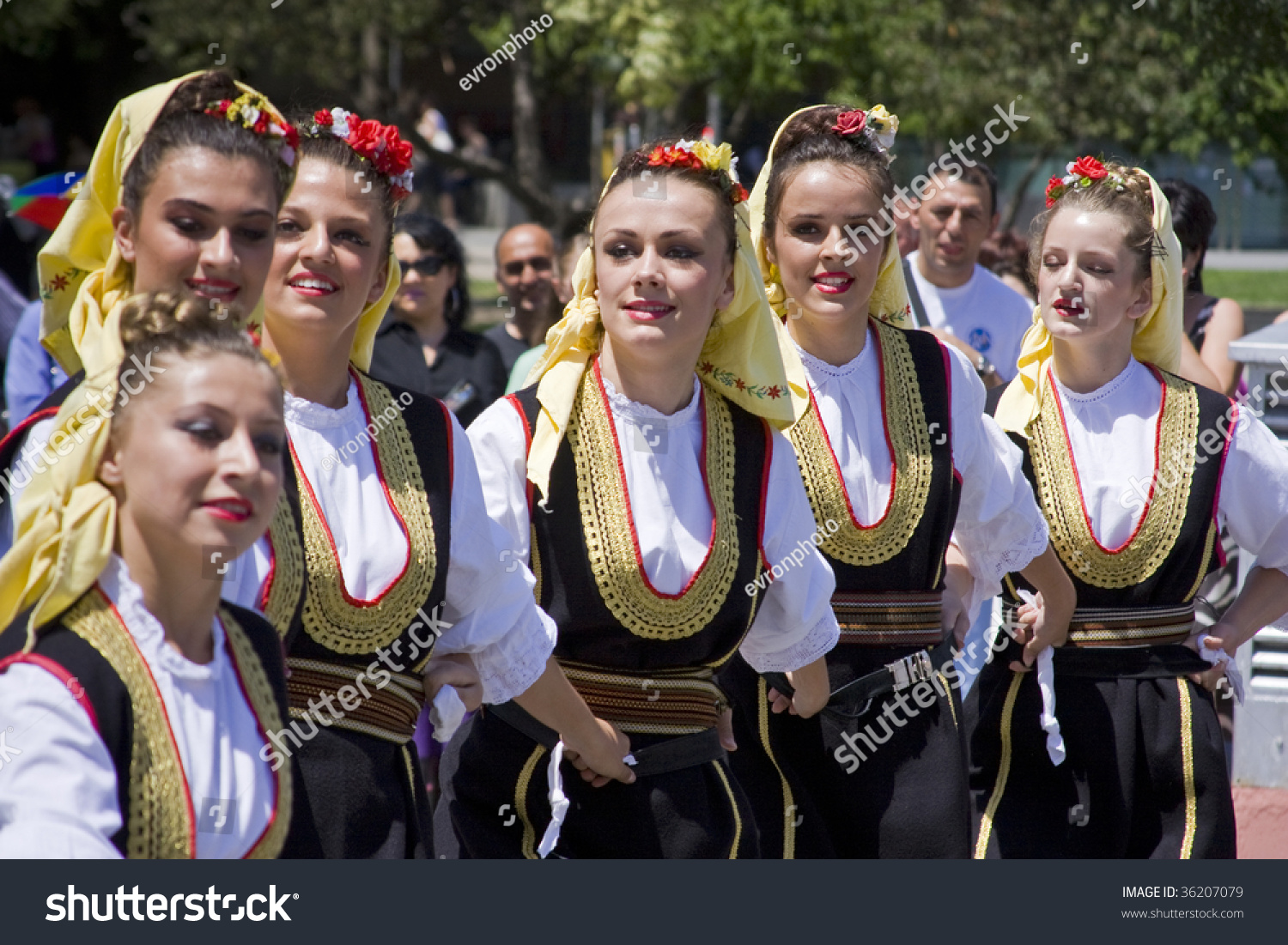
The People of Bosnia: Identity, History, Culture, and Modern Life
Bosnia and Herzegovina is one of Europe’s most culturally layered societies. Located in the western Balkans, it sits between Croatia, Serbia, and Montenegro, with a small coastline on the Adriatic Sea. Its historical regions, Bosnia in the north and center and Herzegovina in the south and southwest, have been shaped by medieval kingdoms, Ottoman rule, Austro-Hungarian administration, Yugoslav socialism, war, migration, and postwar reconstruction. This history has produced a people whose identity cannot be reduced to one ethnicity, one religion, or one political memory. Bosnia and Herzegovina is home mainly to three historically rooted communities: Bosniaks, Serbs, and Croats, with Roma, Jews, and other minorities also forming part of the country’s social fabric. Britannica describes the country as having a “rich ethnic and religious mix,” with Islam, Orthodox Christianity, and Roman Catholicism broadly corresponding to Bosniaks, Serbs, and Croats respectively. (Encyclopedia Britannica)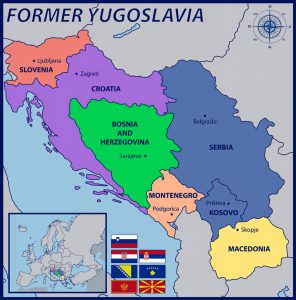
To speak professionally about the “people of Bosnia,” it is important to begin with terminology. “Bosnian” usually refers to someone from Bosnia and Herzegovina as a country or cultural space. “Bosniak,” however, refers specifically to a South Slavic ethnic group, historically associated mostly with Islam and the Bosnian language. A Bosnian may therefore be Bosniak, Serb, Croat, Roma, Jewish, or from another background. This distinction matters because Bosnia and Herzegovina’s social life is built around both shared everyday culture and deeply felt group identities. Minority Rights Group notes that Bosnia and Herzegovina is officially made up of three “constituent peoples”: Bosniaks, Croats, and Serbs, alongside smaller minority groups. (Minority Rights Group)
The geography of Bosnia and Herzegovina has strongly influenced its people. Mountains, river valleys, highland villages, forested areas, Ottoman-era towns, Austro-Hungarian urban centers, and modern industrial districts all coexist in a relatively small territory. Sarajevo, the capital, is often described as a symbolic meeting point of East and West because mosques, churches, synagogues, Ottoman bazaars, Austro-Hungarian buildings, socialist apartment blocks, and modern cafés stand near one another. Mostar, Banja Luka, Tuzla, Zenica, Bihać, and Trebinje each represent different regional experiences. Britannica identifies Sarajevo as the capital and Mostar and Banja Luka as important regional cities. (Encyclopedia Britannica)
Historically, the people of Bosnia developed at the crossroads of empires. The medieval Bosnian state emerged in the Balkans before Ottoman expansion transformed the region’s political, religious, and cultural landscape. Under Ottoman rule, Islam became an important part of Bosnian society, especially among Bosniaks, while Orthodox and Catholic Christian communities remained central to the identity of Serbs and Croats. Later, Austro-Hungarian administration introduced new legal, educational, architectural, and bureaucratic systems. These successive layers did not erase earlier traditions; instead, they produced a society in which architecture, language, music, cuisine, and family customs reveal several historical influences at once.
The Bosnian people’s identity is also connected to language. Bosnian, Serbian, and Croatian are mutually intelligible South Slavic standard languages. In daily life, people across Bosnia and Herzegovina often understand one another easily, even when they identify their language differently. Language choice can be a cultural and political marker, but ordinary communication frequently crosses these boundaries. This is one of the paradoxes of Bosnia: people may be divided by official categories yet connected by shared speech, humor, food, music, and local ways of life.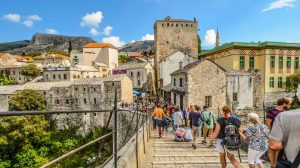
Religion has played a major role in shaping community identity, but Bosnian society is not defined only by religious practice. Islam, Orthodox Christianity, Catholicism, Judaism, and secular traditions are all part of the country’s heritage. For many families, religion is expressed through holidays, names, food, family rituals, and community memory as much as through formal worship. In cities, people from different backgrounds have often shared neighborhoods, workplaces, schools, and friendships. In rural areas, villages may be more closely associated with one ethnic or religious community. The relationship between faith and identity is therefore complex: it is personal, communal, historical, and political at the same time.
The modern demographic picture of Bosnia and Herzegovina reflects both continuity and disruption. The 2013 census was the first census after the 1992–1995 Bosnian war, and the Council of Europe’s International Monitoring Operation concluded that the census was generally valid and useful for economic and social policy planning, while also noting the sensitivity of questions about ethnicity, religion, and mother tongue. (Portal) According to World Bank data, Bosnia and Herzegovina’s population was 3,164,253 in 2024, with negative annual population growth of -0.7 percent that year and net migration of -6,994 in 2025. (World Bank Open Data) These figures show that emigration and demographic decline remain major challenges for the country.
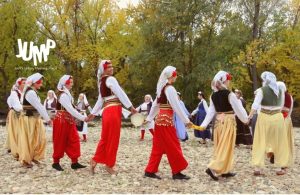
The Bosniaks are the largest ethnic group in Bosnia and Herzegovina. Their identity is rooted in the Bosnian historical region, the Bosnian language, Islamic cultural heritage, and the experience of living between larger regional national projects. Bosniak culture includes Ottoman-influenced urban traditions, Islamic holidays, sevdalinka music, coffee culture, poetry, cuisine, and strong family networks. However, Bosniak identity should not be treated as purely religious. Many Bosniaks are secular or culturally Muslim rather than strictly observant, and their identity may be shaped by language, family history, homeland, and collective memory as much as by faith.
Bosnian Serbs form another major constituent people. They are generally associated with Orthodox Christianity, Serbian cultural heritage, and the Serbian language. Many live in Republika Srpska, one of Bosnia and Herzegovina’s two main political entities created under the Dayton constitutional framework, though Serbs have also historically lived in many parts of Bosnia and Herzegovina. Their cultural life includes Orthodox holidays, epic poetry traditions, family patron-saint celebrations known as slava, regional cuisine, music, and strong ties to Serbian cultural institutions. Like other groups in Bosnia, Bosnian Serbs are diverse in political opinion, religious practice, urban-rural experience, and personal identity.
Bosnian Croats are historically associated with Catholic Christianity, Croatian language and culture, and regions such as Herzegovina and parts of central Bosnia. Their traditions include Catholic holidays, family and village festivals, church-centered community life, and cultural links with Croatia. Bosnian Croats have contributed to Bosnia and Herzegovina’s literature, music, education, business, and political life. As with Bosniaks and Serbs, it would be inaccurate to present Bosnian Croats as a single uniform community. Urban Croats in Sarajevo, Croats in Mostar, and Croats in smaller towns or rural areas may experience identity in different ways.
The Roma are among the most important minority communities in Bosnia and Herzegovina. Minority Rights Group states that Roma face the greatest discrimination in the country and that their number is often estimated at 30,000–50,000 or more, with official census figures criticized for undercounting them. (Minority Rights Group) Roma communities contribute to the country’s music, crafts, labor, and local cultural life, but they continue to face obstacles in housing, education, employment, documentation, and social inclusion. A professional article on Bosnia’s people must therefore include minorities, not only the three major constituent peoples.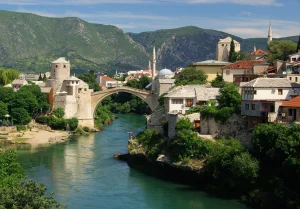
Jewish life is also part of Bosnia’s historical identity. Sarajevo was historically home to Sephardic Jews, many of whom arrived after expulsions from Iberia. One of the most famous symbols of this heritage is the Sarajevo Haggadah, a medieval Hebrew illuminated manuscript. UNESCO describes it as one of the most famous and beautiful Hebrew illuminated manuscripts from the Middle Ages and notes that it was registered in the Memory of the World programme in 2017. (UNESCO) Its survival and preservation are often seen as evidence of Bosnia’s wider multicultural memory.
Daily life among the people of Bosnia is often marked by hospitality. Visitors frequently notice the importance of coffee, conversation, family gatherings, neighborhood relations, and food. Bosnian coffee is not merely a drink; it is a social ritual. Sitting with coffee may mean discussing family news, politics, business, memories, or ordinary daily events. The pace of conversation can be slow, expressive, and personal. Hospitality is especially visible when guests are offered food even during brief visits. In many homes, the boundary between family, neighbors, and close friends remains warm and flexible.
Food is one of the clearest expressions of Bosnian culture. Well-known dishes include ćevapi, burek and other pita varieties, dolma, sarma, begova čorba, sogan-dolma, baklava, tufahija, and many regional specialties. Ottoman influence is visible in stuffed vegetables, pastries, sweets, coffee rituals, and slow-cooked dishes, while Central European influence appears in cakes, breads, stews, and urban restaurant culture. Food traditions cross ethnic lines, although certain dishes may be associated with particular religious holidays or family customs. In this sense, Bosnian cuisine is both shared and differentiated.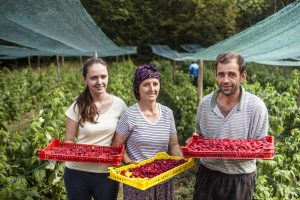
Music offers another window into the Bosnian soul. Sevdalinka, often called sevdah, is a traditional urban folk song known for emotional depth, poetic language, and themes of love, longing, memory, and beauty. UNESCO describes sevdalinka as a traditional urban form of singing practiced in Bosnia and Herzegovina that emerged through a long process of acculturation. (UNESCO Intangible Cultural Heritage) The genre reflects Bosnia’s layered history: South Slavic oral poetry, Ottoman musical influence, urban life, and intimate emotional expression. Modern artists continue to preserve and reinterpret sevdalinka for new audiences.
Architecture also reveals the story of Bosnia’s people. The Old Bridge Area of Mostar is one of the country’s most powerful cultural symbols. UNESCO describes Mostar as a historic town that developed in the 15th and 16th centuries as an Ottoman frontier town and later during the Austro-Hungarian period. UNESCO also states that the reconstructed Old Bridge and Old City of Mostar symbolize reconciliation, international cooperation, and the coexistence of diverse cultural, ethnic, and religious communities. (UNESCO World Heritage Centre) For the people of Bosnia, such monuments are not only tourist attractions; they are symbols of memory, loss, recovery, and shared heritage.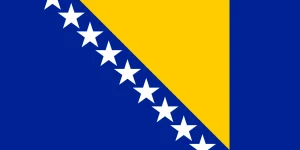
The Bosnian character is often described through resilience. This word is sometimes overused, but in Bosnia it has concrete meaning. Families have lived through political changes, economic hardship, migration, and the consequences of conflict. Many people rebuilt homes, restarted businesses, continued education, and preserved family traditions under difficult circumstances. Yet resilience should not be romanticized. It often comes with fatigue, disappointment, and the desire for better institutions, stronger economic opportunity, and a more stable future.
The 1992–1995 war remains one of the most difficult chapters in Bosnia and Herzegovina’s modern history. A professional article must treat it carefully, without reducing Bosnian people to victims or to political categories. The war changed settlement patterns, family histories, property ownership, schools, politics, and intercommunity trust. It also created a large diaspora. Many Bosnians now live in Germany, Austria, Sweden, Switzerland, the United States, Canada, Australia, Turkey, and other countries. Diaspora communities often maintain strong emotional and financial connections with Bosnia through remittances, summer visits, property, language, food, music, and family networks.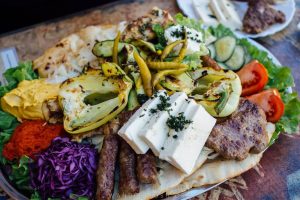
Postwar Bosnia and Herzegovina has a complex political system. The Dayton Peace Agreement ended the war and created a state structure that includes the Federation of Bosnia and Herzegovina, Republika Srpska, and the Brčko District. Britannica notes that the country’s historical regions do not correspond exactly with the two autonomous political entities established under the Dayton framework. (Encyclopedia Britannica) This political structure was designed to stop conflict and balance group representation, but it has also made governance complicated. The people of Bosnia often experience politics as something both essential and exhausting.
One of the country’s major civic challenges is the relationship between collective rights and individual citizenship. Human Rights Watch explains that Bosnia and Herzegovina’s constitution privileges Bosniaks, Croats, and Serbs as constituent peoples while classifying 17 national minorities, including Jews and Roma, as “others,” limiting their ability to run for certain high offices. (Human Rights Watch) This creates a contradiction: Bosnia is socially diverse, but its political system does not offer equal symbolic status to all citizens. The issue is not merely legal; it affects how people imagine belonging.
Education is another area where identity is negotiated. Schools may follow different curricula depending on entity, canton, language, and local politics. Young people may learn different historical narratives, even while sharing similar daily realities and popular culture. At the same time, Bosnian youth are connected through social media, music, sport, universities, cafés, and migration aspirations. Many young people are less interested in old ideological divisions than in employment, travel, housing, professional development, and dignity. However, they still inherit institutions shaped by the past.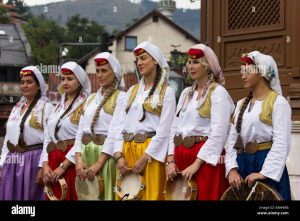
The economy influences how people see their future. World Bank data reports that Bosnia and Herzegovina had GDP per capita of $9,358.8 in 2024, GDP growth of 3.0 percent in 2024, and unemployment estimated at 11.0 percent in 2025. (World Bank Open Data) These indicators show a country that is not without economic activity but still faces serious structural challenges. Many families depend on public-sector employment, small business, seasonal work, remittances, or migration. The desire to leave for better wages is widespread, especially among young professionals.
Technology and globalization are changing Bosnian society. World Bank data shows that 86 percent of the population used the internet in 2024. (World Bank Open Data) This digital connectivity affects language, work, education, entertainment, and identity. Young Bosnians follow global trends, work remotely, study abroad, sell online, create music and video content, and participate in international conversations. At the same time, local identity remains strong. A young person may listen to global music, speak English online, use regional slang, celebrate family holidays, and remain deeply attached to a hometown or village.
Sports are also important in Bosnian identity. Football, basketball, handball, winter sports, and martial arts have passionate audiences. Sporting success often creates moments of collective pride across divisions. Athletes from Bosnia and Herzegovina and the wider Bosnian diaspora can become symbols of talent, discipline, and international visibility. Sport provides a language of belonging that is sometimes less politically charged than formal identity debates.
Gender roles in Bosnian society are changing but remain influenced by tradition. Families often place strong expectations on women as caretakers, mothers, professionals, and emotional anchors of the household. Many Bosnian women are highly educated, active in business, academia, medicine, civil society, arts, and politics. At the same time, patriarchal attitudes can remain present, especially in expectations around marriage, domestic work, and public leadership. Understanding the people of Bosnia requires recognizing both traditional family structures and the growing role of women in shaping modern society.
Rural and urban Bosnia can feel like different worlds, yet they remain connected. Villages preserve agricultural practices, family land, seasonal rhythms, and close community relations. Cities offer universities, hospitals, government institutions, cultural events, and professional networks. Many families maintain ties to both: an apartment in the city and a family house or land in the countryside. Summer visits, village celebrations, and cemetery visits often reinforce these connections. This rural-urban link is a major part of Bosnian social identity.
The Bosnian sense of humor deserves special attention. It is often ironic, sharp, self-critical, and emotionally intelligent. Humor helps people discuss hardship without becoming overwhelmed by it. Jokes about bureaucracy, politics, neighbors, family expectations, and daily frustrations are common. This humor is not simply entertainment; it is a survival mechanism and a form of social commentary. It allows people to express disappointment while preserving dignity.
Memory is central to Bosnian identity. Families remember previous generations, lost homes, migrations, weddings, harvests, school days, military service, religious celebrations, and political changes. Public memory is visible in monuments, museums, cemeteries, restored buildings, street names, and commemorations. Private memory is carried through stories told at home. Sometimes these memories connect communities; sometimes they separate them. The challenge for Bosnia’s future is not to erase memory but to build a civic culture that can hold different memories without permanent hostility.
The arts remain a powerful field of expression. Bosnian literature, film, theater, music, and visual art often explore identity, absurdity, love, exile, humor, bureaucracy, trauma, and hope. Sarajevo’s cultural life, including film and theater traditions, has helped the country maintain international cultural visibility. Artists often act as interpreters of Bosnian complexity, showing the world that the country is more than its political difficulties.
The people of Bosnia are also shaped by migration. Many Bosnians abroad preserve language and traditions while adapting to new societies. Diaspora identity can be complex: children born in Sweden, Germany,
Austria, or the United States may feel Bosnian through family, food, music, summer visits, and emotional inheritance, even if their everyday life is shaped by another country. The diaspora often becomes a bridge between Bosnia and the world, bringing investment, ideas, education, and cultural exchange.
Despite political problems, Bosnia and Herzegovina remains a place of remarkable social depth. Its people carry multiple identities at once: local, regional, ethnic, religious, civic, European, Balkan, and diasporic. A person may identify as Bosniak from Sarajevo, Serb from Banja Luka, Croat from Herzegovina, Roma from Tuzla, Jewish from Sarajevo, or simply Bosnian. These identities are not always in conflict. In everyday life, people often navigate them with more flexibility than political systems suggest.
Professionally speaking, the people of Bosnia should not be described through clichés alone. They are not only “divided,” “traditional,” or “war-shaped.” They are also entrepreneurs, teachers, engineers, artists, farmers, doctors, students, athletes, parents, migrants, returnees, and innovators. Their society contains pain, beauty, humor, faith, skepticism, warmth, frustration, and ambition. Bosnia’s people are best understood as a historically layered society trying to transform inherited complexity into a livable future.
Conclusion
The people of Bosnia and Herzegovina represent one of Europe’s most complex cultural communities. Their identity is formed by geography, language, religion, empire, memory, conflict, coexistence, migration, and creativity. Bosniaks, Serbs, Croats, Roma, Jews, and other communities have all contributed to the country’s social fabric. While political structures often emphasize division, everyday Bosnian life also reveals shared habits, humor, food, music, hospitality, and attachment to place. The future of Bosnia depends on whether its people can protect their rich cultural inheritance while building institutions that treat every citizen with equal dignity. To understand the people of Bosnia is therefore to understand a society where difference and closeness exist side by side, and where history remains alive in both public monuments and ordinary conversations.
Last-Minute Air Travel Made Easy