
 By admin
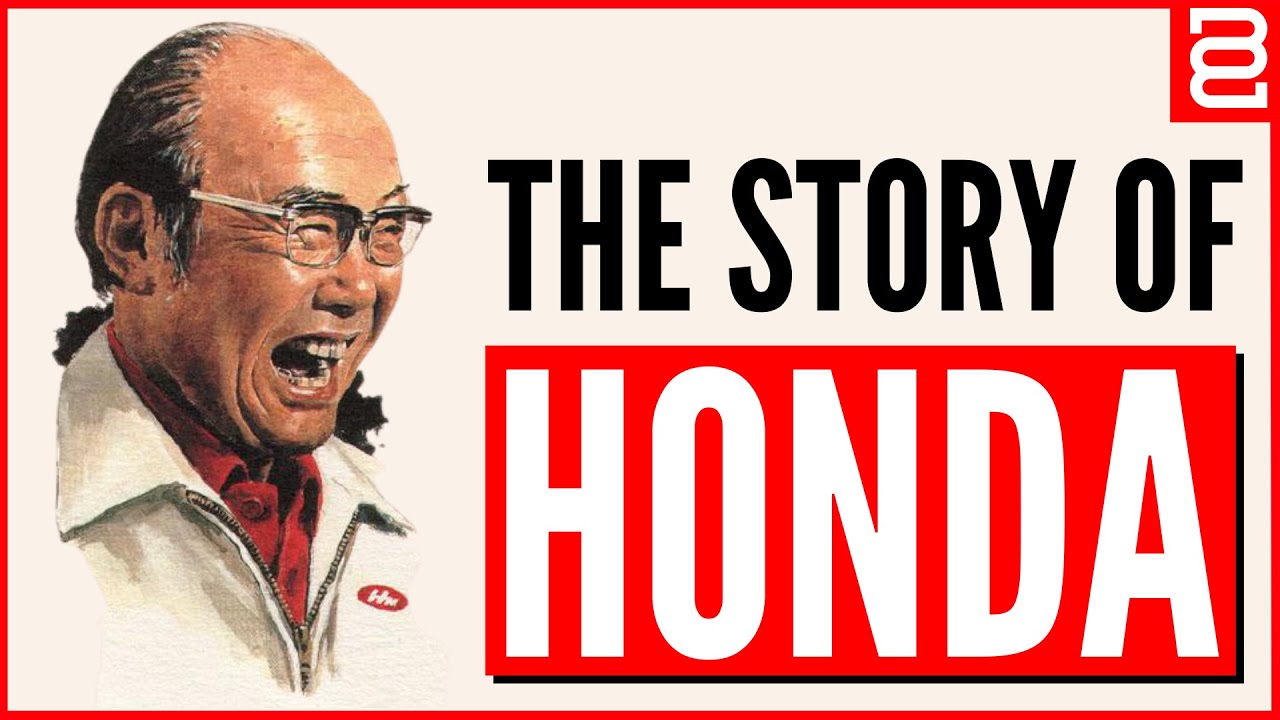
From Poverty to Power: The Inspiring Story of Soichiro Honda and the Rise of the Honda Motor Company
Introduction
In the realm of global automotive giants, Honda stands tall as one of the most influential and innovative companies. Behind its rise is a remarkable story of resilience, vision, and relentless determination—embodied by its founder, Soichiro Honda. Born into poverty in rural Japan, Honda’s journey from a humble bicycle mechanic to the creator of a multi-billion-dollar international corporation is a testament to what human willpower, ingenuity, and hard work can achieve.
This article dives deep into the incredible life of Soichiro Honda, tracing his path from modest beginnings to becoming a global icon of industrial success. We’ll explore the challenges he faced, the values he upheld, and the strategies that transformed his company into a world leader in automobiles and motorcycles.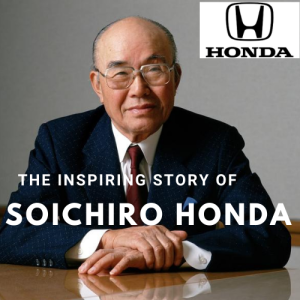
The Humble Beginnings of Soichiro Honda
A Childhood Marked by Struggles
Soichiro Honda was born on November 17, 1906, in the small village of Komyo, located in Japan’s Shizuoka Prefecture. His father was a blacksmith who also repaired bicycles, and young Honda grew up surrounded by tools, metal, and the sounds of hammering. Despite the family’s poverty, Soichiro developed a deep interest in mechanics and machinery from a young age.
His formal education was limited, and he often skipped school to tinker with mechanical parts or watch the earliest automobiles passing through his village. But this unconventional education would lay the foundation for a mind attuned to engineering marvels and practical problem-solving.
Early Fascination with Machines
At the age of 15, Soichiro left home for Tokyo, where he secured a position as an apprentice at a car repair shop called Art Shokai. This move was a turning point in his life. Under the mentorship of his employer, he immersed himself in the world of engines, gaining hands-on experience in building and repairing cars. Honda spent six years perfecting his mechanical skills, demonstrating a work ethic that would later define his corporate culture.
The Road to Innovation: From Repairman to Inventor
Founding Tokai Seiki: Honda’s First Venture
After returning to his hometown in 1928, Honda opened his own auto repair business. But his ambitions stretched far beyond fixing vehicles. In 1937, he founded Tokai Seiki, a company specializing in piston rings. Although his early attempts to manufacture piston rings were met with failure due to lack of technical knowledge, Honda didn’t give up. He enrolled in technical courses and collaborated with engineers to refine his designs.
Eventually, his company began supplying piston rings to Toyota, marking his first breakthrough into Japan’s burgeoning automotive industry.
World War II and Unforeseen Setbacks
During World War II, Tokai Seiki’s facilities were bombed, and shortly afterward, an earthquake destroyed the remaining buildings. Financially and emotionally drained, Honda sold the remnants of the company to Toyota. Many would have given up after such devastating losses—but for Soichiro Honda, it was merely the beginning of a new chapter.
The Birth of Honda Motor Company
A Vision to Mobilize Post-War Japan
In 1946, with post-war Japan struggling with a shattered economy and limited transportation, Honda saw a unique opportunity. Using leftover generator engines from the war, he began attaching them to bicycles to create motorized bikes. This product, known as the “Honda A-Type” or “Bata-Bata”, quickly gained popularity for its affordability and practicality.
By 1948, he officially founded the Honda Motor Company with Takeo Fujisawa as his business partner. While Honda focused on engineering and innovation, Fujisawa brought business acumen and strategic insight, creating a powerful leadership duo that would shape the company’s future.
The Super Cub: A Motorcycle Revolution
In 1958, Honda launched the Honda Super Cub, a small, lightweight motorcycle that became one of the most successful and best-selling vehicles of all time. Its low cost, fuel efficiency, and ease of use made it immensely popular not only in Japan but across the globe.
This marked Honda’s entry into the global market. By the 1960s, Honda had become the largest motorcycle manufacturer in the world, exporting millions of units worldwide and reshaping the way people thought about mobility.
Expanding Horizons: Automobiles and Global Presence
Entering the Automobile Market
Not content with dominating the motorcycle industry, Soichiro Honda set his sights on the automotive sector. In 1963, Honda released its first car, the T360 mini truck, followed by the S500 sports car. While initial reactions were modest, the company’s commitment to innovation began to shine.
Honda’s focus on fuel efficiency, affordability, and reliable performance resonated with consumers worldwide. By the 1970s, amid the global oil crisis, Honda released the Civic, a compact car that offered exceptional fuel economy and emissions performance—perfectly timed for environmentally conscious markets.
Engineering Excellence: The CVCC Engine
One of Honda’s most groundbreaking contributions to automotive technology came with the CVCC engine (Compound Vortex Controlled Combustion) in 1975. This engine allowed Honda to meet U.S. emissions regulations without using a catalytic converter—an engineering marvel that positioned the company as a leader in eco-friendly technology.
Values That Shaped Honda’s Global Empire
Innovation at the Core
Soichiro Honda believed in experimentation and continuous improvement. He famously said, “Success represents the 1% of your work which results from the 99% that is called failure.” This mindset fueled the company’s culture of innovation and risk-taking.
From robotics to racing, Honda ventured into diverse fields, always with the goal of pushing technological boundaries. The creation of ASIMO, a humanoid robot, and Honda’s participation in Formula 1 racing both reflect this relentless pursuit of innovation.
People-Centric Philosophy
Unlike many industrialists, Honda prioritized the well-being and growth of his employees. He encouraged open communication and innovation at every level of the organization. This culture made Honda a company where ideas could come from anyone, not just the top executives.
Legacy of Soichiro Honda
Retirement and Reflection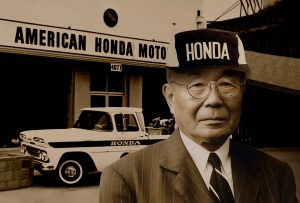
Soichiro Honda retired from Honda Motor Company in 1973 but remained involved in the company’s research and development. He received numerous accolades throughout his life, including the Order of the Rising Sun, one of Japan’s highest honors.
Honda passed away in 1991, but his legacy endures. Today, Honda is a global powerhouse, producing cars, motorcycles, aircraft, and even energy solutions. Its name is synonymous with reliability, efficiency, and forward-thinking innovation.
Conclusion
Soichiro Honda’s journey is more than a business success story—it’s a story of human perseverance, vision, and the power of innovation to overcome adversity. From a poor village boy to the founder of a global empire, Honda showed the world that limitations can be transcended through courage, creativity, and an unwavering belief in one’s dreams.
Honda Motor Company stands today not only as a manufacturer of machines but as a symbol of what’s possible when a person dares to dream big and act boldly. In an age where many are looking for inspiration, Soichiro Honda’s life remains a beacon of what’s achievable when passion meets purpose.
The Timeless Charm of Acoustic Guitars