
 By admin

BIC: The Pen That Changed the World of Education
Introduction
Few products have had as profound and lasting an impact on global education as the simple ballpoint pen. At the center of this revolution stands BIC, a company that redefined affordability, accessibility, and innovation in the world of writing instruments. Since its inception, BIC has enabled millions of students across the globe to access reliable writing tools, empowering generations with education and literacy. This article explores how BIC began, its breakthrough with the BIC Cristal pen, and how it transformed the educational landscape worldwide.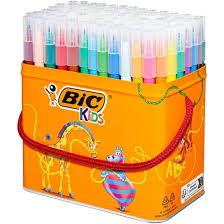
The Origins of BIC: A French Vision with a Global Reach
The Birth of Société Bic
The story of BIC starts in 1945, just after World War II, when Baron Marcel Bich and his partner Édouard Buffard purchased a factory in Clichy, France. Their goal was to manufacture writing instruments that were both affordable and high-quality. By 1949, Bich had acquired the patent for the ballpoint pen from Hungarian-Argentinian inventor László Bíró, whose rudimentary design had yet to reach mass-market potential.
Launch of the BIC Cristal Pen
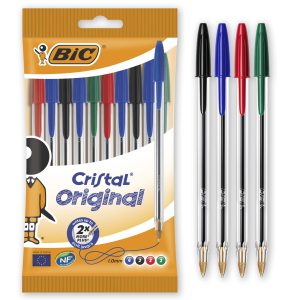
In 1950, the company launched the BIC Cristal ballpoint pen — a revolutionary product that combined sleek design, reliability, and cost-efficiency. The pen’s transparent barrel, hexagonal shape (for better grip), and tungsten carbide ball tip set a new standard in pen manufacturing. Most importantly, it was built for mass production, making it accessible to students, teachers, and professionals alike.
BIC and the Democratization of Education
Accessibility for All
Before BIC, fountain pens and ink wells were the norm in classrooms, which were expensive, messy, and difficult for young students to manage. The BIC Cristal offered an affordable, mess-free alternative. This simple innovation helped schools lower costs and equipped more children with the tools they needed to learn.
Worldwide Expansion into Schools
By the late 1950s, BIC had expanded to Italy, Brazil, and the United States, bringing its signature product to new markets. Schools embraced the pen as a standard issue for students, particularly in developing countries where access to writing instruments had been limited.
Supporting Literacy and Education
BIC’s wide distribution and affordability supported literacy programs worldwide. NGOs and governments began purchasing BIC pens in bulk for educational initiatives, boosting enrollment and performance in schools where resources were scarce. For millions of children, the first step toward literacy began with a BIC pen.
Innovations in Pen Technology and Education
Manufacturing Advancements
BIC revolutionized pen manufacturing with high-precision machinery that could produce thousands of pens daily at minimal cost. This made BIC pens not only accessible but consistent in quality — a crucial factor for schools relying on dependable supplies.
Customization for Student Use
Over the decades, BIC introduced a variety of pen models tailored for different educational needs: from color-coded pens for organizing notes, to ergonomic designs for young children learning to write. Their innovation extended to whiteboard markers, highlighters, and mechanical pencils — further integrating BIC into classrooms.
Environmental Awareness
Recognizing its global footprint, BIC has taken significant steps toward sustainability. Their “Writing the Future, Together” initiative includes eco-design strategies to reduce plastic waste and increase the use of recycled materials. In 2023, BIC announced a line of eco-friendly pens made from 85% recycled materials, responding to environmental concerns of modern educational institutions.
Global Impact and Cultural Relevance
A Cultural Icon
The BIC Cristal is more than a pen — it’s a cultural symbol. It’s been featured in museums like the Museum of Modern Art (MoMA) in New York, celebrated for its minimalist industrial design. It has appeared in films, literature, and advertising as a symbol of simplicity, reliability, and accessibility.
Empowering Generations of Learners
With over 100 billion pens sold globally, BIC has played a role in nearly every educational system on the planet. Whether in a rural school in Sub-Saharan Africa or an elite university in Europe, chances are BIC pens have been part of the learning journey. This universality gives BIC a unique cultural significance in education.
Challenges and Adaptation in the Digital Age
Competing with Digital Tools
As digital learning tools become more common, especially in high-income countries, traditional writing instruments face competition from tablets, laptops, and styluses. BIC has responded by diversifying its portfolio to include digital stylus pens and smart notebooks, bridging the gap between analog and digital learning.
Staying Relevant in a Tech-Driven World
Despite the digital shift, handwriting remains a critical part of early education, cognitive development, and personal expression. BIC’s commitment to quality and innovation ensures its continued presence in classrooms. Their recent collaborations with educational software companies and content creators show an eagerness to evolve with the times.
Corporate Social Responsibility and Educational Outreach
BIC Corporate Foundation for Education
In 2016, BIC launched the BIC Corporate Foundation, focused on supporting education and improving learning conditions around the world. It partners with NGOs, charities, and education-based social enterprises to provide writing instruments, resources, and infrastructure for underserved communities.
Key Initiatives
-
Classroom Support: BIC has donated millions of pens to schools in need, particularly in Latin America, Africa, and Southeast Asia.
-
Back-to-School Campaigns: Annual campaigns encourage donations and raise awareness about the importance of basic school supplies.
-
Gender and Education: Through various partnerships, BIC helps girls access education in regions where gender disparity remains an obstacle.
The Future of BIC in Education
Embracing Hybrid Learning
BIC is investing in hybrid learning tools that blend handwriting with digital platforms. Products like the BIC AI-powered smart pen are designed to digitize notes in real-time, syncing them with apps and cloud storage — making learning more flexible and modern.
Commitment to Innovation
BIC continues to file patents and develop new writing technologies, including erasable ink, pressure-sensitive pens for special needs students, and biodegradable materials. The company’s R&D efforts remain closely aligned with the needs of educators and learners alike.
Educational Collaborations
BIC collaborates with schools and universities to co-develop products that reflect real classroom needs. These partnerships ensure the brand stays relevant and effective in supporting diverse learning environments.
Conclusion
From a small French startup to a global symbol of educational empowerment, BIC has fundamentally transformed how the world writes and learns. Its iconic Cristal pen is not just a tool — it’s a gateway to knowledge, creativity, and opportunity. By democratizing access to reliable writing instruments, BIC has played a key role in shaping education systems across the globe. As it continues to innovate in response to digital trends and sustainability demands, BIC is poised to remain a pillar of education for generations to come.