
 By admin
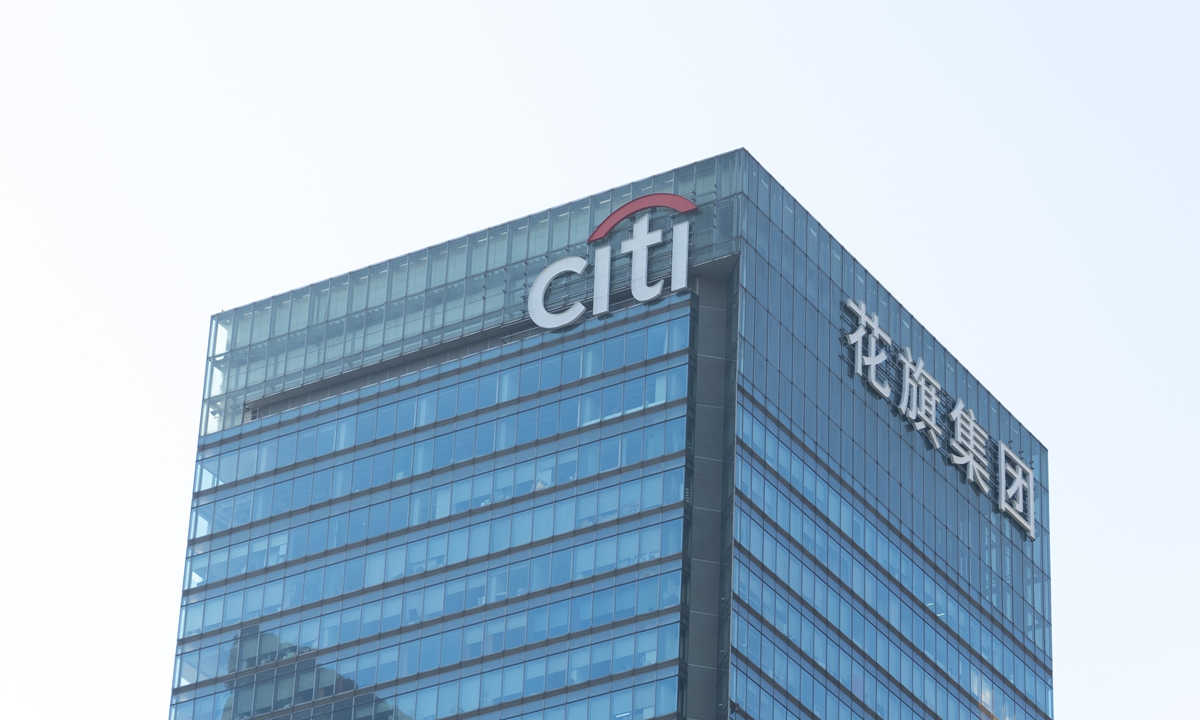
A Chinese Coup: How Citigroup Challenged the Limits of Foreign Ownership in China’s Banking Sector
Introduction
At the beginning of the 21st century, China emerged as one of the world’s most attractive financial markets. Rapid economic growth, expanding consumer wealth, industrial transformation, and increasing global trade turned the country into a strategic battleground for international banks eager to establish a foothold in Asia. Yet despite China’s economic liberalization, its banking sector remained heavily protected, tightly regulated, and largely controlled by the state.
Foreign banks faced strict limitations on ownership, influence, and operational freedom. While many international financial institutions invested billions of dollars into Chinese lenders, few obtained meaningful management control. Against this backdrop, Citigroup attempted one of the boldest moves ever made by a foreign financial institution in China’s banking industry. By leading a consortium to acquire a dominant stake in Guangdong Development Bank (GDB), Citigroup challenged the boundaries of Chinese banking regulations and reshaped discussions about foreign participation in the country’s financial system.
The proposed deal was more than a simple investment. It represented a strategic gamble involving political negotiation, regulatory flexibility, corporate rivalry, and long-term ambitions in the world’s fastest-growing major economy. Although the acquisition appeared risky due to GDB’s financial weaknesses, it also symbolized the determination of global banks to gain influence inside China before the market became fully saturated.
This article explores the historical context, strategic significance, financial risks, and global implications of Citigroup’s ambitious move into the Chinese banking sector. It also examines how the deal reflected broader changes in China’s economic policy and the evolving relationship between Chinese institutions and foreign capital.
China’s Banking Sector Before Foreign Expansion
The Structure of China’s Banking Industry
Before foreign banks began investing aggressively in China, the country’s banking system was dominated by state-owned financial institutions. The “Big Four” banks held enormous influence over the economy:
- Industrial and Commercial Bank of China
- China Construction Bank
- Bank of China
- Agricultural Bank of China
These banks financed infrastructure projects, state-owned enterprises, industrial growth, and regional development. However, many suffered from inefficient lending practices, poor risk management, and large volumes of non-performing loans.
As China prepared for deeper integration into the global economy following its entry into the World Trade Organization (WTO) in 2001, the government recognized the need to modernize its banking system. International expertise became increasingly valuable in areas such as:
- Risk management
- Corporate governance
- Retail banking
- Credit card operations
- Digital financial services
- International compliance standards
Foreign investment was therefore encouraged — but only within carefully controlled limits.
Strict Limits on Foreign Ownership
Chinese regulators feared that allowing foreign institutions to dominate domestic banks could threaten financial stability and weaken national control over credit markets. As a result, strict ownership caps were imposed:
- A single foreign investor could own no more than 20% of a Chinese bank.
- Total foreign ownership was limited to 25%.
These rules allowed foreign institutions to participate financially while preventing them from exercising significant control. Most international banks accepted minority positions, hoping that long-term relationships would eventually lead to greater influence.
However, many foreign investors soon became frustrated. Despite injecting capital and expertise, they often lacked decision-making power. Their investments resembled passive partnerships rather than strategic takeovers.
This environment created the perfect opportunity for a more aggressive institution willing to push regulatory boundaries.
Citigroup’s Bold Strategic Move
A Bid That Shocked the Banking Industry
Citigroup stunned global financial markets by leading a consortium offering approximately 24 billion yuan — around $3 billion at the time — for an 85% stake in Guangdong Development Bank.
If approved, Citigroup itself would own between 40% and 45% of GDB, far exceeding China’s official ownership caps.
The proposal immediately attracted worldwide attention because it appeared to contradict the very regulations designed to limit foreign influence. Industry analysts viewed the move as a test of China’s willingness to liberalize its banking system.
The deal was remarkable for several reasons:
1. It Challenged Existing Regulations
Citigroup’s proposed ownership level exceeded both the individual and collective foreign ownership limits. This suggested either extraordinary regulatory flexibility or political willingness to create exceptions for troubled banks.
2. It Offered Management Control
Unlike previous minority investments, Citigroup would gain meaningful operational influence over GDB’s direction, governance, and business strategy.
3. It Signaled Aggressive Competition
The acquisition demonstrated that international banks were willing to compete fiercely for access to China’s financial sector, even at high financial risk.
Why Guangdong Development Bank Mattered
Guangdong Development Bank was not one of China’s largest banks, but it held strategic importance.
Based in Guangdong Province — one of China’s richest and most economically dynamic regions — GDB operated in a market characterized by:
- Strong export activity
- Manufacturing growth
- Rising consumer wealth
- Expanding private enterprise
- Increasing demand for financial products
Guangdong was often considered China’s economic gateway to the world. For Citigroup, gaining control of a regional bank there meant securing access to one of the country’s most promising financial markets.
Additionally, GDB possessed one particularly attractive strength: its credit-card business. At a time when consumer finance in China was still in its early stages, credit cards represented enormous future growth potential.
Citigroup’s Comeback After Earlier Defeats
Losing Ground to Competitors
Before the GDB bid, Citigroup had experienced several setbacks in China.
In 2005, Bank of America secured a valuable stake in China Construction Bank, beating Citigroup in the process.
This was a major disappointment because China Construction Bank was one of the country’s largest lenders and an important gateway into the Chinese banking market.
Citigroup also lost a profitable advisory role connected to CCB’s major stock-market flotation. These defeats allowed rivals to strengthen their positions while Citigroup appeared to lag behind.
Moving Faster Than European Rivals
Determined not to fall behind again, Citigroup acted aggressively in the competition for GDB.
The American banking giant reportedly outbid:
- ABN AMRO
- Société Générale
Winning the bid restored Citigroup’s reputation as a leading player in international banking expansion.
The deal also illustrated how global financial institutions increasingly viewed China not merely as an emerging market, but as a future center of global banking power.
The Risks Behind the Acquisition
A Financially Weak Bank
Although the acquisition offered strategic opportunities, Guangdong Development Bank was financially troubled.
The bank suffered from several serious problems:
Weak Balance Sheet
GDB’s liabilities exceeded its assets by approximately 35 billion yuan. State assistance had been necessary to keep the bank stable.
Poor Capital Adequacy
Its capital-adequacy ratio fell well below international banking standards, raising concerns about financial resilience.
Low Profitability
Operational efficiency and profitability remained weak compared with international banking benchmarks.
These issues meant Citigroup was not purchasing a healthy, fast-growing institution. Instead, it was acquiring a troubled bank requiring major restructuring.
Paying an Expensive Premium
Citigroup reportedly agreed to pay 2.3 times book value for its stake in GDB.
This valuation appeared extremely high when compared with previous foreign investments in Chinese banks. For example, Bank of America paid only 1.15 times book value for its investment in China Construction Bank.
The high price reflected several factors:
- The rarity of obtaining management control
- Strategic access to Guangdong Province
- Long-term growth expectations in China
- Competitive pressure from rival bidders
Nevertheless, critics argued that Citigroup was overpaying for a risky asset.
Complicated Relationships Inside China
The Shanghai Pudong Development Bank Problem
Citigroup’s ambitions in China were complicated by an earlier investment in Shanghai Pudong Development Bank.
In 2003, Citigroup purchased a 4.6% stake in the bank and agreed not to invest in another mainland Chinese bank without approval.
This agreement became a major obstacle during negotiations for GDB.
To secure permission, Citigroup reportedly had to: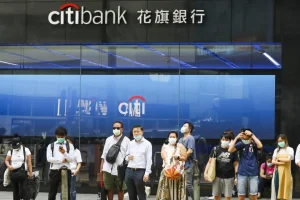
- Increase its stake in Shanghai Pudong Development Bank to 19.9%
- Pay approximately $800 million
- Accept restrictions on future business activities
The situation demonstrated the complexity of partnerships in China’s financial environment. Foreign banks often had to balance political relationships, contractual obligations, and strategic ambitions simultaneously.
Restrictions on Credit Card Expansion
One of the most surprising elements of the deal involved credit cards.
Despite GDB’s strong position in the credit-card market, Citigroup reportedly agreed not to establish a joint venture in this sector with the bank.
This restriction was significant because consumer finance represented one of China’s most promising future industries. Rising incomes, urbanization, and expanding middle-class consumption were expected to fuel enormous demand for personal banking services.
The limitation suggested that Chinese regulators remained cautious about allowing foreign firms to dominate highly profitable financial segments.
China’s Balancing Act
Opening Markets While Maintaining Control
China faced a difficult challenge.
On one hand, the government wanted foreign capital, expertise, and modern banking practices. On the other hand, policymakers remained deeply concerned about preserving national control over the financial system.
The GDB transaction highlighted this tension perfectly.
Chinese authorities could justify the deal by arguing that:
- GDB was financially weak
- The bank required urgent restructuring
- Foreign management expertise could improve operations
- The situation represented a special exception rather than a general rule
Still, the transaction inevitably raised questions about whether ownership restrictions would eventually be relaxed for stronger banks as well.
Regulatory Concerns
Liu Mingkang, China’s top banking regulator at the time, warned that banks with foreign ownership exceeding 25% might be classified as foreign institutions.
Such classification carried important consequences:
- Restrictions on yuan-denominated business
- Limited geographic operating permissions
- Additional regulatory oversight
This warning showed that even if China allowed larger foreign stakes, authorities still intended to preserve strong regulatory control.
How Rivals Reacted
Frustration Among Foreign Banks
Many international banks were likely frustrated by Citigroup’s apparent success.
By that time, foreign institutions had already invested billions into Chinese lenders without gaining comparable influence.
Several major players held minority stakes:
- HSBC
- UBS
- Royal Bank of Scotland
Yet these institutions remained limited in their ability to shape management decisions.
Citigroup’s arrangement therefore appeared unfair to some competitors.
Pressure to Relax Ownership Caps
Ironically, Citigroup’s move may have benefited rival banks more than Citigroup itself.
Once regulators demonstrated flexibility for one institution, pressure increased to allow similar arrangements elsewhere.
For example, HSBC already held a significant stake in Bank of Communications, a stronger and larger institution than GDB.
If ownership restrictions were eased, HSBC and other foreign banks could potentially seek greater control over higher-quality Chinese lenders.
Thus, Citigroup’s bold move may have accelerated broader financial liberalization across the industry.
The Broader Global Context
China as the Future of Banking Growth
By the mid-2000s, many Western banks recognized that mature markets in North America and Europe offered slower growth opportunities.
China, by contrast, provided:
- Rapid GDP expansion
- Rising household wealth
- Massive urbanization
- Expanding middle-class consumption
- Growing demand for mortgages, loans, and investment products
Foreign institutions feared missing out on what could become the world’s largest banking market.
This urgency explains why banks were willing to accept limited influence, complex regulations, and high financial risks simply to establish an early presence.
Financial Globalization and Strategic Competition
Citigroup’s attempt to control GDB also reflected the growing globalization of finance.
Banks were no longer confined by national borders. Instead, they competed internationally for market share, influence, and strategic positioning.
China became one of the most important arenas in this global competition because of its scale and future potential.
The deal symbolized a broader transition in the global economy:
- Western banks seeking expansion in Asia
- Emerging markets gaining financial importance
- Governments balancing openness with sovereignty
- International capital flowing into previously protected sectors
Lessons From Citigroup’s Chinese Gamble
Control Often Comes at a High Cost
Citigroup’s experience demonstrated that gaining influence in emerging markets often requires paying premium prices and accepting substantial risks.
Control is valuable precisely because it is rare.
The bank accepted:
- A financially troubled institution
- Expensive acquisition costs
- Regulatory uncertainty
- Political complexity
- Strategic restrictions
All in pursuit of long-term access to China’s banking future.
Regulations Can Evolve Under Pressure
The transaction also showed that regulations are not always fixed. When economic or political incentives align, governments may create exceptions or reinterpret rules.
Citigroup’s deal pushed Chinese regulators to reconsider how foreign participation should evolve in a modernizing financial system.
Relationships Matter in International Banking
Success in foreign markets depends not only on financial resources, but also on partnerships, diplomacy, and political understanding.
Citigroup’s negotiations with Chinese regulators, local banks, and consortium partners illustrated the importance of relationship management in global finance.
Conclusion
Citigroup’s attempted takeover of Guangdong Development Bank marked a pivotal moment in the history of foreign investment in China’s banking sector. More than a corporate acquisition, it represented a challenge to long-standing ownership restrictions and a bold test of China’s willingness to open its financial markets.
The deal exposed the tensions between globalization and national control, between financial opportunity and regulatory caution. Citigroup pursued management influence in a market filled with extraordinary growth potential, but it also inherited financial weaknesses, political complications, and strategic limitations.
For China, the transaction highlighted the delicate balance between welcoming foreign expertise and preserving sovereignty over the nation’s financial system. For international banks, it demonstrated both the immense rewards and the significant risks of entering China’s evolving banking landscape.
Ultimately, Citigroup’s maneuver helped reshape conversations about foreign ownership, banking liberalization, and financial globalization in the world’s second-largest economy. Even if the immediate benefits remained uncertain, the long-term significance of the move was undeniable. It signaled that China’s banking sector was entering a new era — one in which international competition, strategic alliances, and regulatory adaptation would increasingly define the future of global finance.
Forex Trading in the Digital Financial Era