
 By admin
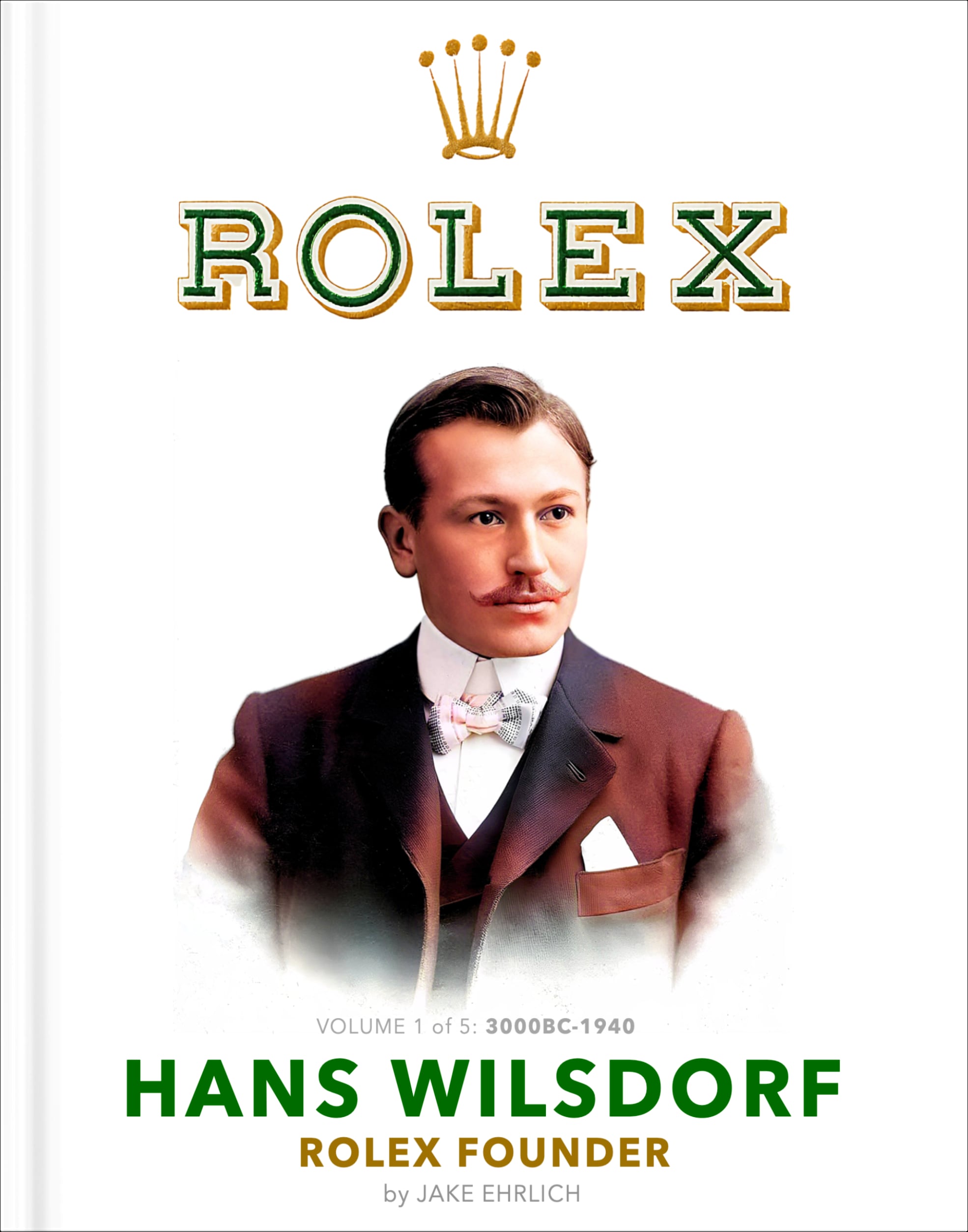
The Orphan Who Timed the World: How Hans Wilsdorf Revolutionized the Global Watchmaking Industry
Introduction
History often celebrates innovation, but it rarely captures the quiet resilience that fuels true revolutions. The story of Hans Wilsdorf is not merely the biography of a successful entrepreneur; it is the chronicle of a man who fundamentally redefined how the world perceives time, precision, and personal achievement. Born an orphan in late 19th-century Germany, Wilsdorf rose from modest beginnings to establish Rolex, the most influential and recognizable watch brand on the planet.
At a time when wristwatches were dismissed as fragile accessories, unfit for men and unreliable for professional use, Wilsdorf envisioned a future in which timekeeping would be portable, robust, and inseparable from modern life. His mission was radical: to transform the wristwatch into a symbol of accuracy, endurance, and success. Through technical innovation, fearless marketing, and an uncompromising obsession with quality, he reshaped the global watchmaking industry.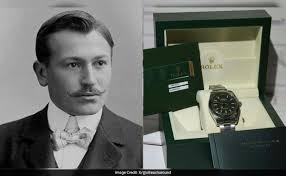
This article explores Hans Wilsdorf’s extraordinary journey, examining the formative hardships that shaped his mindset, the strategic brilliance behind Rolex’s rise, and the enduring legacy that continues to set the standard for luxury watchmaking in the 21st century.
I. Early Life and the Formation of an Unbreakable Mindset
A Childhood Defined by Loss and Independence
Hans Wilsdorf was born in 1881 in Kulmbach, Bavaria, into a prosperous family. Tragically, by the age of twelve, he had lost both parents. This early exposure to loss forced him into independence far earlier than most children of his era. Rather than succumbing to adversity, Wilsdorf developed a disciplined, self-reliant character that would later define his leadership style.
His guardians ensured he received a solid education, but it was his emotional resilience and determination that became his greatest assets. Even as a teenager, Wilsdorf demonstrated an uncommon sense of responsibility, financial awareness, and long-term thinking—qualities that would prove essential in the volatile world of international business.
Commercial Training and Early Business Insight
Wilsdorf’s professional education began in the export industry, where he worked for a pearl trading company. This experience exposed him to international logistics, currency exchange, and cross-border commerce—skills that would later underpin Rolex’s global expansion. More importantly, he learned the importance of reliability, trust, and reputation in international trade.
These formative years laid the foundation for his belief that products must deliver consistent performance, regardless of geography or conditions—a principle that would later define Rolex’s engineering philosophy.
II. Discovering Horology and Identifying a Market Gap
La Chaux-de-Fonds: The Cradle of Watchmaking Excellence
In his early twenties, Wilsdorf moved to La Chaux-de-Fonds, Switzerland, the epicenter of fine watchmaking. Employed by a watch-export company, he gained firsthand exposure to the mechanics of Swiss movements and the realities of global watch distribution.
While Swiss watchmakers focused on pocket watches—considered the pinnacle of precision—Wilsdorf noticed a glaring oversight. Wristwatches, though increasingly popular among women, were widely regarded as inaccurate and unreliable. This perception, he believed, was not a limitation of the concept, but a failure of execution.
The Radical Belief in the Wristwatch
Wilsdorf’s insight was revolutionary: the wristwatch was not inferior by nature; it simply required better engineering. He foresaw a world moving faster—driven by industrialization, transportation, aviation, and sport—where checking the time discreetly and instantly would become essential.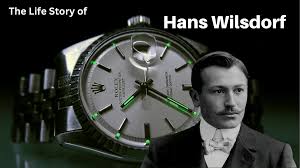
This belief placed him at odds with traditional horologists, but it also positioned him as a visionary ahead of his time.
III. Founding Rolex: A Brand Built on Precision and Simplicity
Wilsdorf & Davis: The London Years (1905)
In 1905, Wilsdorf relocated to London and founded Wilsdorf & Davis with his brother-in-law Alfred Davis. Rather than manufacturing entire watches, the company sourced high-quality Swiss movements and housed them in durable British cases.
From the outset, Wilsdorf insisted on accuracy above all else. He subjected wristwatches to the same chronometric standards as marine chronometers, challenging the industry’s assumptions.
The Birth of the Name “Rolex”
In 1908, Wilsdorf registered the trademark “Rolex.” He wanted a name that was short, elegant, easy to pronounce in any language, and visually balanced on a watch dial. Whether inspired by phonetics or intuition, the name proved timeless.
Rolex quickly became synonymous with innovation, modernity, and ambition—a masterstroke in global branding long before branding became a formal discipline.
Chronometric Certification: Changing Perception Forever
In 1910, a Rolex wristwatch became the first of its kind to receive an official Swiss Certificate of Chronometric Precision. Four years later, it earned a Class A precision certificate from the Kew Observatory in Britain—an honor previously reserved for marine chronometers.
These achievements shattered the myth that wristwatches could not be accurate, forever altering public perception.
IV. Engineering Breakthroughs That Redefined Watchmaking
The Oyster Case (1926): Waterproofing Time
Perhaps Wilsdorf’s most iconic contribution was the invention of the Oyster case—the world’s first truly waterproof wristwatch. Featuring a screw-down bezel, case back, and crown, the design created a hermetic seal that protected the movement from water, dust, and pressure.
This innovation transformed the wristwatch from a delicate instrument into a rugged companion suitable for real-world use.
Marketing Genius: The Mercedes Gleitze Experiment
Rather than relying on technical claims, Wilsdorf demonstrated performance publicly. In 1927, British swimmer Mercedes Gleitze wore a Rolex Oyster during her attempt to swim across the English Channel. After more than ten hours in icy water, the watch emerged fully functional.
Wilsdorf capitalized on this achievement with full-page newspaper advertisements—one of the earliest examples of experiential marketing—cementing Rolex’s reputation for durability.
The Perpetual Rotor (1931): Automatic Excellence
To preserve the waterproof integrity of the Oyster case, Rolex introduced the Perpetual rotor, the first practical self-winding mechanism. Powered by the natural motion of the wearer’s wrist, it eliminated the need for manual winding.
This invention became the blueprint for modern automatic watches and remains a defining feature of Rolex timepieces today.
V. The Power of Association: Building a Global Icon
Watches as Tools of Achievement
Wilsdorf understood that credibility is earned through performance. Rolex watches accompanied explorers, pilots, athletes, and scientists pushing the limits of human endurance.
From Mount Everest to the depths of the Mariana Trench, Rolex positioned itself not as a luxury accessory, but as a tool for those who dared to achieve more.
From Utility to Symbol of Success
Over time, Rolex transcended functionality. Through consistent storytelling and association with excellence, the brand evolved into a symbol of accomplishment, leadership, and prestige.
This strategic transformation is one of the most successful brand evolutions in modern business history.
VI. The Wilsdorf Foundation and Rolex in the Modern Era
A Unique Corporate Structure
Upon his death in 1960, Hans Wilsdorf bequeathed Rolex to the Wilsdorf Foundation, ensuring the company would remain independent, private, and free from shareholder pressure.
This structure allows Rolex to prioritize long-term quality, innovation, and brand integrity over short-term profits.
Rolex Today: Precision Meets Cultural Influence
In the 21st century, Rolex continues to dominate the luxury watch market. With proprietary materials, in-house movements, and strict quality control, the brand maintains its reputation for excellence.
Rolex’s involvement in global sports, arts, and scientific endeavors reinforces its relevance in a rapidly changing world.
Conclusion
Hans Wilsdorf’s life is a powerful reminder that vision, when paired with resilience and execution, can reshape entire industries. From a childhood marked by loss to the creation of the world’s most respected watch brand, his journey exemplifies the transformative power of belief and innovation.
Wilsdorf did not merely improve watches—he redefined what timekeeping could represent. Precision became trust. Durability became confidence. Ownership became aspiration. More than a century later, the principles he established continue to guide Rolex and influence the global watchmaking industry.
In mastering time, Hans Wilsdorf secured his place in history.
How Pilots Find Their Way in a Featureless Sky