
 By admin
Introduction
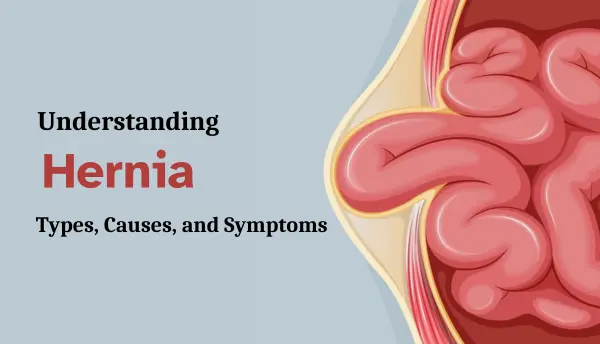
A hernia is a common yet clinically significant medical condition that occurs when an internal organ or tissue protrudes through an abnormal opening or a weakened area in the wall of the cavity that normally contains it. Although hernias can affect individuals of all ages, genders, and lifestyles, they are particularly prevalent among adults with certain risk factors such as obesity, chronic coughing, heavy lifting, or previous abdominal surgery.
In healthy individuals, muscles and connective tissues provide firm support to internal organs, keeping them securely in place. However, when there is a structural weakness combined with increased intra-abdominal pressure, organs—most commonly portions of the intestine—may push through these weakened areas, resulting in a visible or palpable bulge. This bulge typically enlarges during activities that increase abdominal pressure, such as coughing, lifting heavy objects, straining during bowel movements, or urination. In many cases, the swelling reduces or disappears when the individual lies down, except in more severe forms such as strangulated or irreducible hernias.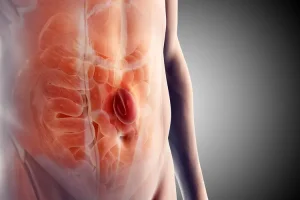
Modern medicine recognizes hernia not merely as a mechanical problem but as a multifactorial condition influenced by genetics, lifestyle, anatomy, and postoperative factors. If left untreated, hernias can lead to serious complications, including intestinal obstruction, tissue ischemia, infection, and life-threatening peritonitis. This article provides a detailed, up-to-date exploration of hernia types, causes, common anatomical sites, complications, and modern treatment options, including both conservative management and advanced surgical techniques.
Understanding Hernia: Definition and Mechanism
A hernia develops when two primary factors coexist:
- Weakness in the body wall, and
- Increased pressure within the cavity, most commonly the abdominal cavity.
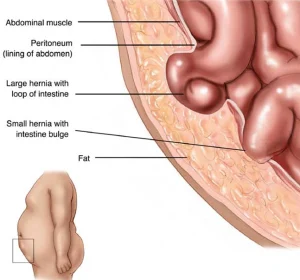
The abdominal wall is particularly susceptible because it contains natural openings for blood vessels, nerves, and structures such as the spermatic cord in males. Over time, stress on these weak points may cause tissues to protrude, forming a hernial sac.
Hernias are classified based on their anatomical location, etiology, and clinical behavior. Some hernias remain small and asymptomatic for years, while others progress rapidly, causing pain and complications that require urgent surgical intervention.
Causes of Hernia
1. Weakness in the Body Wall
Structural weakness is the foundational cause of hernia formation. This weakness may be present at birth or acquired later in life.
a) Congenital Weakness
Some individuals are born with inherent defects or weaknesses in the abdominal wall. These congenital abnormalities may remain unnoticed until later in life when increased pressure triggers herniation. Umbilical hernias in infants are a classic example.
b) Acquired Weakness
Acquired weakness develops over time due to several contributing factors, including:
- Aging-related muscle degeneration
- Muscle wasting due to chronic illness or malnutrition
- Injuries or trauma to the abdominal wall
- Suppurative or infectious lesions affecting muscle integrity
- Presence of naturally weak anatomical openings
- Obesity, which increases stress on abdominal muscles
- Lack of physical activity leading to poor muscle tone
- Repeated pregnancies, which stretch and weaken abdominal muscles
c) Post-Surgical Weakness
Surgical procedures involving the abdomen may compromise the integrity of the abdominal wall. Improper suturing techniques, postoperative infections (sepsis), or delayed wound healing can result in incisional hernias at the surgical site.
2. Increased Intra-Abdominal Pressure
Even a mildly weakened abdominal wall can give way under persistent or excessive internal pressure. Common causes include:
- Chronic constipation and repeated straining
- Persistent or recurrent coughing (e.g., due to smoking or chronic lung disease)
- Heavy weight lifting without proper technique
- Urinary obstruction caused by conditions such as urethral stricture or prostate enlargement
- Pregnancy and ascites (fluid accumulation in the abdomen)
The combination of these pressures with structural weakness significantly raises the risk of hernia development.
Common Sites of Hernia
Although hernias can occur in various parts of the body, certain anatomical regions are more vulnerable due to structural and functional characteristics.
1. Inguinal Hernia
Inguinal hernia is the most common type of hernia, especially in males. It occurs when abdominal contents protrude through the inguinal canal—a passage located in the lower abdominal wall just above the inguinal ligament.
- Types: Direct and indirect inguinal hernias
- Clinical features: A swelling in the groin that appears during straining and disappears when lying down
- Progression: Over time, a large portion of the intestine may descend into the scrotum and become irreducible
2. Femoral Hernia
Femoral hernias are more commonly seen in females, particularly older women.
- Location: Femoral canal, just below the inguinal ligament within the femoral triangle
- Presentation: A swelling in the upper thigh that emerges through the saphenous opening
- Risk: Higher likelihood of strangulation due to narrow neck
3. Umbilical Hernia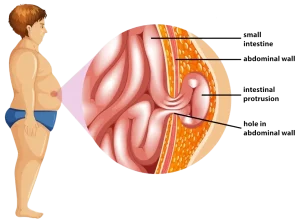
Umbilical hernia is frequently observed in infants and young children, though it can also occur in adults.
- Cause: Weakness at the umbilical ring
- Symptoms: Bulb-like protrusion at the navel, especially noticeable during crying, coughing, or defecation
- Prognosis: Many childhood umbilical hernias resolve spontaneously
4. Incisional Hernia
Incisional hernias develop at the site of a previous surgical incision.
- Etiology: Improper suturing, wound infection, obesity, or early physical strain after surgery
- Trend: Increasing incidence due to the growing number of abdominal surgeries worldwide
5. Epigastric Hernia
Epigastric hernia occurs in the upper abdominal midline between the umbilicus and the sternum.
- Nature: Rare and often small
- Contents: Usually preperitoneal fat rather than intestine
6. Lumbar Hernia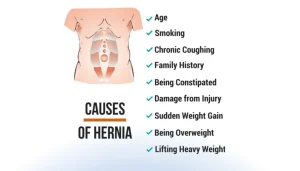
Lumbar hernia is an uncommon condition.
- Location: Lumbar triangle on either side of the spine
- Cause: Weakness in posterior abdominal wall structures
7. Obturator Hernia
Obturator hernia is a rare but dangerous type.
- Pathway: Through the obturator foramen of the pelvic bone
- Population: Elderly, thin women
- Presentation: Often diagnosed late due to lack of visible swelling
Complications of Hernia
Untreated hernias may lead to serious and potentially fatal complications.
1. Strangulation
Strangulation occurs when the blood supply to the herniated tissue is compromised due to constriction at the hernial orifice. This leads to ischemia, tissue necrosis, and severe pain, requiring emergency surgery.
2. Intestinal Obstruction
When a loop of intestine becomes trapped within the hernial sac, bowel contents cannot pass, resulting in obstruction. Symptoms include abdominal pain, vomiting, distension, and constipation.
3. Infection and Peritonitis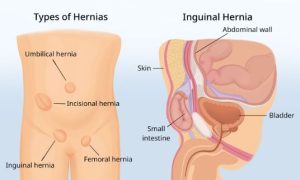
If strangulation leads to intestinal perforation, bacteria may spread throughout the abdominal cavity, causing peritonitis—a life-threatening inflammatory condition.
Management and Treatment of Hernia
Initial (Conservative) Management
In early or mild cases, conservative measures may help alleviate symptoms and slow progression:
- Use of Hernia Belts or Trusses
Specially designed hernia belts provide external support and reduce discomfort. - Treatment of Underlying Conditions
Addressing constipation, chronic cough, and urinary obstruction is essential. - Weight Management
Reducing body fat decreases abdominal pressure and strengthens muscle support. - Abdominal Muscle Strengthening Exercises
Targeted exercises improve muscle tone and support. - Dietary Modifications
High-fiber diets with fruits, vegetables, and whole grains promote regular bowel movements. - Alternative Therapies
Some patients explore homeopathy or herbal remedies, although scientific evidence remains limited.
If symptoms persist or worsen, surgical consultation is strongly advised.
Surgical Treatment of Hernia
Surgery is the definitive treatment for most hernias. The choice of procedure depends on the type, size, and condition of the hernia.
1. Herniotomy
This procedure involves:
- Returning the herniated contents to the abdominal cavity
- Ligation and removal of the hernial sac
It is commonly performed in pediatric cases.
2. Herniorrhaphy
In addition to herniotomy, this technique includes repairing the posterior wall of the abdomen using sutures to reinforce weakened muscles.
3. Hernioplasty
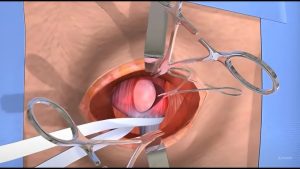
Hernioplasty is the most widely used modern technique.
- Method: Reinforcement of the abdominal wall using non-absorbable synthetic mesh
- Materials: Polypropylene mesh, stainless steel mesh, or composite biomaterials
- Advantages: Lower recurrence rates and faster recovery
Minimally invasive laparoscopic hernia repair has further revolutionized outcomes by reducing pain, hospital stay, and postoperative complications.
Conclusion
Hernia is a widespread medical condition with diverse causes, presentations, and potential complications. While some hernias remain asymptomatic, others can progress rapidly and lead to life-threatening emergencies if neglected. Understanding the underlying mechanisms, recognizing early signs, and adopting appropriate preventive measures are crucial for effective management.
Modern surgical techniques, particularly mesh-based and laparoscopic repairs, have significantly improved patient outcomes, reduced recurrence rates, and enhanced quality of life. Early diagnosis, timely intervention, and lifestyle modification remain the cornerstones of hernia prevention and treatment in contemporary medical practice.