
 By admin
What Happens to Your Voice When You Say “Hello”?
Introduction
When you pick up your phone and say “Hello,” it may feel like the simplest action in the world. Yet, beneath that simple greeting lies a marvel of science, engineering, and global telecommunications infrastructure. Every time you make a call, your voice embarks on an extraordinary journey: it is captured, digitized, compressed, transmitted across vast networks, routed through countless devices, and finally reconstructed so that another human being can hear your exact words.
The path of your voice is invisible, instantaneous, and often taken for granted. But understanding how it works reveals just how far communication technology has come—from early analog telephones to today’s 5G networks, Voice over Internet Protocol (VoIP), and AI-driven voice enhancement.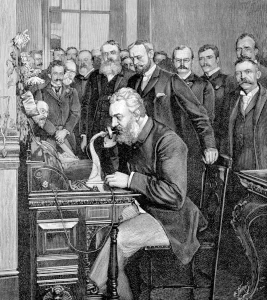
In this article, we will take an in-depth look at what happens to your voice when you say “Hello,” explore the technologies that make real-time conversations possible across thousands of kilometers, examine the challenges of modern telecommunications, and highlight what the future holds for voice communication.
- The Moment You Speak: Voice Capture
1.1 How Sound Becomes a Signal
Your voice originates as vibrations in your vocal cords, creating sound waves that travel through the air. The microphone in your phone acts as a transducer, converting these sound waves into electrical energy. This is the first step in transforming human speech into a signal that can travel across digital networks.
Modern smartphones use highly sensitive microphones that can capture a wide range of frequencies. Some phones even use multiple microphones to help isolate your voice from background noise, ensuring clearer communication.
1.2 Analog-to-Digital Conversion (ADC)
While your voice exists naturally in analog form, telecommunication systems rely on digital signals. An Analog-to-Digital Converter (ADC) samples the continuous sound wave at extremely high rates—typically 8,000 times per second for standard calls and up to 48,000 times per second for high-definition (HD) voice calls.
Each sample is assigned a numerical value representing the sound’s amplitude at that moment. This process creates a digital replica of your voice that can be transmitted efficiently, stored, and reconstructed at the other end. Without ADC, modern voice calls over digital networks, including mobile and internet-based calls, would not be possible.
- The Role of Signal Compression
2.1 Why Compression is Essential
Raw digital voice data is massive and would overwhelm communication networks if transmitted directly. That’s why compression is crucial. Voice compression algorithms analyze the signal, identify redundant information, and reduce the data size while preserving quality.
2.2 Compression Algorithms
Some of the most widely used codecs (compression-decompression technologies) include:
- G.711 – Provides standard telephone quality.

- G.729 – Used in VoIP for efficient compression with minimal quality loss.
- Opus – A modern codec widely adopted by apps like WhatsApp and Zoom, offering high quality even on low-bandwidth networks.
Thanks to these algorithms, your voice can travel with clarity even under constrained conditions such as poor mobile signals or congested Wi-Fi connections.
- Transmission Over Networks
3.1 The Cellular Network Path
When you make a call from a mobile phone, the digital voice data first travels to a nearby cell tower. From there, it enters the vast infrastructure of the mobile operator. Your voice packets are then passed through multiple switches and routers, ensuring they take the most efficient route toward the receiver.
If the call involves different carriers, the data travels through interconnection gateways that link networks worldwide. Eventually, it reaches the recipient’s nearest tower, which delivers the signal to their phone.
3.2 Voice Over IP (VoIP)
With the rise of internet-based communication platforms, many calls today use Voice over Internet Protocol (VoIP). Instead of traditional telecom systems, your voice is broken into packets and sent across the internet.
These packets may travel through:
- Fiber-optic cables for ultra-fast terrestrial transmission.
- Undersea cables linking continents.
- Satellite relays for remote or rural connectivity.
Apps like Skype, WhatsApp, Zoom, and Google Meet rely on VoIP, making global calls affordable and accessible.
- Routing and Switching: The Heart of Communication
4.1 Routing
Every voice packet contains addressing information, much like a postal letter. Routers analyze these addresses and determine the optimal path through the network. Importantly, routers prioritize real-time traffic like voice calls to minimize delays, ensuring conversations remain smooth.
4.2 Switching
Switches handle the actual connection between devices and networks. They ensure that all voice packets not only reach the destination but also arrive in the correct sequence, reconstructing your words exactly as they were spoken.
Together, routing and switching are the “traffic control system” that keeps your conversations flowing seamlessly across the globe.
- Reception and Decoding
5.1 Digital-to-Analog Conversion (DAC)
At the recipient’s phone, the process is reversed. A Digital-to-Analog Converter (DAC) takes the digital packets and rebuilds them into continuous sound waves. These waves are then played through the phone’s speaker, recreating your original “Hello.”
5.2 Voice Quality Enhancement
Modern devices don’t just play back the sound. They enhance it with:
- Noise reduction – Filtering out background disturbances.
- Echo cancellation – Removing echoes from speakerphone calls.
- Dynamic volume adjustment – Ensuring consistent loudness.
These technologies ensure that, regardless of distance, the voice sounds natural and clear.
- The Challenges of Long-Distance Voice Communication
6.1 Latency and Delay
Latency is the delay between speaking and hearing. While it usually lasts only milliseconds, noticeable delays can occur on international or satellite calls. High latency makes conversations awkward, often causing people to talk over one another.
6.2 Packet Loss
When networks become congested, some voice packets may never reach their destination. This is called packet loss, and it can result in words being cut off, robotic-sounding voices, or even dropped calls.
6.3 Security Concerns
In the digital age, another challenge is security. VoIP calls can be intercepted if not properly encrypted. That’s why modern apps and carriers implement end-to-end encryption to keep conversations private.
- The Future of Voice Communication
7.1 5G and Beyond
With the rollout of 5G networks, latency is being reduced dramatically, offering near-instant voice transmission. 5G also allows HD Voice and even Ultra HD Voice, providing crystal-clear audio that feels like speaking face-to-face.
7.2 Artificial Intelligence (AI) in Voice Communication
AI and machine learning are increasingly integrated into telecom systems. They are used for:
- Real-time translation – Breaking language barriers in calls.
- Voice recognition – Enhancing personal assistants and automated systems.
- Adaptive compression – Adjusting quality dynamically based on network conditions.
7.3 Quantum Communication
Looking further ahead, researchers are exploring quantum communication technologies that could make voice calls even faster, more secure, and resistant to interception. Though still experimental, this field holds immense promise for the future.
Conclusion
The next time you answer your phone and say “Hello,” remember that your voice is embarking on a remarkable technological journey. From microphones capturing sound waves, to digital conversion and compression, through vast networks of towers, cables, and satellites, and finally to the receiver’s speaker, every step is a triumph of engineering.
Despite challenges like latency, packet loss, and security concerns, innovations in 5G, VoIP, AI, and quantum communication continue to redefine the way we connect. The magic of hearing another person’s voice across the globe in real-time is no longer magic—it’s science, technology, and human ingenuity at work.
As communication continues to evolve, one thing remains constant: the universal power of the human voice, carrying emotions, ideas, and connections across distances both near and far.
The First American EVA on June 3, 1965