
 By admin
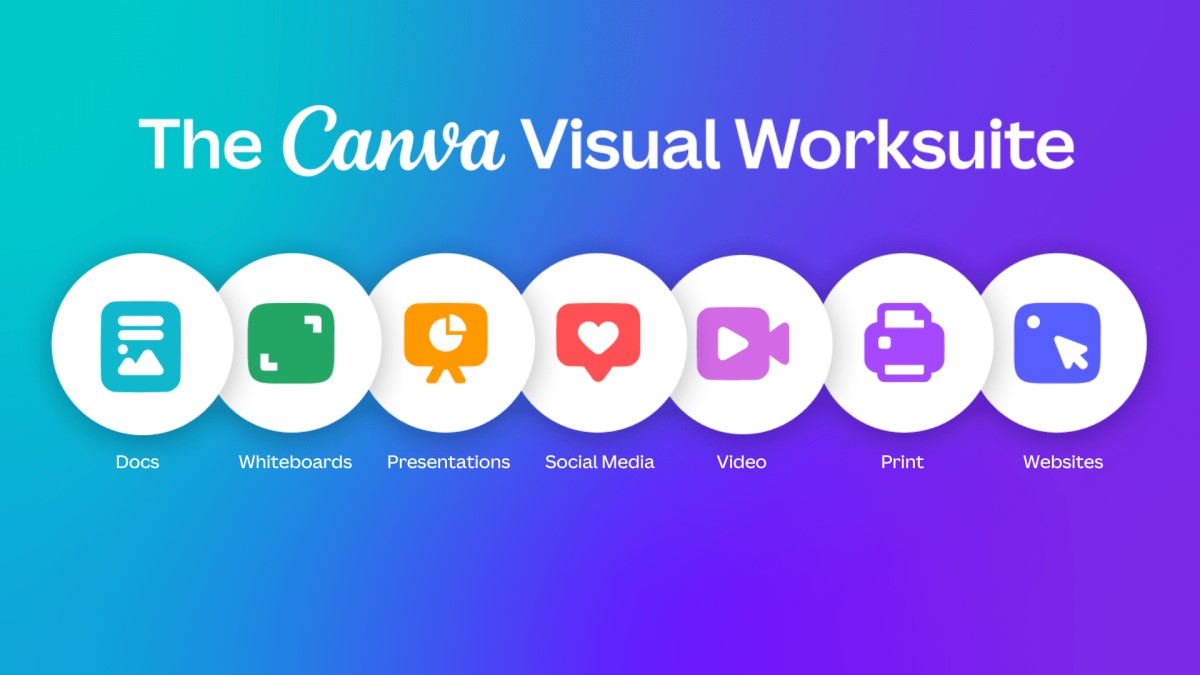
Introduction
Over the past decade, the digital design landscape has undergone a profound transformation—one that has moved design creation from the exclusive domain of trained professionals to the hands of everyday users. At the heart of this revolution lies Canva, a platform that has redefined what it means to create visual content in the age of social media, remote collaboration, and global digital expression. What started as a simple ambition to simplify the design process has evolved into a multi-billion-dollar company with more than 135 million active monthly users, spanning students, freelancers, social media managers, educators, nonprofit organizations, and Fortune 500 enterprises.
This article delves into the compelling history of Canva, its strategic evolution, and the hidden mechanisms that propelled it into a global creative powerhouse. From its early beginnings as an online yearbook builder to its position today as an all-in-one visual communication platform, Canva’s journey demonstrates the power of user-centric innovation, intuitive UX, and a scalable business model. It is not merely a story about a tool—it is a case study in how simplicity, accessibility, and technology can disrupt an entire industry. Through a comprehensive look at its origins, business strategy, AI integration, and future outlook, this article uncovers the elements that turned a simple idea into one of the most influential SaaS platforms of the 21st century.
The Evolution of a Global Design Powerhouse
1. Early Beginnings: The Problem That Sparked a Movement
A Frustrating Reality for Non-Designers
Canva’s origin can be traced back to 2007, when Melanie Perkins—a university student teaching programs like Adobe InDesign and Photoshop—observed a widespread challenge: traditional design software was notoriously complicated. Her students often spent weeks learning the basics before they could create anything meaningful. This friction highlighted a massive opportunity: millions of people needed an accessible, user-friendly way to design without undergoing professional training.
Perkins realized that design tools were stuck in an era that assumed every user was a specialist. But the world had changed—business owners, teachers, marketers, and students all needed visual assets but lacked the time or skill to navigate complex programs.
Fusion Books: The First Prototype
Together with Cliff Obrecht, Perkins created Fusion Books, a web-based tool that allowed schools to design yearbooks through drag-and-drop simplicity. Fusion Books gained significant traction in Australia, then expanded to France and New Zealand, proving the viability of a simplified online design model. This success formed the conceptual foundation for what would eventually become Canva.
2. From Vision to Global Platform: Funding and Development
A Difficult Path to Investment
Despite Fusion Books’ success, the idea of a broader online design platform faced heavy skepticism. Perkins and Obrecht pitched their idea to over 100 Silicon Valley investors—nearly all of whom rejected it. Many could not imagine a future where a simple browser-based tool could rival Adobe’s deep dominance.
Game-Changing Investors and the Creation of Canva
The breakthrough came when Perkins met venture capitalist Bill Tai and eventually connected with influential tech figures like Lars Rasmussen, the co-creator of Google Maps. Their belief in the idea allowed Canva to secure the funding necessary to build its MVP and hire a technical co-founder, Cameron Adams, whose expertise bridged design and engineering.
2013 Launch: A New Era Begins
Canva officially launched in August 2013. The platform introduced a revolutionary combination:
- A browser-based drag-and-drop interface
- A massive library of ready-to-use templates

- A freemium pricing model
- A focus on accessibility for non-designers
Within its first year, Canva attracted more than 1 million users—a clear indication that the design world was ready for change.
Strategic Expansion and Milestones
1. Canva for Work and the Shift Toward Business Solutions
In 2016, Canva launched Canva for Work, later rebranded as Canva Pro. This version introduced crucial tools for businesses, including:
- Brand Kits for consistent branding
- Magic Resize for adapting designs to various platforms instantly
- Team collaboration and shared folders
- New premium templates
This marked Canva’s transition from a consumer design tool into a professional business solution.
2. Mobile Expansion: Riding the Smartphone Wave
As mobile content creation exploded worldwide, Canva responded with full-featured apps for both iOS and Android. These empowered millions of users—especially in emerging markets—to design on the go, expanding Canva’s global reach.
3. Strategic Acquisitions and Ecosystem Building
Canva’s growth has been amplified by targeted acquisitions, such as:
- Pexels and Pixabay: Adding millions of royalty-free images into the platform
- Kaleido.ai: Enhancing background removal and AI-based editing
- Zeetings: Powering interactive presentations
- Smartmockups: Enabling realistic product visualization
These acquisitions allowed Canva to expand vertically and horizontally in the digital content ecosystem.
4. Enterprise Solutions and the Rise of Visual Communication
In 2019, Canva introduced Canva for Enterprise, offering:
- Centralized brand controls
- Advanced security
- Approval workflows
- Admin dashboards
This allowed the platform to compete with major corporate tools and become a standardized part of organizational communication.
The Pillars Behind Canva’s Industry Dominance
1. Intuitive UX: Simplifying the Complex
Canva’s biggest competitive advantage is its exceptional user experience. Unlike traditional software that overwhelms users with layers of tools, Canva emphasizes:
- Template-first creation
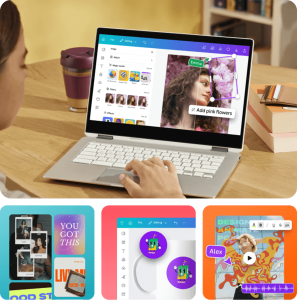
- Minimalistic drag-and-drop mechanics
- Smart contextual toolbars
- Beginner-friendly features
This simplicity lowers the barrier to entry, creating a massive network effect that accelerates user adoption.
2. Collaboration in the Cloud
Modern work is collaborative and remote—and Canva was built for this era. Its cloud-native architecture supports:
- Real-time multi-user editing
- Commenting and version history
- Device-agnostic access
- Easy sharing and publishing
These features turned Canva into an essential team collaboration tool rather than just a design app.
3. A Powerful Freemium Engine
Canva’s freemium model offers extraordinary value at no cost, drawing users in. Premium conversions are driven by:
- Advanced editing tools (e.g., Background Remover)
- Additional cloud storage
- Premium templates and assets
- Brand management tools
This strategy fuels sustainable, recurring revenue while keeping the platform widely accessible.
The Hidden “Secrets” Behind Canva’s Success
1. The Template Economy and Community Contributions
A crucial factor behind Canva’s scalability is its global contributor ecosystem. Through the Canva Creators Program, designers produce:
- Templates
- Photos
- Illustrations
- Elements
Contributors earn royalties, incentivizing high-quality content creation. This ensures Canva’s library remains:
- Fresh
- Diverse
- Globally relevant
- Continuously expanding
2. Deep AI Integration: Creativity Enhanced
AI is now central to Canva’s value proposition. The platform’s advanced AI tools include:
- Magic Write: AI-generated text
- Magic Design: Instant design creation from user input
- AI Background Generator & Remover
- Text-to-Image generation
These tools reduce manual effort and make professional-quality design even more accessible.
3. A Global Mindset: Localization and Inclusivity
Canva’s success extends across continents thanks to its commitment to:
- Supporting 100+ languages
- Culturally relevant templates
- Affordable regional pricing
- Free plans for nonprofits and educators

This localization strategy positioned Canva as a truly global platform rather than a Western-centric tool.
Challenges and the Future of Canva
Despite its massive success, Canva faces several challenges:
1. Intensifying Competition
Its rivals now include:
- Adobe Express
- Figma (for UI/UX design)
- CapCut (video editing)
- Professional AI image tools
Each competitor offers strengths in specialized domains.
2. Copyright and Ethical AI Issues
With millions of user-generated designs, Canva must navigate:
- Intellectual property disputes
- Design plagiarism
- Ethical AI model training
3. Next-Generation Growth Areas
To maintain dominance, Canva must continue advancing:
- Video creation capabilities
- Animation and motion design
- AI-driven workflows
- Enterprise-level integrations
Conclusion
Canva’s story is a testament to how technology, when paired with user empathy and simplicity, can reshape an entire industry. By identifying a deep market need and addressing it through intuitive design, Canva bridged the gap between complex professional tools and the everyday user. Its ecosystem—rooted in collaboration, AI innovation, a powerful template economy, and global inclusivity—has solidified its place as a foundational platform for modern visual communication.
As the world continues to rely increasingly on visual storytelling, Canva stands positioned not merely as a tool but as a long-term creative companion. Its influence extends beyond design; it symbolizes the future of digital creativity—open, accessible, collaborative, and empowered by smart technology.
The Evolution of Blender Technology