
 By admin

5 Proven Tips for Successful Trading in Today’s Financial Markets
Introduction
Trading in the financial markets—whether in stocks, forex, commodities, cryptocurrencies, or derivatives—remains one of the most attractive ways for individuals to build wealth. However, while the potential rewards are great, so are the risks. Many beginners enter the trading world dreaming of quick profits, only to discover that consistent success requires skill, discipline, and a strong foundation of knowledge.
This article explores five essential tips for successful trading, updated with modern strategies and insights relevant to today’s fast-paced global markets. By focusing on trading psychology, risk management, price action, strategy development, and gaining an edge through technology and education, you can improve your chances of long-term profitability.
Understanding the Foundations of Trading
Before diving into advanced techniques, every trader must master the basics. Trading is more than buying low and selling high—it is about analyzing market behavior, managing risk, and making data-driven decisions. To trade successfully, you must understand the language of the markets, how to interpret price movements, and how to control your emotions.
Step 1: Master the Language of Trading
Learn Key Trading Terminology
The financial world comes with its own vocabulary, and every aspiring trader must understand it. Terms such as stop-loss orders, leverage, margin calls, candlesticks, support, resistance, volatility, liquidity, and trendlines are fundamental. Without knowing these, interpreting charts, articles, or professional insights becomes almost impossible.
For example:
- A stop-loss order helps limit losses by automatically selling a security when it reaches a certain price.
- Leverage allows traders to control large positions with small amounts of capital, but it also magnifies risk.
- Support and resistance levels are key technical concepts that help identify potential price reversals.
Stay Updated with Market News
In today’s interconnected economy, global events—from central bank announcements to geopolitical tensions—can move markets instantly. Successful traders keep track of:
- Economic calendars for events like Federal Reserve meetings, employment reports, and inflation data.
- Financial news platforms for breaking updates.
- Market sentiment indicators, such as the VIX (Volatility Index).
By mastering trading language and staying informed, you lay the foundation for smart decision-making.
Step 2: Learn to Read Price Action
What is Price Action?
Price action refers to the movement of an asset’s price over time. Instead of relying solely on lagging indicators, professional traders often analyze candlestick charts, trendlines, chart patterns, and volume to anticipate market moves.
Identifying Market Trends
Markets move in trends: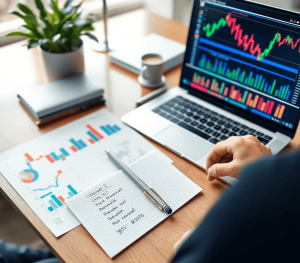
- Uptrend (bullish): Higher highs and higher lows.
- Downtrend (bearish): Lower highs and lower lows.
- Sideways (consolidation): Price moves within a range.
Recognizing these patterns allows traders to align their strategies with market direction rather than fight against it.
Chart Patterns and Technical Tools
Common chart patterns include:
- Head and Shoulders: Often signals trend reversals.
- Triangles: Indicate consolidation before a breakout.
- Double Tops/Bottoms: Show potential reversals.
Technical tools like moving averages, RSI (Relative Strength Index), and MACD (Moving Average Convergence Divergence) further help traders confirm signals.
Price action analysis remains one of the most valuable skills for traders because it helps them predict future movements without relying heavily on external forecasts.
Step 3: Master Risk Management
Why Risk Management is Crucial
Even the best trading strategy will fail without proper risk management. History shows that many traders lose money not because their ideas are wrong, but because they overexpose themselves to risk.
Setting Stop-Loss and Take-Profit Levels
- Stop-loss orders protect you from catastrophic losses.
- Take-profit orders secure gains before the market reverses.
- A risk-to-reward ratio (such as risking $1 to make $3) ensures long-term profitability.
Position Sizing
Smart traders never risk more than 1–2% of their trading capital on a single trade. This way, even a series of losses won’t wipe out their accounts.
Hedging and Diversification
Professional traders sometimes hedge positions with options, futures, or correlated assets. Diversifying across multiple sectors or instruments also reduces risk exposure.
Risk management ensures survival in volatile markets. As Warren Buffett famously said: “Rule number one is never lose money. Rule number two is never forget rule number one.”
Step 4: Develop a Trading Edge
What is a Trading Edge?
A trading edge is any factor that increases your probability of success compared to the average trader. It could be superior chart reading skills, better emotional control, a tested trading strategy, or access to advanced tools.
Sources of Trading Edges
- Technology: Modern platforms use AI, machine learning, and real-time data analysis to identify opportunities.
- Backtesting Strategies: Running simulations on historical data ensures a system works before risking capital.
- Algorithmic Trading: Automated systems help remove emotional decision-making.
- Education: Studying the methods of legendary traders like Jesse Livermore, Paul Tudor Jones, or Ray Dalio provides timeless lessons.
Building Your Own Edge
Every trader should experiment, record trades in a journal, and refine their strategy. Over time, this process develops unique insights that can turn into a sustainable edge.
Step 5: Cultivate Mental Discipline and Emotional Control
Trading Psychology Matters
Markets are unpredictable, but your response to them doesn’t have to be. Psychology plays a bigger role than most beginners realize. Two traders can use the same system, but emotions like fear, greed, or impatience will lead to different outcomes.
Common Psychological Challenges
- Fear of Loss: Leads to premature exits.
- Greed: Encourages overtrading or holding too long.
- Revenge Trading: Trying to “win back” losses quickly, which often results in further losses.
Developing Mental Strength
- Stick to Your Plan: Successful traders follow their system, win or lose.
- Meditation and Mindfulness: Many professionals use mental training to stay calm under pressure.
- Accepting Losses: Losses are part of the game; managing them is key to long-term success.
By developing mental resilience, you ensure that your trading decisions remain rational and aligned with your strategy.
Modern Considerations for Today’s Traders
The Role of Technology
Unlike in 2006, today’s traders have access to advanced charting platforms, trading bots, AI-powered signals, and mobile apps that allow real-time monitoring. This technology has leveled the playing field, giving retail traders access to tools once reserved for hedge funds.
The Rise of Cryptocurrency Trading
In addition to stocks, forex, and commodities, cryptocurrencies have opened new opportunities. Bitcoin, Ethereum, and altcoins are highly volatile, offering both high risks and high rewards. Learning crypto-specific strategies is essential for traders entering this market.
Sustainable Trading Practices
Modern traders also focus on sustainability—balancing profits with responsible investment. ESG (Environmental, Social, Governance) considerations are increasingly influencing financial decisions worldwide.
Conclusion
Trading is an exciting journey that blends knowledge, skill, psychology, and discipline. While many beginners dream of quick profits, true success lies in consistent application of proven principles. By mastering trading language, learning to read price action, controlling risk, developing a trading edge, and cultivating mental discipline, you can dramatically improve your chances of long-term profitability.
Remember: trading is not a sprint—it’s a marathon. Success doesn’t come from one lucky trade but from years of learning, practicing, and refining strategies. By following these five powerful tips for successful trading, you position yourself not just to survive in today’s volatile markets, but to thrive.
Funding Your Franchise Business