
 By admin
Introduction
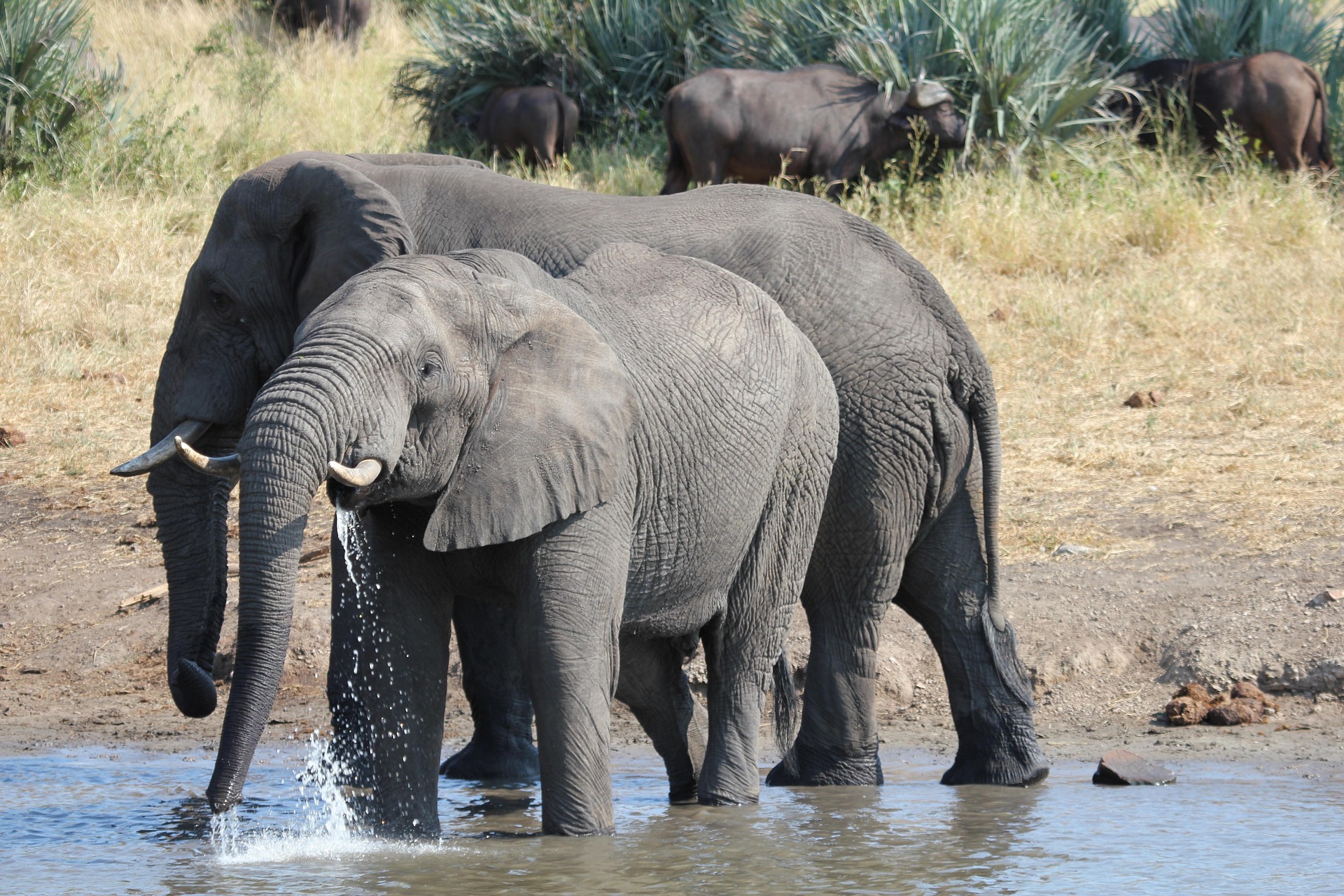
Elephants are among the most iconic and awe-inspiring animals on Earth. Renowned for their massive bodies, complex social structures, and remarkable intelligence, these gentle giants also possess one of the most fascinating and multifunctional body parts in the animal kingdom: the trunk. A curious question often arises when observing elephants drink water: how do they manage to breathe while their trunks are filled with liquid? Do they use their trunks like giant straws? And more importantly, how do they avoid choking or suffocation?
In this in-depth exploration, we’ll dive into the anatomy and physiology of the elephant’s trunk, demystify how elephants manage to drink and breathe simultaneously, and reveal the latest scientific research behind their extraordinary biological systems. By understanding how elephants drink without choking, we uncover the genius of evolution that crafted such a versatile and life-sustaining tool.
The Elephant’s Trunk: A Masterpiece of Nature
What Exactly Is an Elephant’s Trunk?
The elephant’s trunk is not merely a long nose—it’s a highly complex, muscular organ formed by the fusion of the upper lip and the nose. This muscular hydrostat is made up of more than 40,000 individual muscles grouped into up to 150,000 muscle fascicles. To put this into perspective, the entire human body contains only around 600 muscles.
Despite having no bones, the trunk exhibits remarkable strength and dexterity. Elephants use their trunks for an array of essential tasks, including eating, drinking, breathing, touching, communicating, and even expressing emotion.
Key Functions of the Trunk
The elephant trunk serves as an all-in-one sensory, manipulative, and respiratory organ. Its core capabilities include:
- Drinking and bathing: Drawing water and transferring it to the mouth or spraying it over the body.
- Feeding: Grasping food items as small as a peanut or as large as a tree branch.
- Communication: Producing sounds and tactile signals for social interaction.
- Smelling: Detecting food, water sources, or potential threats from great distances.
- Breathing: Acting as the primary airway, replacing the function of the nasal passage.
This organ’s combination of raw strength, refined touch, and respiratory role makes it one of the most versatile appendages in the animal world.
How Elephants Drink Water
Busting the Straw Myth
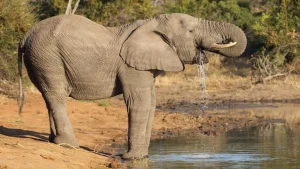
A common misconception is that elephants drink water by sucking it up through their trunks like humans use a straw. In reality, elephants do not swallow through their trunks. Instead, the trunk is used to draw up water—up to 10 liters at a time—and then the elephant curls its trunk around to pour the water into its mouth.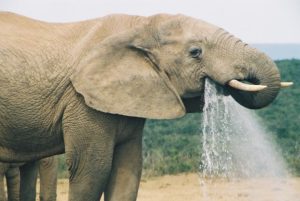
This means the trunk is more like a flexible pitcher than a straw. The actual act of swallowing happens in the mouth, not the trunk.
The Water Transfer Process
The process of drinking looks like this:
- Suction: The elephant inhales through its trunk, pulling water into it.
- Transfer: The trunk curls and points toward the mouth.
- Dispensing: Water is sprayed into the mouth, where it is then swallowed.
This method allows elephants to drink large volumes of water quickly while still maintaining full control over their respiratory process.
Breathing and Drinking: How Do They Coexist?
Why Elephants Don’t Choke While Drinking
Unlike humans, elephants are obligate nasal breathers, meaning they cannot breathe through their mouths. Their entire respiratory system operates through their nasal passages—specifically, the trunk. This anatomical adaptation ensures that the pathway for air and the pathway for food or water remain separate.
When an elephant draws water into its trunk, the nasal passage is temporarily closed off by muscular valves, preventing the water from entering the lungs. The moment the trunk is used to dispense water into the mouth, breathing is automatically rerouted or paused until the water transfer is complete.
Breath-Holding and Trunk Control
Elephants possess an advanced muscular system that allows them to control the internal airflow and pressure within their trunks. When their trunks are submerged or full of water, specialized nasal valves seal off the respiratory tract, much like a person holding their breath.
Recent studies show that elephants can create suction forces strong enough to rival modern vacuum cleaners—without compromising their ability to manage breathing. This makes their method of drinking both efficient and safe.
Can Elephants Breathe When Their Trunks Are Submerged?
Trunk as a Snorkel
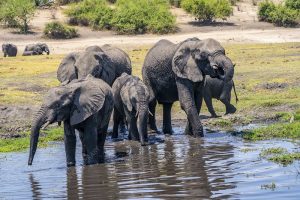
One of the most fascinating behaviors observed in elephants is their ability to swim and breathe simultaneously. When swimming across rivers or deep water, elephants will often submerge their entire bodies, leaving only the tip of the trunk above the surface—effectively using it like a snorkel.
This behavior demonstrates the evolutionary genius behind trunk design. The internal structure allows for continuous airflow from the tip of the trunk directly to the lungs, even when the rest of the body is submerged.
Muscular and Valve Adaptations
To accomplish this feat, elephants utilize:
- High muscular precision to keep the trunk tip stable and elevated.
- Internal valves that manage pressure and prevent water from entering the airway.
- Conscious breath control to regulate airflow while swimming.
These adaptations provide elephants with remarkable aquatic versatility, contributing to their ability to cross rivers and navigate various environments across Africa and Asia.
Anatomical Differences: Elephants vs. Humans
Separate Pathways for Air and Food
In humans, the mouth and throat are shared for both food and air, which increases the risk of choking. In elephants, the trunk is entirely dedicated to respiration, while ingestion occurs separately through the mouth.
The presence of a well-developed epiglottis, a flap-like structure at the base of the tongue, ensures that food and water do not accidentally enter the respiratory tract.
Advantages of Nasal Breathing
Being obligate nasal breathers gives elephants several advantages:
- Reduces the risk of aspiration while eating or drinking.
- Enables trunk submersion without compromising respiration.
- Improves sense of smell, as air constantly flows over olfactory sensors in the trunk.
This separation enhances survival, allowing elephants to drink, feed, and breathe with minimal risk.
Learning to Use the Trunk: Elephant Intelligence at Work
Baby Elephants and Trunk Mastery
Young elephants are not born knowing how to use their trunks efficiently. It takes several months of trial and error for them to develop the coordination needed for drinking, feeding, and social interaction. Watching a baby elephant playfully splash water or clumsily attempt to drink offers a window into the learning process.
Neural Complexity and Sensory Awareness
The elephant trunk contains tens of thousands of sensory receptors that make it one of the most sensitive organs in the animal kingdom. This allows elephants to:
- Pick up a single blade of grass
- Detect subtle changes in texture
- Communicate with others using gentle trunk touches
Advanced neural pathways connect the trunk to the brain, enabling complex motor control and tactile processing. This level of control surpasses that of almost any other mammal, including primates.
Recent Research and Scientific Insights
High-Speed Suction and Control
A 2021 study by researchers at the Georgia Institute of Technology revealed that elephants can inhale water at speeds of over 500 km/h (310 mph). This level of suction rivals that of commercial-grade vacuum pumps. The secret lies in the elastic tissue within the trunk and the precise muscular contractions that create rapid pressure differentials.
Implications for Biomimicry and Robotics
Scientists are now looking to elephant trunks for inspiration in robotics. Trunk-like manipulators could be used in surgical tools, search-and-rescue robots, or delicate industrial processes. Understanding how elephants manage breathing, movement, and force all at once is opening new doors in bioengineering.
Conclusion
Elephants are more than just large land mammals—they are intricate marvels of biological engineering. Their trunks, often romanticized as symbols of strength and wisdom, are actually complex tools that enable survival in harsh and dynamic environments. From drinking and feeding to communicating and breathing underwater, the elephant trunk is a true testament to evolutionary adaptation.
By understanding how elephants manage to breathe while drinking—without choking or suffocating—we gain deeper insight into the astonishing capabilities of nature. These findings not only enrich our appreciation for elephants but also inspire scientific innovation in fields ranging from medicine to robotics.
As we continue to study and protect these majestic creatures, we uncover more about the delicate balance of function, form, and intelligence that defines life on Earth.
How Woodpeckers Avoid Brain Damage