
 By admin
Introduction
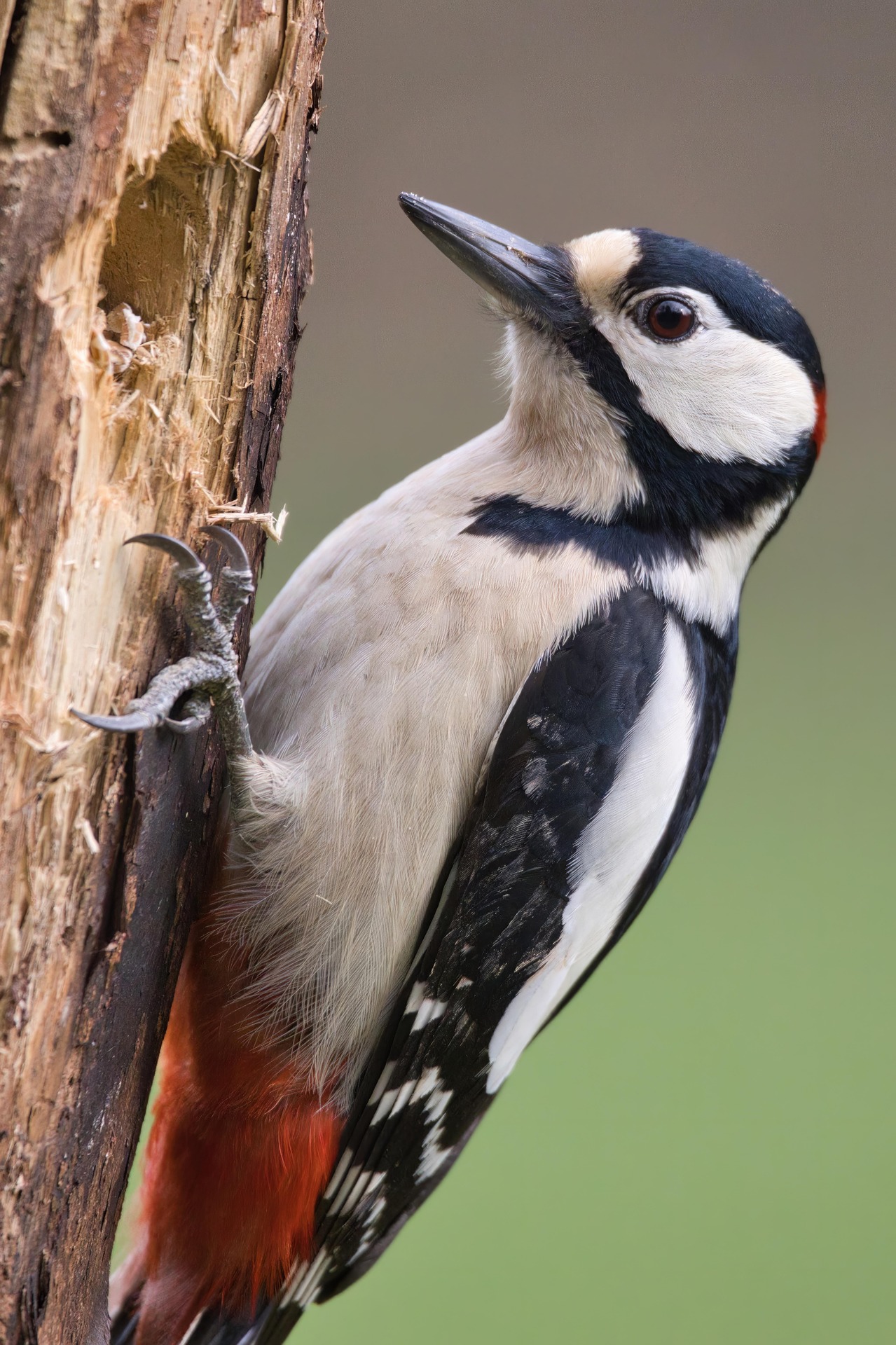
In the realm of natural engineering, few creatures are as captivating as the woodpecker. These industrious birds hammer their beaks into tree trunks at breakneck speeds—up to 20 times per second—without suffering any visible injury. While a single blow to the human head at such force would likely result in a concussion or worse, woodpeckers peck over 12,000 times a day with seemingly no ill effects.
This biological mystery has puzzled scientists and biomechanics experts for decades: How do woodpeckers avoid brain damage despite the intense and repetitive forces involved in pecking? Recent research combining high-speed imaging, anatomical studies, and biomechanical modeling has uncovered a sophisticated set of adaptations that shield the woodpecker’s brain from trauma.
In this article, we explore the cutting-edge science behind the woodpecker’s shock-absorbing physiology, its evolutionary significance, and how these findings are shaping innovations in technology, safety gear, and medicine.
The Physics of Pecking: What Happens During Impact?
Unpacking the Force
A woodpecker’s peck generates forces exceeding 1,200 Gs (gravitational force units)—an intensity over 10 times greater than the threshold at which a human brain can suffer a concussion (around 80–100 Gs). Yet, the woodpecker’s body is uniquely equipped to handle this force without sustaining neurological damage.
Key Impact Metrics:
-
Pecking speed: Up to 20 pecks per second
-
Impact force per peck: 1,000 to 1,200 Gs
-
Duration of each strike: ~1 millisecond
Despite these extreme conditions, woodpeckers exhibit no signs of trauma. The answer lies in their anatomy and physiology.
Anatomical Armor: The Shock-Proof Skull
The Skull’s Built-In Safety Features
1. Density-Gradient Bone Structure
The woodpecker’s skull isn’t uniformly hard. Instead, it features a bone density gradient:
-
The front of the skull, near the beak, is denser and stronger.
-
The rear of the skull, closer to the brain, is spongier and acts as a shock absorber.
This design enables the skull to disperse energy away from sensitive neural tissue.
2. Honeycomb Trabeculae System
The spongy areas of the skull contain a trabecular matrix—a lightweight, honeycomb-like bone structure that evenly distributes mechanical stress and reduces the transmission of impact to the brain.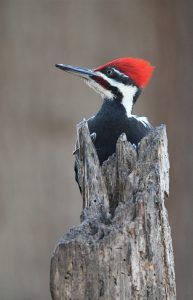
The Beak: Nature’s Energy Dissipator
3. Asymmetrical Beak Design
The woodpecker’s upper beak is slightly longer than the lower. This subtle difference allows energy to travel outward and away from the skull during impact.
4. Elasticity and Flexibility
Unlike rigid tools, the woodpecker’s beak has slight elasticity, which aids in absorbing shock and reducing the severity of transmitted vibrations.
The Hyoid Bone System: A Natural Suspension Harness
5. The Wraparound Tongue
One of the most astonishing adaptations is the elongated hyoid bone, which wraps around the skull, sometimes reaching over the top of the head. This structure supports the tongue and acts like a safety harness for the brain.
6. Suspension and Stability
The hyoid bone anchors and stabilizes the brain, reducing the risk of harmful jostling or movement inside the skull during pecking.
Microscopic Marvels: Neurological Adaptations
Brain Structure and Positioning
7. Tightly Packed Brain
Woodpeckers have small, compact brains that fit snugly within the skull. This minimizes the brain’s ability to move during impact, reducing the risk of concussions.
8. Strategic Brain Orientation
Unlike human brains that are prone to rotational injury, the woodpecker’s brain is oriented to minimize rotational forces, a major cause of traumatic brain injuries.
Protective Fluid Dynamics
9. Minimal Cerebrospinal Fluid
In contrast to humans, woodpeckers have very little cerebrospinal fluid (CSF) around the brain. While CSF cushions the brain under normal conditions, it can allow the brain to “slosh” inside the skull during sudden impacts. Less fluid means less movement, which in this case is protective.
Cellular-Level Resilience
10. Resilient Brain Cells
Emerging research suggests that woodpecker neurons are more tolerant to mechanical stress.
11. Upregulated Protective Proteins
Woodpeckers show increased expression of proteins involved in cellular repair and neuroprotection, potentially reducing cumulative damage over time.
12. High Neuroplasticity
Preliminary findings indicate that these birds may exhibit enhanced neuroplasticity, allowing their brains to recover more efficiently from microtraumas.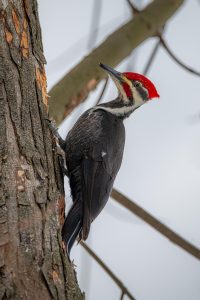
Technology Inspired by Woodpeckers
Biomimicry in Safety Gear
13. Next-Gen Helmet Design
Woodpecker biomechanics have inspired improvements in helmet technology, particularly for sports and military applications. Innovations include:
-
Layered composite materials mimicking the skull’s density gradient
-
Improved shock absorbers based on the trabeculae system
-
Flexible outer shells to disperse impact forces
14. Neck and Spine Protection
The structure of the hyoid bone has influenced neck support systems that reduce head motion during collisions or falls, aiding in spinal injury prevention.
Applied Research
15. Data from the Field
Scientists have attached accelerometers to woodpeckers to measure real-time impact forces during pecking. These data are used to simulate collisions in crash-test environments and test new materials for protective equipment.
Are Woodpeckers Truly Immune to Brain Damage?
While woodpeckers seem perfectly adapted, recent studies challenge the notion of complete immunity to trauma.
Findings from Neurology Studies
16. Tau Protein Accumulation
A 2022 study revealed that tau proteins, often associated with chronic traumatic encephalopathy (CTE) in humans, were found in woodpecker brains. This suggests minor accumulative damage may still occur.
17. Unknown Long-Term Effects
It’s not yet clear whether these proteins impair the birds’ cognitive functions or behavior. Further research is needed to determine whether neurological wear-and-tear affects lifespan or performance.
Conclusion: Lessons from a Feathered Engineer
The woodpecker represents a masterclass in evolutionary engineering. Its suite of adaptations—from a shock-absorbing skull to a suspension-like hyoid bone system—enables it to perform a behavior that would be catastrophically damaging to most animals.
These adaptations don’t just satisfy scientific curiosity—they hold real promise for human innovation. Helmet design, vehicle safety, and protective gear are all benefiting from the study of woodpeckers. As we continue to unlock the secrets of this bird’s biology, we inch closer to applying nature’s lessons to our own designs.
Woodpeckers don’t just survive impact—they’ve mastered it. And through them, we are learning how to make ourselves safer, smarter, and better equipped for high-impact environments.
The Ultimate Guide to Dog Grooming