
 By admin
Introduction
Alcohol has been consumed by humans for thousands of years—for celebration, social bonding, relaxation, and even ritual. Yet behind these familiar cultural practices lies a powerful neurochemical substance capable of altering the brain in profound and sometimes devastating ways. Modern neuroscience reveals that alcohol is not merely a beverage that influences mood; it is a psychoactive drug that disrupts communication between neurons, affects the structure of brain tissues, and interferes with the delicate balance between thought, emotion, and physical coordination.
Scientific research has advanced significantly in the last century, allowing us to understand in detail how alcohol travels through the bloodstream, penetrates the brain, and alters its functioning. Whether consumed occasionally, socially, or in dangerous excess, alcohol acts on nearly every part of the central nervous system. At low doses, it appears to relax inhibitions and enhance sociability. At higher doses, it impairs judgment, slows motor coordination, depresses vital brain centers, and in extreme cases leads to unconsciousness or death.
This article explores the effects of alcohol on the brain through a professional, structured, and science-based lens. It examines how alcohol impacts brain tissues, the spinal cord and peripheral nerves, the judgment and emotional centers, and the deeper regulatory systems responsible for consciousness and life itself. Understanding these physiological mechanisms not only reveals why alcohol alters behavior so dramatically, but also why chronic or excessive drinking can have long-lasting and irreversible consequences.
Alcohol’s Impact on Brain Structure and Function
1. Alcohol and Brain Tissue: What Modern Science Reveals
One of the most striking observations about alcohol’s impact on the brain comes from historical and contemporary medical examinations. When individuals die from acute alcohol poisoning or violent accidents while intoxicated, their brain tissue often shows visible signs of alcohol’s extreme vascular and chemical effects.
Modern neuropathology confirms these findings. After significant alcohol intake:
- Blood vessels in the brain become extremely dilated, creating an engorged, reddish appearance.
- Brain membranes swell, as alcohol alters fluid balance within cerebral tissues.
- The white matter becomes less distinguishable, as alcohol diffuses through nerve fibers.
- Neurons exhibit signs of chemical stress, including inflammation and oxidative damage.
Alcohol’s Rapid Diffusion Into Brain Tissue
Because alcohol is both water-soluble and fat-soluble, it crosses the blood–brain barrier with extraordinary ease. Within minutes of consumption, it spreads through brain tissue, altering neurotransmitter activity and affecting regions responsible for memory, coordination, decision-making, and emotional control.
Impact on the Cerebrum and Cerebellum
Alcohol affects: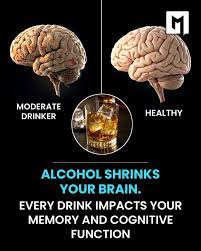
- The cerebrum, responsible for judgment, personality, reasoning, and voluntary movement.
- The cerebellum, controlling balance, motor coordination, and fine muscle control.
This dual influence explains why intoxicated individuals often display slowed thinking, slurred speech, impaired balance, and poor motor coordination.
Relative Resistance of the Brainstem
Interestingly, the medulla—the region that controls breathing and heartbeat—shows fewer immediate structural effects from alcohol. This relative resistance is one reason intoxicated individuals often lose consciousness before alcohol directly shuts down the heart.
2. Alcohol and the Spinal Cord: Disrupting Automatic Movements
The spinal cord plays a central role in controlling automatic and semi-automatic movements, allowing the body to perform everyday tasks with minimal conscious effort.
Under normal conditions, actions such as walking, grasping objects, and maintaining posture occur smoothly because the spinal cord works in harmony with higher brain centers. Alcohol disrupts this harmony in several stages.
Stage 1: Interference with Automatic Motor Functions
As alcohol enters spinal structures:
- Automatic movements become inaccurate.
- Tasks previously performed effortlessly now require conscious concentration.
- Movements such as reaching for an object or stepping forward become hesitant or poorly coordinated.
For instance, a skilled worker under the influence may struggle to perform tasks that normally require no mental focus.
Stage 2: Loss of Muscular Coordination
Alcohol weakens both the nervous impulses sent to muscles and the muscles’ ability to respond.
Effects include:
- Reduced motor strength
- Slower reaction time
- Decreased ability to coordinate limbs
- Fatigue or sudden loss of control
The lower lip muscles often weaken first—explaining the familiar “drooping mouth” of intoxicated individuals. Next, the legs become unstable, especially the extensor muscles, which normally help the body stand upright.
Stage 3: Nausea and Vomiting in Young Drinkers
In adolescents and young adults, the spinal cord and peripheral nervous system are still developing. When alcohol reaches higher doses, the body often triggers:
- Nausea
- Vomiting
- Weakness
- Temporary collapse
This reaction serves as a protective mechanism to expel the toxin before it causes more serious harm.
3. Alcohol’s Impact on the Higher Brain Centers
As alcohol reaches deeper into the cerebral cortex and the limbic system, the effects become more dramatic and dangerous.
The Loss of Judgment and Willpower
The brain’s higher centers—responsible for decision-making, reasoning, impulse control, and judgment—are highly sensitive to alcohol.
When impaired:
- The rational mind becomes weakened.
- Clear thinking deteriorates.
- Emotional and instinctive responses dominate behavior.
This explains why intoxicated individuals often engage in risky or aggressive conduct that they would avoid when sober.
“In Vino Veritas”: The Exposure of Raw Emotion
The Latin phrase “In vino veritas” (“In wine, there is truth”) reflects a physiological reality:
Alcohol unmasks internal emotional tendencies.
Depending on personality and emotional state, alcohol may make a person:
- Angrier
- More fearful
- Overconfident
- More affectionate
- More impulsive
Because the rational centers lose control, suppressed emotions and instincts emerge without restraint.
Disruption of the Brain’s Organizational Systems
As the cerebral cortex becomes overwhelmed:
- Thoughts become chaotic
- Memory becomes unreliable
- Sensory perception becomes distorted
- Speech becomes incoherent
These effects worsen as blood alcohol concentration rises.
4. Alcohol at Its Extreme: Shutdown of Vital Brain Functions
At very high levels of intoxication, alcohol begins to depress the most essential brain centers.
Clouded Senses and Loss of Voluntary Movement
Eventually:
- Vision blurs
- Hearing becomes dull
- Sensory perception fades
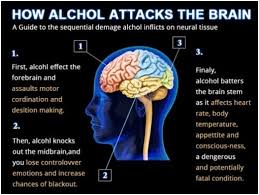
- Voluntary muscle control collapses
The body becomes unresponsive—a condition resembling partial paralysis.
The Final Stage Before Death
When intoxication reaches peak levels:
- The person becomes unconscious
- Reflexes slow dramatically
- Breathing becomes shallow
- The body lies motionless, supported only by the heartbeat and minimal respiratory effort
Fortunately, the heart remains functional longer than the brain. This delay prevents many intoxicated individuals from drinking themselves into immediate cardiac arrest.
However, if alcohol levels continue to rise—particularly during binge drinking—breathing can stop altogether, leading to fatal alcohol poisoning.
5. Long-Term Consequences: What Chronic Alcohol Use Does to the Brain
While the original text focuses on acute intoxication, modern neuroscience has identified extensive long-term damage caused by chronic drinking.
Structural Brain Shrinkage
Chronic alcohol exposure reduces brain volume, especially in:
- The frontal lobes
- The hippocampus
- The cerebellum
These changes lead to long-term deficits in memory, coordination, and reasoning.
Neurotransmitter Imbalance
Alcohol disrupts key brain chemicals, including:
- GABA (inhibition)
- Glutamate (learning and memory)
- Dopamine (reward and addiction)
- Serotonin (mood regulation)
This imbalance contributes to dependency, depression, and cognitive decline.
Wernicke–Korsakoff Syndrome
A severe neurodegenerative condition caused by alcohol-induced vitamin B1 deficiency. Symptoms include:
- Confusion
- Memory loss
- Difficulty walking
- Permanent cognitive damage
Increased Risk of Stroke and Dementia
Chronic alcohol use increases the likelihood of:
- Stroke
- Early-onset dementia
- Vascular cognitive impairment
Conclusion
Alcohol’s effects on the brain extend far beyond temporary intoxication. Its influence is immediate, profound, and multifaceted—impacting brain tissue, disrupting spinal cord functions, distorting emotional regulation, and impairing judgment at every stage of consumption. At higher doses, alcohol becomes a powerful brain depressant capable of shutting down consciousness and dangerously weakening the body’s vital functions.
Modern scientific research reinforces what physicians and neurologists have observed for centuries: alcohol is not merely a social beverage but a potent psychoactive substance. Its short-term effects may seem pleasurable or liberating, but its capacity to impair reasoning, coordination, and emotional stability makes it a significant public health concern.
Understanding how alcohol affects the brain empowers individuals to make informed decisions about their drinking habits. Whether one chooses moderation, abstinence, or recovery from dependence, knowledge remains the first and most powerful tool for protecting the health of the brain—the organ that defines who we are.
The Ultimate Detox Nutrition Guide