
 By admin

The History of Archery: From Ancient Survival Tool to Modern Precision Sport
Introduction
Throughout human history, few tools have influenced survival, warfare, and culture as profoundly as the bow and arrow. Long before the development of firearms, archery served as one of humanity’s most effective technologies for hunting, defense, and military conquest. From prehistoric hunters tracking animals across vast landscapes to elite warriors defending powerful empires, archery shaped civilizations and determined the outcomes of countless battles.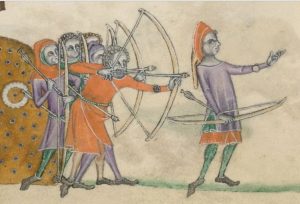
Archaeological discoveries show that archery dates back tens of thousands of years, making it one of the oldest technological innovations created by humankind. Early humans used simple wooden bows and stone-tipped arrows to hunt animals and defend themselves against predators. Over time, this basic tool evolved into a sophisticated weapon system that required immense skill, training, and precision.
Archery also became deeply embedded in the cultures of many ancient societies. Kingdoms and empires across Asia, the Middle East, Europe, and Africa relied heavily on archers in warfare. Highly trained archers could launch arrows with remarkable accuracy and speed, making them formidable warriors on the battlefield.
Today, although archery is no longer a primary weapon of war, it remains an important sport, cultural tradition, and recreational activity. Modern competitions, including the Olympic Games, showcase the incredible precision and discipline required to master this ancient skill.
This article explores the fascinating history of archery, tracing its development from prehistoric times through ancient civilizations and into the modern era. It also examines the evolution of bows and arrows, the techniques used by archers, and the role of archery in shaping human history.
Origins of Archery in Prehistoric Times
Early Human Innovation
The invention of the bow and arrow represents one of humanity’s earliest engineering breakthroughs. Archaeologists believe that archery first appeared during the late Paleolithic Age, although some evidence suggests it may have become widespread during the Mesolithic Age.
Primitive bows were crafted from flexible wood, while arrows were often made from straight wooden shafts tipped with sharpened stone or flint. These early weapons allowed hunters to attack prey from a distance, greatly increasing both safety and success rates during hunts.
Before the invention of archery, humans relied primarily on spears and other hand-held weapons. These tools required close proximity to animals, which made hunting dangerous and inefficient. The bow and arrow transformed hunting by enabling early humans to strike from a safe distance with improved accuracy.
Archaeological Discoveries
Excavations across the world have uncovered numerous artifacts that shed light on the early use of archery. One of the oldest known bows was discovered in Denmark, dating back several thousand years. Similar discoveries have been made in ancient sites across Egypt, India, and Sweden.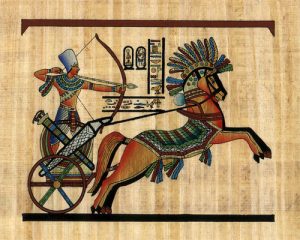
These findings demonstrate that archery developed independently in many parts of the world. Despite geographical differences, early bows and arrows shared common characteristics: wooden shafts, stone arrowheads, and feathered fletching designed to stabilize flight.
Such archaeological evidence highlights the universal importance of archery as a survival technology during prehistoric times.
Archery in Ancient Civilizations
The Role of Archery in Early Empires
As civilizations emerged, archery quickly became a vital military skill. Ancient armies relied heavily on archers to weaken enemy forces before close combat began. Skilled archers could rain arrows onto opposing troops, creating chaos and confusion on the battlefield.
Archery was particularly important in ancient civilizations such as:
- Egypt
- India
- Greece
- Persia
These cultures developed specialized training programs to produce highly skilled archers capable of fighting in both offensive and defensive roles.
In many cases, archers were trained from childhood. Young warriors practiced for years to master the techniques needed to shoot accurately while standing, running, or even riding horses.
Archery in Asian and Islamic Kingdoms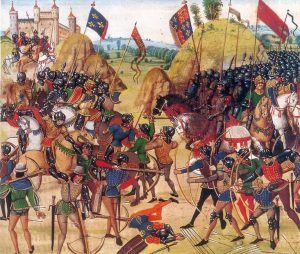
Archery reached remarkable levels of sophistication in Asia and within various Islamic empires. Mounted archers, particularly those from Central Asia, revolutionized warfare by combining mobility with long-range firepower.
Horse archers could shoot arrows while riding at high speeds, making them extremely difficult to counter. This tactic was famously used by the armies of the Genghis Khan and the Mongol Empire, whose mounted archers conquered vast territories across Asia and Europe.
Islamic military traditions also placed great emphasis on archery. Warriors trained extensively with bows and arrows, considering archery both a military skill and a noble discipline.
Types of Bows Throughout History
Over centuries, different cultures developed a variety of bow designs suited to their specific needs. Each type of bow offered unique advantages in terms of power, accuracy, and portability.
Longbow
The longbow is perhaps the most famous traditional bow in history. Its length often matched or exceeded the height of the archer using it.
The longbow became legendary in medieval Europe, particularly in England. English archers wielding longbows played a decisive role in several historic battles during the Hundred Years’ War.
Longbows were capable of launching arrows over long distances with significant force, making them devastating weapons on the battlefield.
Shortbow
Shortbows were smaller and lighter than longbows. Their compact size made them easier to carry and maneuver, especially in dense forests or while hunting.
Because of their shorter range and lower draw weight, shortbows were commonly used for hunting rather than large-scale warfare.
Flatbow
Flatbows featured wider limbs and a rectangular cross-section. This design distributed stress more evenly across the bow, improving durability and efficiency.
Flatbows were used in many cultures due to their reliability and ease of construction.
Recurve Bow
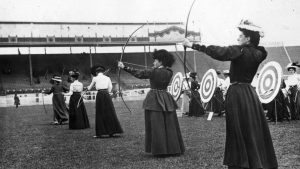
The recurve bow is distinguished by its curved limbs, which bend away from the archer when unstrung. This design stores more energy during the draw and releases it quickly upon firing.
Recurve bows remain widely used today in professional archery competitions, including the Olympic Games.
Crossbow
The crossbow represents a significant innovation in archery technology. Unlike traditional bows, crossbows are mounted horizontally on a frame and fired using a trigger mechanism.
This design made crossbows easier to use because the archer could hold the bow in a drawn position without continuous effort. As a result, crossbows required less training than traditional bows.
Compound Bow
The compound bow is a modern development that incorporates pulleys and cables to reduce the force required to hold the bow at full draw.
This advanced design allows archers to maintain greater accuracy and stability, making compound bows extremely popular in modern competitive and recreational archery.
The Structure and Design of Arrows
An arrow may appear simple, but its design involves several carefully engineered components.
Main Parts of an Arrow
A typical arrow consists of four primary components:
- Shaft
- Arrowhead
- Nock
- Fletching
Each element plays a crucial role in ensuring that the arrow travels accurately toward its target.
Materials Used in Arrow Construction
Historically, arrow shafts were made from natural materials such as wood or pine. Stone or flint arrowheads were attached to the front to create a sharp point capable of penetrating animal hide or armor.
Modern archery uses advanced materials to improve performance. Arrow shafts today are commonly made from:
- Aluminum alloys
- Carbon fiber
- Fiberglass
- Engineered wood composites
Carbon arrows are particularly popular because they combine strength, lightweight design, and excellent aerodynamic stability.
Many professional competitions now rely on carbon arrows due to their superior accuracy and durability.
Archery Techniques and Shooting Methods
Over centuries, archers developed various techniques for aiming and releasing arrows. Two major shooting methods have dominated archery practice.
Instinctive Shooting
Instinctive shooting is one of the oldest archery techniques. In this method, the archer focuses entirely on the target without using mechanical aids or sights.
The shooter relies on muscle memory, body alignment, and instinct to guide the arrow. Achieving consistent accuracy through instinctive shooting requires years of practice and deep concentration.
This technique was widely used in ancient warfare and traditional hunting cultures.
Sight Shooting
Sight shooting emerged with the development of adjustable aiming devices attached to bows.
These sights contain pins or markers that allow archers to align their shots precisely with the target. By adjusting the pins, archers can compensate for distance and arrow trajectory.
Sight shooting greatly improves accuracy and is commonly used in modern archery competitions and training programs.
The Decline of Archery in Warfare
The Rise of Firearms
Despite its effectiveness, archery eventually declined as a military weapon following the invention of firearms.
Gunpowder weapons offered several advantages:
- Greater destructive power
- Longer effective range
- Easier training for soldiers
Firearms allowed armies to equip large numbers of troops quickly, reducing the need for years of specialized archery training.
As a result, bows and arrows gradually disappeared from battlefields across the world.
The End of Archery as a Military Weapon
By the early modern period, firearms had largely replaced archery in military forces. Kingdoms that failed to adopt gunpowder weapons often suffered devastating defeats against opponents equipped with muskets and cannons.
Nevertheless, archery continued to survive in hunting traditions and cultural practices.
Archery in the Modern World
Archery as a Competitive Sport
Today, archery is widely practiced as both a sport and recreational activity. International competitions attract elite athletes from around the globe.
One of the most prestigious platforms for competitive archery is the Olympic Games, where athletes demonstrate extraordinary precision by hitting small targets from significant distances.
Modern training methods incorporate sports science, biomechanics, and advanced equipment technology to improve performance.
Archery in Culture and Recreation
Beyond competitive sports, archery continues to play an important role in cultural traditions. Many communities around the world maintain historical archery practices as part of their heritage.
Recreational archery has also grown in popularity, with clubs, training centers, and outdoor ranges offering opportunities for enthusiasts to learn the ancient craft.
Additionally, archery has gained renewed interest through movies, historical reenactments, and fantasy literature, which often portray legendary archers and epic battles.
Conclusion
The history of archery is a story of human ingenuity, survival, and innovation. From its origins in prehistoric hunting societies to its role in shaping powerful civilizations, archery has left an indelible mark on human history.
For thousands of years, the bow and arrow served as essential tools for hunting, warfare, and defense. Skilled archers played decisive roles in ancient battles and were revered for their precision, discipline, and bravery.
Although firearms eventually replaced archery in military combat, the art of shooting arrows has never disappeared. Instead, it evolved into a respected sport and cultural tradition that continues to captivate people around the world.
Modern archery combines ancient techniques with advanced technology, preserving the legacy of one of humanity’s oldest inventions. Whether practiced competitively, recreationally, or historically, archery remains a powerful symbol of focus, skill, and human determination.
Happiness Is a Skill: Learn How to Build It