
 By admin
Bayern Munich: The German Football Giant That Built a Global Standard of Excellence
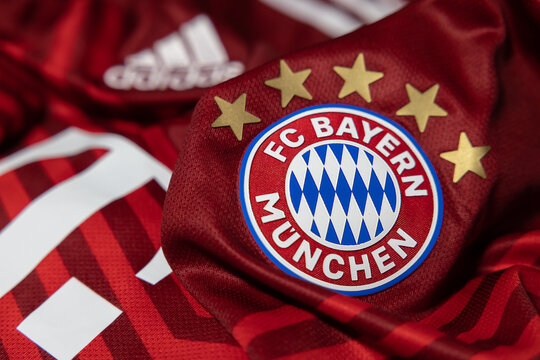
FC Bayern Munich is more than a football club. It is a sporting institution, a symbol of German efficiency, and one of the most powerful brands in world football. Based in Munich, Bavaria, Bayern has built a reputation on winning, discipline, identity, elite management, and an ability to renew itself across generations. From its foundation in 1900 to its modern dominance at the Allianz Arena, the club has become a model for how sporting success, financial stability, and global influence can work together.
The story of Bayern Munich began on 27 February 1900, when eleven footballers founded “Fußballclub Bayern München” at Café Gisela near Odeonsplatz in Munich. The group was led by Franz John, who became the club’s first president and helped shape the club’s early independent identity. According to Bayern’s official history, the club’s founding document was signed by 17 members in February 1900, marking the start of what would later become Germany’s most successful football institution. (FC Bayern)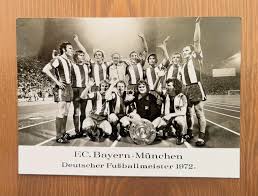
A Club Built on Identity and Ambition
Bayern Munich’s identity is deeply connected to Bavaria, but its ambition has always gone far beyond regional pride. The club’s famous red colors, its disciplined culture, and the phrase “Mia san mia” represent confidence, self-belief, and a refusal to accept average standards. This mentality is not just marketing. It is visible in the way Bayern recruits players, develops coaches, manages finances, and responds to failure.
Unlike some clubs whose success depends mainly on wealthy owners or short-term spending cycles, Bayern has historically promoted a model based on strong internal leadership, commercial strength, fan culture, and sporting continuity. The club is expected to win the Bundesliga, compete seriously in Europe, and develop a squad capable of challenging the best teams in the world. This pressure can be heavy, but it is also what keeps Bayern at the highest level.
The club’s record of trophies confirms this position. Bayern’s official honours page lists 34 German Championship victories through the 2024/25 season, 20 DFB German Cup wins, 12 German Supercup victories, six European Cup or UEFA Champions League titles, one UEFA Cup, one UEFA Cup Winners’ Cup, two Intercontinental Cups, two FIFA Club World Cups, and two UEFA Super Cups. (FC Bayern)
Domestic Dominance in Germany
Bayern Munich’s dominance in German football is one of the most remarkable patterns in European sport. While the Bundesliga has produced strong clubs such as Borussia Dortmund, Bayer Leverkusen, RB Leipzig, VfB Stuttgart, Werder Bremen, and Schalke 04, Bayern has consistently found ways to stay ahead. The club’s advantage comes from several areas: stronger revenue, better squad depth, a winning mentality, and the ability to attract top German and international players.
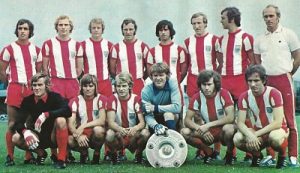
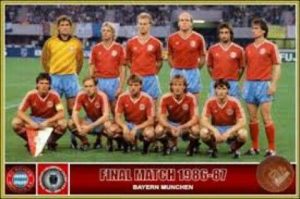
Bayern’s domestic success is not only about having famous names. It is also about consistency. The club has repeatedly replaced legends without losing its competitive level. When one generation ended, another emerged. Franz Beckenbauer, Gerd Müller, Sepp Maier, Karl-Heinz Rummenigge, Lothar Matthäus, Oliver Kahn, Philipp Lahm, Bastian Schweinsteiger, Arjen Robben, Franck Ribéry, Robert Lewandowski, Thomas Müller, Manuel Neuer, Joshua Kimmich, Jamal Musiala, Harry Kane, and other stars all belong to different eras, but the standard remained similar: Bayern must win.
As of 12 May 2026, Bayern were leading the 2025/26 Bundesliga table with 86 points after 3
3 matches, with a record of 27 wins, five draws, and one defeat. The Bundesliga’s official club profile also showed Bayern with 117 goals scored and 35 conceded at that stage, underlining the team’s attacking strength and overall control of the league campaign. (Bundesliga)
European Prestige and Champions League Legacy
Bayern Munich’s reputation is not limited to Germany. The club belongs to the elite group of European football giants because of its record in the European Cup and UEFA Champions League. Bayern’s six European Cup or Champions League victories came in 1974, 1975, 1976, 2001, 2013, and 2020, according to the club’s official honours list. (FC Bayern)
The 1970s created Bayern’s first great European dynasty. Led by figures such as Franz Beckenbauer, Gerd Müller, and Sepp Maier, Bayern won three consecutive European Cups between 1974 and 1976. That period established the club as a continental force and gave it a permanent place in football history.
The 2001 Champions League victory restored Bayern’s European status after years of frustration, including the dramatic 1999 final defeat against Manchester United. The 2013 triumph under Jupp Heynckes was part of a historic treble, with Bayern winning the Bundesliga, DFB-Pokal, and Champions League. The 2020 triumph under Hansi Flick was another treble season and also formed part of a wider period in which Bayern won every major competition available to them.
In 2026, Bayern again reached the advanced stages of the Champions League but were eliminated by Paris Saint-Germain in the semi-finals. Reuters reported that PSG advanced to the final with a 6-5 aggregate victory after a 1-1 draw in Munich on 6 May 2026. Harry Kane scored a stoppage-time equalizer in the second leg, but it was too late to save Bayern’s European campaign. (Reuters)
The Allianz Arena: A Modern Football Cathedral
The Allianz Arena is one of the most recognizable stadiums in world football. It
s illuminated exterior, modern design, and intense matchday atmosphere make it a powerful symbol of Bayern’s modern era. The stadium has a total capacity of 75,024 seats for national games and 70,000 for international games without standing areas. The official Allianz Arena information page also notes that, because of a UEFA pilot project, 75,024 seats are currently authorized on Champions League matchdays. (Allianz Arena)
The move to the Allianz Arena in 2005 marked a major step in Bayern’s modernization. It gave the club a world-class home, strengthened matchday revenue, improved the fan experience, and reinforced Bayern’s image as a club prepared for the future. The stadium is not simply a venue; it is part of the Bayern brand.
For visiting teams, the Allianz Arena is one of the most difficult places in Europe. Bayern’s fans create pressure from the first minute, and the players are expected to dominate. The stadium’s design helps create a sense of theater, especially during big Champions League nights. When the red lights shine across the outer shell, the arena b
ecomes a visual representation of Bayern’s power and identity.
Current Squad and Sporting Direction
Bayern’s current team combines experienced leaders, world-class attackers, versatile midfielders, and emerging young players. According to Bayern’s official first-team page and the Bundesliga club profile, the 2025/26 squad includes players such as Manuel Neuer, Dayot Upamecano, Minjae Kim, Jonathan Tah, Alphonso Davies, Raphaël Guerreiro, Joshua Kimmich, Leon Goretzka, Jamal Musiala, Michael Olise, Aleksandar Pavlović, Serge Gnabry, Harry Kane, Nicolas Jackson, and Luis Díaz. (FC Bayern)
The presence of Harry Kane gives Bayern one of the most complete centre-forwards in the world. Kane offers goals, link-up play, leadership, passing range, and penalty-box intelligence. Jamal Musiala brings creativity, dribbling, and unpredictability between the lines. Michael Olise adds technical quality and wide attacking threat. Luis Díaz brings speed, directness, and intensity. Together, these players give Bayern several ways to attack opponents.
In midfield, Joshua Kimmich remains central to Bayern’s structure. His passing, pressing intelligence, and leadership make him one of the team’s most influential figures. Aleksandar Pavlović represents the younger generation and gives Bayern another option in central areas. In defense, players such as Dayot Upamecano, Minjae Kim, Jonathan Tah, Alphonso Davies, Raphaël Guerreiro, and Josip Stanišić provide a mix of pace, strength, technical ability, and tactical flexibility.
Vincent Kompany and the Tactical Evolution
Vincent Kompany joined Bayern Munich as head coach on 1 July 2024, and Bayern’s official profile lists his contract as running until 30 June 2029. Before Bayern, Kompany coached Anderlecht and Burnley, and as a player he represented clubs including Anderlecht, Hamburger SV, and Manchester City. (FC Bayern)
Kompany’s Bayern is built around aggressive football, high pressing, technical circulation, and attacking ambition. His background as a defender gives him an understanding of structure, but his coaching approach also emphasizes proactive football. Bayern are expected to take the initiative, dominate possession, recover the ball quickly, and create repeated attacking waves.
The Bundesliga’s official statistics for the 2025/26 season show Bayern’s control clearly. After 33 league matches, the team had recorded 117 goals, 62 percent average possession, 615 shots on goal, and a 90.3 percent successful pass rate from open play. These numbers reflect a team that does not merely win matches but seeks to control them through territory, possession, and attacking volume. (Bundesliga)
However, the Champions League semi-final defeat to PSG also showed the challenge Bayern still faces. Elite European competition often punishes even small defensive gaps. Bayern’s attacking style can overwhelm most opponents, but against the strongest teams, tactical balance and game management become decisive. For Kompany, the next step is not to reduce Bayern’s ambition but to refine it.
Financial Strength and Professional Management
One of Bayern Munich’s greatest advantages is financial stability. The club has developed a business model that allows it to compete with state-backed clubs, Premier League giants, and global football brands without losing its identity. Bayern’s commercial power comes from sponsorships, matchday income, broadcasting revenue, merchandising, global fan engagement, and strong corporate partnerships.
In November 2025, Bayern announced record turnover for the 2024/25 financial year. According to the club’s official statement, total turnover reached €978.3 million, operating profit rose to €187.8 million, pre-tax profit reached €42.5 million, and net profit for the year was €27.1 million. (FC Bayern)
Associated Press also reported that Bayern had reached 432,500 members, after adding 50,000 new members in one year. The same report quoted Bayern president Herbert Hainer as saying this made Bayern bigger by membership than any other club in the world. (AP News)
This financial structure matters because it gives Bayern freedom. The club can invest in elite players, improve facilities, retain stars, and plan long term. It also gives Bayern resilience during difficult seasons. When the team fails in Europe or loses a major player, the club usually has the resources and institutional strength to respond quickly.
Youth Development and German Football Influence
Bayern Munich is often associated with signing elite players, but youth development is also part of the club’s long-term strategy. The FC Bayern Campus is designed to produce players who understand the club’s technical and mental demands. In modern football, developing young talent is not only a sporting priority but also a financial necessity. Clubs that produce first-team players save transfer money and strengthen their identity.
Bayern’s relationship with German football is complex. On one hand, the club is a source of pride because it represents Germany at the highest European level. On the other hand, its dominance can create frustration among rival fans who want a more balanced Bundesliga title race. Yet Bayern’s success also forces competitors to improve. Clubs such as Borussia Dortmund, Bayer Leverkusen, and RB Leipzig have all developed strong recruitment and development models partly because they must compete with Bayern’s standard.
Bayern has also been central to the German national team’s history. Many of Germany’s greatest players represented Bayern, and the club has often provided the backbone of the national team. From Beckenbauer and Müller to Lahm, Schweinsteiger, Neuer, Kimmich, and Musiala, Bayern’s influence on German football has been enormous.
Global Brand and Fan Culture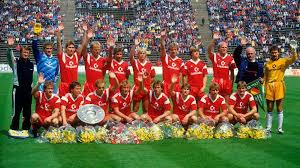
Bayern Munich’s fan base is global. The club has supporters across Europe, Asia, Africa, the Middle East, and the Americas. Its appeal comes from trophies, legendary players, attacking football, and the image of a club that combines tradition with modern professionalism.
The global football market rewards clubs that can tell a clear story. Bayern’s story is easy to understand: a German giant built on discipline, ambition, loyalty, and excellence. This identity travels well internationally. Fans may not live in Munich or speak German, but they understand what Bayern represents.
The club’s fan culture also remains strongly connected to local roots. Bayern is a global brand, but it still carries Bavarian identity. This balance between local authenticity and international reach is difficult to achieve. Some clubs become global but lose their original character. Bayern has largely managed to grow without abandoning its roots.
Challenges Facing Bayern Munich
Even a club as successful as Bayern Munich faces serious challenges. The first challenge is European competition. Winning the Bundesliga is expected, but the Champions League is the true test of Bayern’s global standing. A season without European success can feel incomplete, even if domestic trophies are won.
The second challenge is squad renewal. Football moves quickly, and Bayern must constantly manage the transition between experienced stars and younger players. Manuel Neuer and other senior figures cannot play forever. The club must maintain leadership while giving younger players responsibility.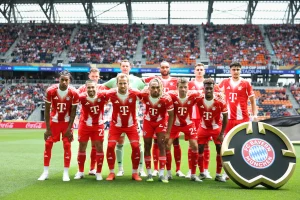
The third challenge is tactical balance. Kompany’s attacking Bayern can dominate matches, but the Champions League demands flexibility. Against elite teams, Bayern must know when to press, when to control rhythm, when to slow the match, and when to protect space behind the defensive line.
The fourth challenge is competition from financially powerful clubs. Premier League clubs, state-backed projects, and Spanish giants all compete for the same elite players. Bayern’s reputation remains strong, but transfer markets are increasingly expensive. Smart recruitment is therefore essential.
Why Bayern Munich Remains a Model Club
Bayern Munich remains a model club because it combines three qualities that are rarely found together: sporting success, financial discipline, and cultural identity. Many clubs win for a short period, but few remain competitive across decades. Bayern’s strength is not only that it wins. Its strength is that it has built a system designed to keep winning.
The club has a clear hierarchy, strong expectations, a powerful stadium, a global fan base, and a history that inspires players to perform. When a footballer joins Bayern, he understands that second place is rarely acceptable. That pressure can be difficult, but it is also why Bayern attracts ambitious professionals.
Bayern’s future will depend on how well the club handles the next phase of its evolution. Under Vincent Kompany, Bayern has a coach with a modern vision, a squad full of attacking talent, and the institutional support to keep competing. The Champions League remains the ultimate objective, but Bayern’s foundation is strong enough to ensure that the club will continue to shape European football for years to come.
Conclusion
Bayern Munich is not simply Germany’s most successful football club. It is one of the defining institutions of modern football. Its history began in a Munich café in 1900, but its influence now reaches every continent. The club’s success has been built through legendary players, intelligent management, financial stability, a world-class stadium, passionate supporters, and an uncompromising demand for excellence.
In Germany, Bayern sets the standard. In Europe, Bayern remains one of the clubs every opponent respects. Around the world, Bayern represents a model of how tradition and modernity can work together. The club has faced setbacks, and it will face more in the future, but its structure gives it a rare ability to recover, rebuild, and return stronger.
For any football fan, Bayern Munich is a club worth studying. It shows that greatness is not created by one golden generation alone. True greatness comes from culture, discipline, ambition, and the ability to repeat success across time. That is why Bayern Munich remains one of the most important football clubs in the world.
Applying Aikido Moves in Self-Defense