
 By admin
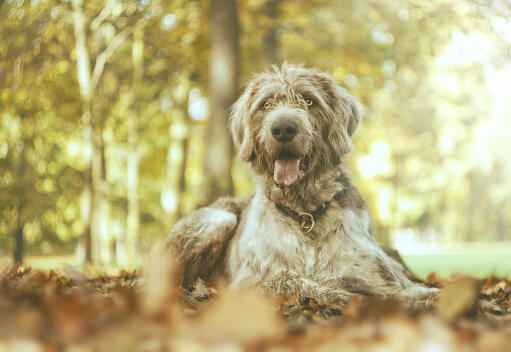
The Deerhound: A Comprehensive Guide to Scotland’s Majestic Sighthound
Introduction
The Deerhound stands as one of the most magnificent and visually striking breeds in the canine world, commanding admiration through its imposing stature and picturesque elegance wherever it appears. Whether positioned within the grand surroundings of a baronial estate, reclining in luxurious repose before a crackling hearth where firelight dances across polished armor and aged tapestries, or surging across the open landscape with powerful grace, this breed embodies an aesthetic that transcends mere physical beauty. The Deerhound possesses an innate nobility that evokes the romanticized imagery of feudal Scotland—a creature seemingly born from the pages of medieval poetry and Highland legend.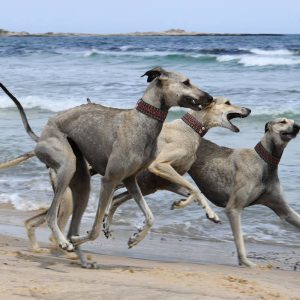
Every movement of the Deerhound radiates grace and majesty, from the deliberate placement of its large, compact feet to the fluid arch of its well-muscled loin. Even observers with no particular affinity for dogs find themselves captivated by the breed’s inherent glamour, an almost mystical quality that connects the modern world to centuries of aristocratic tradition. This is not merely a dog; it is a living testament to Scotland’s rich cultural heritage, a four-legged ambassador of the Highland nobility who once bred and cherished these remarkable animals for both practical hunting purposes and as symbols of status and prestige.
The Deerhound’s appeal extends far beyond its physical attributes. It represents a bridge between the ancient world of Scottish chivalry and contemporary canine appreciation, maintaining its relevance through a combination of historical significance, functional capability, and undeniable aesthetic charm. For prospective owners, breed enthusiasts, and historians alike, understanding the Deerhound requires an appreciation of its multifaceted nature—its physical standards, its temperament, its working history, and its place in the modern world of dog breeding and companionship.
Historical Significance and Royal Heritage
The Noble Origins of the Breed
The historical roots of the Deerhound stretch back to remote antiquity, with the Scottish nobility maintaining and refining their distinctive strains of these dogs across countless generations. These aristocratic families did not merely keep Deerhounds as pets; they cultivated them as essential components of their sporting lifestyle, seeking glorious and challenging sport amid the rugged Highland forests where red deer roamed in abundance. The pursuit of deer with hounds represented one of the most prestigious and exhilarating forms of hunting available to the Scottish elite, requiring both exceptional canine ability and considerable human skill in handling and strategy.
The relationship between the Deerhound and the Scottish monarchy adds another layer of historical fascination to the breed’s story. By inexorable law, the red deer of Scotland belonged exclusively to the kings of Scotland, making the organized coursing of these magnificent animals a royal prerogative of the highest order. Great drives were orchestrated with meticulous planning, often lasting for several consecutive days, designed to round up deer herds into predetermined neighborhoods for the pleasure and entertainment of the court. These elaborate hunting expeditions reached their zenith during the reign of Queen Mary, when the spectacle of noblemen and their powerful hounds pursuing deer through the Highland landscape represented the pinnacle of aristocratic leisure.
Evolution Through Political Turmoil
The organized coursing of deer by courtiers and nobility underwent a dramatic transformation during the turbulent period of the Stuart troubles, a series of political and religious conflicts that reshaped Scottish society. As the traditional structures of aristocratic privilege came under pressure, the formal deer hunts associated with royal courts gradually ceased, leaving the practice in the hands of retainers and estate workers. These dedicated individuals continued the tradition not merely for sport but for practical necessity, using their Deerhounds to replenish their chiefs’ larders and provide sustenance for Highland households.
This transition from royal sport to practical working function did not diminish the Deerhound’s status or capabilities; rather, it ensured the breed’s survival through difficult times. The dogs continued to prove their worth as hunting companions, demonstrating the versatility and resilience that would characterize the breed throughout its history. The shift in ownership and purpose also contributed to the development of regional variations within the breed, as different Highland families maintained their own bloodlines and selection criteria based on local hunting conditions and personal preferences.
Preservation and Modern Recognition
The Deerhound’s journey from medieval hunting companion to recognized purebred dog represents one of the most compelling narratives in canine history. As the traditional Highland way of life faced extinction during the 18th and 19th centuries, concerned enthusiasts recognized the urgent need to preserve this living piece of Scottish heritage. The breed faced near-extinction during periods of social upheaval, including the Highland Clearances and the gradual decline of traditional aristocratic estates.
Fortunately, dedicated breeders and admirers intervened to save the Deerhound from oblivion. Through careful breeding programs and passionate advocacy, they ensured that the breed’s distinctive characteristics—its size, coat, structure, and temperament—were maintained for future generations. Today, the Deerhound enjoys recognition from major kennel clubs worldwide, including the American Kennel Club (AKC) and The Kennel Club (UK), where it competes successfully in conformation shows and participates in various canine sports and activities.
Breed Standard and Physical Characteristics
Head and Facial Structure
The Deerhound’s head constitutes one of its most distinctive and breed-defining features, requiring careful evaluation according to established standards. The ideal head should be broadest at the ears, tapering slightly as it approaches the eyes, with the muzzle tapering more decidedly toward the nose. This gradual narrowing creates an elegant, refined profile that distinguishes the Deerhound from other large sighthound breeds while maintaining the strength necessary for its historical hunting function.
The muzzle should be pointed, yet the teeth and lips must remain level, ensuring proper dental alignment and functional bite. The head itself should be notably long, with a skull that is flat rather than round, featuring only a very slight rise over the eyes and absolutely nothing approaching a pronounced stop. This flat skull configuration contributes to the breed’s characteristic long, lean head shape and differentiates it from breeds with more domed or rounded cranial structures.
A particularly notable feature of the Deerhound’s head is its coat texture. The skull should be coated with moderately long hair that is distinctly softer than the hair covering the rest of the body. This softer cranial coat creates a pleasant textural contrast and adds to the breed’s aesthetic appeal. The nose should ideally be black, though some blue-fawn individuals may exhibit a blue-colored nose. In lighter-colored dogs, a black muzzle is generally preferred as it provides desirable contrast and definition. The breed should display a good moustache composed of rather silky hair, along with a fair beard, both of which contribute to the Deerhound’s dignified, somewhat melancholic expression.
Ear Set and Characteristics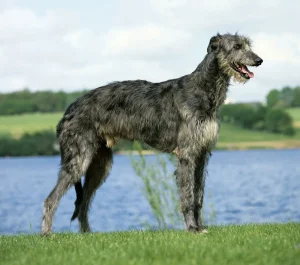
The ears of the Deerhound require careful attention from breeders and judges alike, as they significantly influence the breed’s overall expression and silhouette. They should be set on high, positioned well above the level of the skull, and in repose should fold back in a manner reminiscent of the Greyhound’s ear carriage. However, during moments of excitement or alertness, the ears should raise above the head without losing their characteristic fold, and in some individuals may even become semi-erect, adding to the breed’s animated and intelligent expression.
The ideal Deerhound ear should be soft and glossy to the touch, with a texture comparable to a mouse’s coat—fine, smooth, and velvety. Size matters considerably in ear evaluation, with smaller ears being preferred over larger ones. The ear should not display any long coat or excessive fringe, though a silky, silvery coat on the body of the ear and at the tip is commonly observed and considered acceptable. Regardless of the dog’s overall coat color, the ears should be black or dark-colored, providing a striking contrast against lighter body shades and enhancing the breed’s dramatic facial appearance.
Neck and Shoulder Architecture
The Deerhound’s neck exemplifies the Greyhound character that defines the breed’s overall silhouette and movement. It should be long—specifically, of the length that appropriately befits the Greyhound character of the dog, creating an elegant line from head to body. The nape of the neck should be very prominent where the head is set on, creating a distinct muscular crest that speaks to the breed’s strength and athleticism. The throat should be clean-cut at the angle and prominent, free from excessive dewlap or loose skin that might detract from the refined outline.
The shoulders should be well sloped, allowing for the extensive reach and fluid stride characteristic of efficient sighthound movement. The shoulder blades should be positioned well back on the body, with not too much width between them. This moderate width prevents the breed from appearing coarse or bulky while maintaining sufficient structural strength to support the dog’s considerable size and weight during active hunting or running.
Tail Configuration and Carriage
The stern, or tail, of the Deerhound should be tolerably long, tapering gradually from base to tip, and reaching to within approximately one and one-half inches of the ground when the dog stands in natural position. It should extend about one and one-half inches below the hocks, creating a balanced overall proportion. When the dog remains still, the tail should hang perfectly straight down or display a gentle curve, never curling over the back or deviating dramatically from the vertical line.
During movement, the tail should curve when the dog is excited, but in no case should it be lifted out of the line of the back. This restriction prevents the high tail carriage seen in some other breeds and maintains the Deerhound’s characteristic low-set, flowing outline. The tail should be well covered with hair, with the inside displaying thick, wiry texture while the underside features longer, softer hair. This differential coat texture on the tail adds to the breed’s rustic, weather-resistant appearance.
Eye Expression and Coloration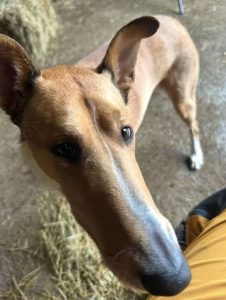
The eyes of the Deerhound contribute significantly to its soulful, contemplative expression. They should be dark in color, generally appearing as dark brown or hazel. The eye itself is moderately full, neither protruding nor excessively deep-set, with a soft, gentle look in repose that transforms into a keen, far-away gaze when the dog becomes aroused or alert. This remarkable ability to shift expression—from dreamy contemplation to intense focus—reflects the breed’s dual nature as both gentle companion and fierce hunting athlete.
The rims of the eyelids should be black, providing a defined border that enhances the eye’s shape and intensity. This pigmentation requirement ensures that lighter-colored dogs maintain sufficient facial definition and prevents the washed-out appearance that might result from flesh-colored or poorly pigmented eyelids. The overall eye shape and placement should contribute to the breed’s characteristic dignified, somewhat sad expression that so many admirers find irresistible.
Body Structure and Proportions
The Deerhound’s body and general formation closely resemble that of a Greyhound, but scaled up to larger size with correspondingly heavier bone structure. This relationship to the Greyhound is immediately apparent to knowledgeable observers, yet the Deerhound maintains its own distinct identity through specific proportional differences and coat characteristics. The chest should be deep rather than broad, providing ample room for heart and lungs without creating a barrel-shaped or excessively wide front. However, the chest should not be too narrow and flat-sided, as this would compromise the dog’s stamina and working ability.
The loin represents a critical area of evaluation, as it should be well arched and drooping gracefully toward the tail. This pronounced arch creates the characteristic underline that distinguishes quality sighthounds and contributes to the elastic, powerful gallop for which the breed is renowned. The back should be strong and level, providing a stable platform from which the powerful hindquarters can drive the dog forward at remarkable speeds.
Leg and Foot Construction
The legs of the Deerhound must support considerable weight while maintaining the agility and speed expected of a functional sighthound. The forelegs should be broad and flat, with a good broad forearm and elbow being particularly desirable. These substantial front legs must be as straight as possible, free from any deviation or crookedness that might compromise the dog’s movement or working ability. The feet should be close and compact, with well-arched toes that provide traction and stability across varied terrain.
The hind-quarters should droop slightly and be as broad and powerful as possible, with the hips set wide apart to accommodate the substantial musculature required for propulsion. The hind-legs should be well bent at the stifle, creating the angulation necessary for efficient extension and drive. Great length from the hip to the hock is essential, with the hock itself being broad and flat rather than round or narrow. This hindquarter construction enables the Deerhound to cover ground with the long, effortless strides that characterize the breed’s movement.
Coat Texture and Grooming Requirements
The Deerhound’s coat represents one of its most distinctive and challenging features for owners and exhibitors. The hair on the body, neck, and quarters should be harsh and wiry in texture, measuring approximately three to four inches in length. This weather-resistant outer coat protects the dog during adverse conditions and contributes to its rugged, natural appearance. In contrast, the hair on the head, breast, and belly should be much softer, creating textural variation that adds interest and character.
There should be a slight hairy fringe on the inside of the fore and hind-legs, but nothing approaching the profuse feathering characteristic of breeds like the Collie. The Deerhound should present as a shaggy dog, but not over-coated to the point where its outline becomes obscured or its movement restricted. Grooming requirements, while not excessive, demand regular attention to prevent matting and maintain the coat’s natural texture and color. Prospective owners should understand that this is not a low-maintenance breed in terms of coat care, despite its rustic appearance.
Color Variations and Preferences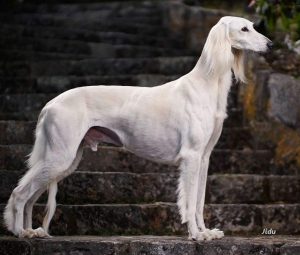
Color in Deerhounds is largely a matter of personal fancy and individual preference, with the breed standard accommodating a wide range of acceptable shades. However, long-standing tradition and popular consensus have established certain color preferences within the breed community. The dark blue-grey stands as the most preferred color, representing the classic Deerhound image that many enthusiasts consider ideal. This striking shade, ranging from deep slate to lighter blue tones, provides a dramatic and elegant appearance that photographs beautifully and presents impressively in the show ring.
Following the blue-grey in popularity are the darker and lighter greys or brindles, with the darkest shades generally preferred over lighter variations. Yellow and sandy-red or red-fawn colors, especially when accompanied by black points on the ears and muzzle, enjoy equal estimation with the grey variations. This diversity of acceptable colors ensures that the breed maintains genetic diversity while accommodating individual aesthetic preferences. Regardless of color, all Deerhounds should display sound pigmentation on nose, eye rims, and ears, with dark colors preferred in these areas.
Height and Size Parameters
The Deerhound is undeniably a large breed, with height requirements reflecting its substantial nature. Males should measure from 28 inches to 30 inches at the shoulder, or even more if there be symmetry without coarseness—a combination that, however, is rare and highly prized when achieved. Bitches should measure from 26 inches upward, with no objection to larger size provided the dog does not become too coarse or heavy. Even at her greatest height, a bitch does not approach the size of a mature male, and therefore could not well be too big for work, unlike over-large males who might sacrifice speed and agility for sheer bulk.
This size differential between males and females is notable and accepted within the breed standard, reflecting the practical realities of breeding and working large sighthounds. The emphasis on symmetry without coarseness underscores the importance of balanced, harmonious construction over mere height or weight. A Deerhound should appear elegant and athletic despite its considerable size, never ponderous or cumbersome.
Temperament and Living Requirements
The Gentle Giant Personality
Despite their imposing size and formidable hunting heritage, Deerhounds possess a temperament that belies their powerful appearance. They are renowned for their gentle, dignified, and somewhat reserved nature, often described as “gentle giants” who form deep bonds with their families while maintaining an air of noble aloofness toward strangers. This temperament makes them surprisingly suitable companions for households that can accommodate their physical needs, though their size and exercise requirements demand serious consideration.
Deerhounds typically display remarkable patience with children and generally coexist peacefully with other dogs, particularly when raised together. However, their strong prey drive, inherited from generations of deer hunting, means that caution is necessary when introducing them to smaller pets such as cats or rabbits. Early socialization and consistent training are essential to ensure that the Deerhound develops into a well-mannered, reliable companion capable of navigating the modern world with confidence and poise.
Exercise and Space Considerations
The Deerhound’s heritage as a running hunter demands substantial exercise to maintain physical health and mental well-being. These dogs thrive in environments where they have ample space to stretch their long legs and engage in periodic galloping exercise. While they can adapt to suburban or even urban living with dedicated owners, they are happiest in rural or semi-rural settings with secure fencing and room to move.
Daily walks are essential, but Deerhounds particularly benefit from opportunities to run freely in safe, enclosed areas. Their sighthound instincts mean that they may pursue moving objects with single-minded determination, making secure containment and reliable recall training absolutely critical. Prospective owners must honestly assess their ability to provide adequate exercise and space before committing to this magnificent but demanding breed.
Conclusion
The Deerhound stands as a living monument to Scotland’s rich cultural and sporting heritage, a breed that combines breathtaking beauty with genuine functional capability. From its origins in the Highland forests where noblemen pursued red deer with packs of these magnificent hounds, to its modern role as a cherished companion and successful show dog, the Deerhound has demonstrated remarkable adaptability and enduring appeal. Its physical characteristics—the long, flat head with soft cranial coat, the dark, soulful eyes, the harsh wiry body coat, and the powerful, Greyhound-like structure—create a silhouette that is instantly recognizable and universally admired.
For those fortunate enough to share their lives with a Deerhound, the rewards are immeasurable. These dogs offer loyalty, dignity, and a unique connection to centuries of history and tradition. Yet they also demand commitment: to proper exercise, to coat maintenance, to understanding their sensitive, somewhat independent nature. The Deerhound is not a breed for everyone, but for the right owner, it represents the pinnacle of canine companionship—a gentle giant with the heart of a poet and the soul of a Highland warrior.
As we look to the future, the preservation of the Deerhound depends on responsible breeding practices, dedicated owner education, and continued appreciation for the qualities that make this breed unique. Whether resting gracefully before a modern hearth or coursing across open fields, the Deerhound remains one of the most decorative, stately, and picturesque of dogs—a true aristocrat of the canine world whose glamour and grace will continue to captivate generations to come.
The History and Popularity of Horse Racing