
 By admin
Borussia Dortmund: A Legacy of Passion, Talent, and Triumph
Borussia Dortmund, often referred to simply as Dortmund or by its acronym BVB (Ballspielverein Borussia 09 e.V. Dortmund), is one of the most iconic and successful football clubs in Germany and Europe. Known for its passionate fanbase, vibrant yellow-and-black colors, and a history filled with triumphs and challenges, Borussia Dortmund has become a global symbol of football excellence and resilience. This article delves into the club’s rich history, its defining moments, key players, and its influence on global football culture.
The Birth of Borussia Dortmund: Humble Beginnings
Founded on December 19, 1909, Borussia Dortmund was established by a group of young men who wanted to play football free from the influence of local church authorities. The club’s name, “Borussia,” comes from a nearby brewery, a nod to its local roots. Initially, the team played in regional leagues, gradually building its reputation as a competitive force in German football.
The early decades of Dortmund’s history were marked by modest achievements, but the foundations for its future success were being laid. The club’s ethos of community, hard work, and determination became ingrained in its identity.
Rise to Prominence: Domestic and European Glory
Borussia Dortmund’s breakthrough came in the 1950s, a decade that saw the club clinch its first German championship in 1956. They followed it up with another title in 1957, solidifying their place among Germany’s elite teams. However, the club’s greatest triumph came in 1966 when they became the first German team to win a European competition by securing the UEFA Cup Winners’ Cup, defeating Liverpool 2-1 in the final.
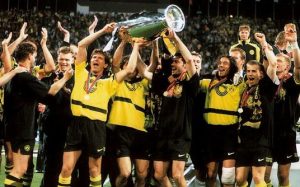
The 1990s marked another golden era for Dortmund. Under the management of Ottmar Hitzfeld, the team won back-to-back Bundesliga titles in 1995 and 1996. Their crowning achievement came in 1997 when Dortmund lifted the UEFA Champions League trophy, defeating Juventus 3-1 in a historic final. This victory remains one of the most celebrated moments in the club’s history.
The Signal Iduna Park: A Fortress of Football
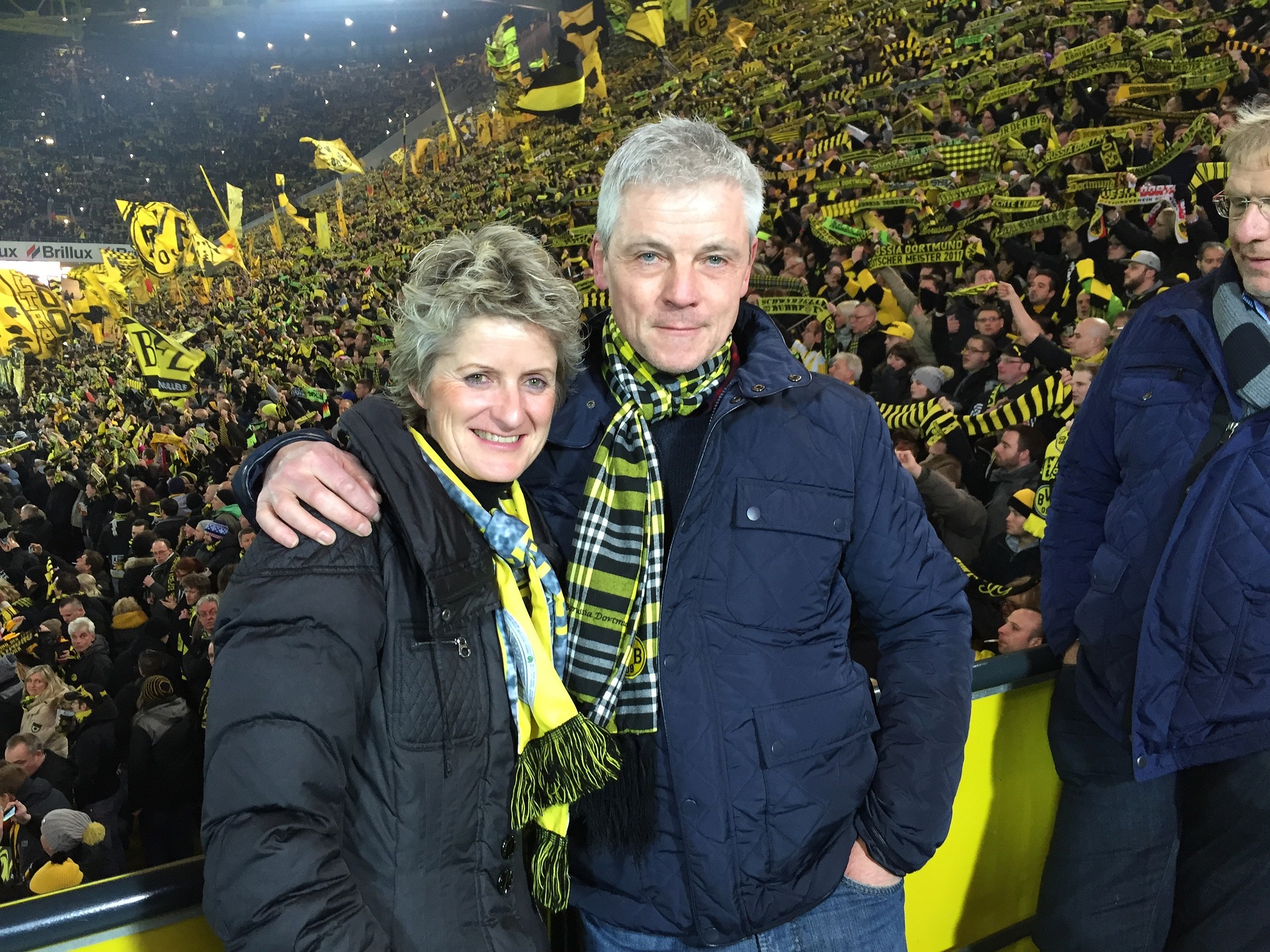
The Signal Iduna Park, formerly known as the Westfalenstadion, is more than just a stadium; it is a symbol of Borussia Dortmund’s identity. With a capacity of over 81,000, it is the largest stadium in Germany and renowned for its electrifying atmosphere. The “Yellow Wall,” a massive standing terrace on the south side, is one of the most iconic features of the stadium. Housing over 25,000 passionate fans, it creates an intimidating environment for visiting teams and showcases the unwavering support of BVB’s fanbase.
The Players Who Defined an Era
Borussia Dortmund has been home to some of the most talented and influential players in football history. From legends of the past to modern-day stars, these players have left an indelible mark on the club:
- Matthias Sammer: A key figure in Dortmund’s 1990s success, Sammer’s leadership and defensive prowess earned him the Ballon d’Or in 1996.
- Michael Zorc: A one-club man, Zorc made over 550 appearances for Dortmund and later served as the club’s sporting director, shaping its modern era.
- Marco Reus: The current captain and a local hero, Reus embodies the spirit of Borussia Dortmund with his skill, dedication, and loyalty.
- Robert Lewandowski: Before becoming one of the world’s top strikers, Lewandowski played a pivotal role in Dortmund’s back-to-back Bundesliga titles in 2011 and 2012.
- Erling Haaland: The Norwegian sensation brought global attention to Dortmund with his incredible goal-scoring exploits before moving to Manchester City.
The Klopp Revolution: A New Era of Success
Jurgen Klopp’s arrival as head coach in 2008 marked the beginning of a transformative period for Borussia Dortmund. Klopp’s high-energy, pressing style of football, known as “gegenpressing,” revolutionized the team’s approach. Under his guidance, Dortmund won the Bundesliga in 2011 and completed a domestic double in 2012 by winning both the league and the DFB-Pokal.
Klopp also guided Dortmund to the UEFA Champions League final in 2013, where they narrowly lost to Bayern Munich. Despite the defeat, this period established Dortmund as one of Europe’s most exciting teams and cemented Klopp’s legacy as one of the club’s greatest managers.
Borussia Dortmund’s Philosophy: Youth Development and Community
One of Borussia Dortmund’s defining characteristics is its commitment to nurturing young talent. The club’s academy, known as the “Borussia Dortmund Youth Academy,” has produced numerous stars who have gone on to achieve success at the highest levels. Players like Mario Götze, Christian Pulisic, and Jadon Sancho all rose to prominence at Dortmund before becoming household names.
This emphasis on youth development aligns with the club’s philosophy of building sustainable success while maintaining financial prudence. Dortmund’s ability to identify and develop young players has become a cornerstone of its global reputation.
Rivalries and Derbies: The Passion of German Football
Borussia Dortmund’s fierce rivalry with Bayern Munich, known as “Der Klassiker,” is one of the most high-profile clashes in European football. These matches are not just about points; they are battles of pride and prestige between Germany’s two most successful clubs.
Another key rivalry is the “Revierderby” against Schalke 04, a local derby that dates back to 1925. The intense rivalry between the two clubs highlights the deep-rooted passion of football in the Ruhr region.
Global Impact and Fan Culture
Borussia Dortmund boasts one of the largest and most dedicated fanbases in the world. The club’s motto, “Echte Liebe” (True Love), reflects the emotional connection between the team and its supporters. Fans’ unwavering loyalty is evident in their record-breaking attendance figures and their active presence on social media.
Beyond Germany, Borussia Dortmund has cultivated a global following. The club’s emphasis on attacking football, its vibrant colors, and its underdog spirit resonate with fans worldwide. Dortmund’s commitment to community initiatives and social causes further enhances its appeal.
Challenges and Aspirations
Like any football club, Borussia Dortmund has faced its share of challenges. Financial struggles in the early 2000s nearly led to bankruptcy, but the club’s resilience and sound management helped it recover. Today, Dortmund continues to navigate the competitive landscape of modern football, balancing its traditional values with the demands of commercialization.
Looking ahead, Borussia Dortmund aspires to reclaim domestic dominance and achieve sustained success in European competitions. The club’s strategic investments in young talent, infrastructure, and global outreach position it well for the future.
Conclusion
Borussia Dortmund’s journey is a story of passion, resilience, and triumph. From its humble beginnings to its status as a global football powerhouse, the club has consistently embodied the values of hard work, community, and excellence. Whether it’s the deafening roar of the Signal Iduna Park, the brilliance of its players, or the loyalty of its fans, Borussia Dortmund represents the very essence of football. As the club continues to write new chapters in its history, its legacy as one of the world’s most beloved teams remains secure.
Keywords: Borussia Dortmund, BVB, Signal Iduna Park, Yellow Wall, German football, Bundesliga, Jurgen Klopp, Marco Reus, Der Klassiker, Revierderby, youth development, European football, passionate fans.