
 By admin
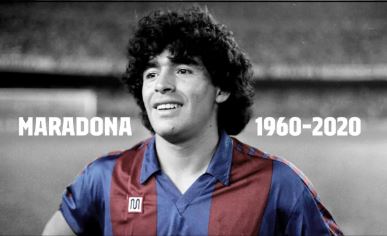
Diego Maradona: The Immortal Legend of Football
Diego Armando Maradona, often celebrated as one of the greatest footballers of all time, was much more than a player; he was a global phenomenon whose influence extended beyond the pitch. Born on October 30, 1960, in Villa Fiorito, a poverty-stricken suburb of Buenos Aires, Maradona’s journey from humble beginnings to football stardom remains an inspiring story. Renowned for his extraordinary skill, fiery temperament, and undying love for the game, Maradona left an indelible mark on both football and popular culture. This article delves into his life, career, and enduring legacy, highlighting the moments that cemented his place as a football icon.
Early Life and Rise to Stardom
Diego Maradona grew up as the fifth of eight children in a family that struggled to make ends meet. Despite these hardships, his talent for football was apparent from an early age. At just eight years old, he joined Los Cebollitas, the youth team of Argentinos Juniors, where his exceptional dribbling, vision, and ball control earned him recognition as a prodigy. By the age of 15, Maradona had made his professional debut for Argentinos Juniors, captivating fans and scouts with his performances. His meteoric rise attracted attention from top clubs and national team selectors, setting the stage for his illustrious career.
Club Career
Boca Juniors
In 1981, Maradona fulfilled a childhood dream by signing with Boca Juniors. His debut season was a resounding success, as he played a pivotal role in securing the Argentine Primera División title. Maradona’s charisma and exceptional skills made him an instant fan favorite, forging a bond with Boca supporters that lasted his entire life.
Barcelona
Maradona’s move to FC Barcelona in 1982 marked the beginning of his European career. While his time in Spain showcased his undeniable brilliance, including a memorable goal against Real Madrid in the Copa del Rey, it was also fraught with challenges. Injuries and clashes with management overshadowed his stint, culminating in his transfer to SSC Napoli in 1984.
Napoli: The Golden Era
Maradona’s tenure at Napoli is widely regarded as the pinnacle of his club career. Arriving as the world’s most expensive player, he transformed the club into a dominant force in Italian football. Under his leadership, Napoli clinched their first Serie A title in 1987, followed by another in 1990, and secured the UEFA Cup in 1989. Maradona’s impact extended beyond the pitch; he became a cultural icon in Naples, symbolizing hope and pride for the city’s working-class population.
Later Years
After leaving Napoli in 1991, Maradona’s career became increasingly turbulent. Stints at Sevilla, Newell’s Old Boys, and a return to Boca Juniors marked the twilight of his playing days. As his on-field performances waned, personal struggles, including substance abuse and legal issues, began to dominate the narrative of his life.
International Career
Maradona’s contributions to Argentina’s national team solidified his legendary status. Representing his country in four FIFA World Cups, he delivered performances that defined an era.
1986 World Cup: The Hand of God and the Goal of the Century
Maradona’s 1986 World Cup campaign in Mexico is etched in football history. Leading Argentina to victory, he scored five goals and provided five assists. The quarter-final against England remains the most iconic match of his career. His first goal, infamously known as the “Hand of God,” was scored using his hand, an act he described as “a little with the head of Maradona and a little with the hand of God.”
Minutes later, he scored the “Goal of the Century,” dribbling past five English players in a mesmerizing solo effort. These moments encapsulated Maradona’s duality—a mix of audacity, genius, and controversy.
1990 and 1994 World Cups
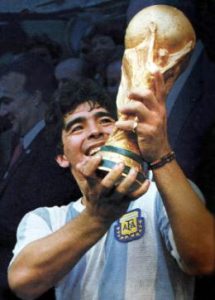
In the 1990 World Cup, Maradona captained Argentina to the final, where they lost to West Germany. By the 1994 tournament, his career was on a decline, and he was sent home after testing positive for banned substances, marking a bittersweet end to his international journey.
Playing Style and Skills
Maradona’s style of play was characterized by extraordinary technical ability and creativity. His skill set included:
- Dribbling: Maradona’s ability to weave through defenders was unmatched.
- Vision and Passing: His precision in creating scoring opportunities for teammates was exceptional.
- Free Kicks: A master of set-pieces, his free kicks were often unstoppable.
- Leadership: Despite his flaws, Maradona’s passion and determination inspired those around him.
Standing at 1.65 meters (5 feet 5 inches), his low center of gravity gave him exceptional balance and agility, making him a nightmare for defenders.
Off the Pitch: A Controversial Figure
Maradona’s life off the field was as dramatic as his exploits on it. He battled substance abuse, faced numerous legal and financial challenges, and had a tumultuous personal life. Despite these controversies, his charisma and generosity endeared him to fans worldwide, who saw him as a flawed but relatable hero.
Legacy and Cultural Impact
Diego Maradona’s influence transcended football. He became a symbol of resistance, hope, and passion for marginalized communities. In Naples, murals of Maradona still adorn the city’s walls, reflecting his lasting impact. His autobiography, Yo Soy el Diego, and the 2019 documentary Diego Maradona provide deep insights into his complex persona.
Awards and Recognition
Maradona’s accolades include:
- FIFA Player of the Century (shared with Pelé)
- Golden Ball for Best Player at the 1986 World Cup
- Induction into the FIFA Hall of Fame
Maradona’s Church
In a testament to his iconic status, Argentine fans established the “Church of Maradona,” celebrating his life with rituals and memorabilia.
Death and Posthumous Legacy
Diego Maradona passed away on November 25, 2020, due to a heart attack. His death prompted an outpouring of grief worldwide, with tributes from fans, players, and political leaders. Argentina declared three days of national mourning, underscoring his importance to the nation.
Conclusion
Diego Maradona’s life was a tapestry of extraordinary talent, triumph, and tribulation. Despite his flaws, he remains an enduring symbol of passion, artistry, and resilience in football. His legacy lives on in the hearts of millions, reminding us of the beauty and humanity that define the sport. Maradona was not just a footballer; he was a legend whose influence transcended borders and inspired generations.