
 By admin
The Giant Panda: A Fascinating Life in the Wild and Captivity
The giant panda, scientifically known as Ailuropoda melanoleuca, is one of the most beloved and iconic animals on Earth. Renowned for its striking black-and-white coat and endearing demeanor, the giant panda is native to China and has become a global symbol of wildlife conservation. This article delves into the life of the giant panda, exploring its habitat, diet, behavior, and conservation efforts.
Habitat and Distribution
Giant pandas are primarily found in the temperate mountain forests of central China, specifically in the Sichuan, Shaanxi, and Gansu provinces. These regions are characterized by dense bamboo forests, which provide the panda with its primary food source. The altitudes where pandas thrive range from 1,200 to 3,400 meters, offering the cool and moist conditions they prefer. Despite their historical range being much broader, habitat loss and human activity have restricted their population to these limited areas.
Unique Dietary Habits
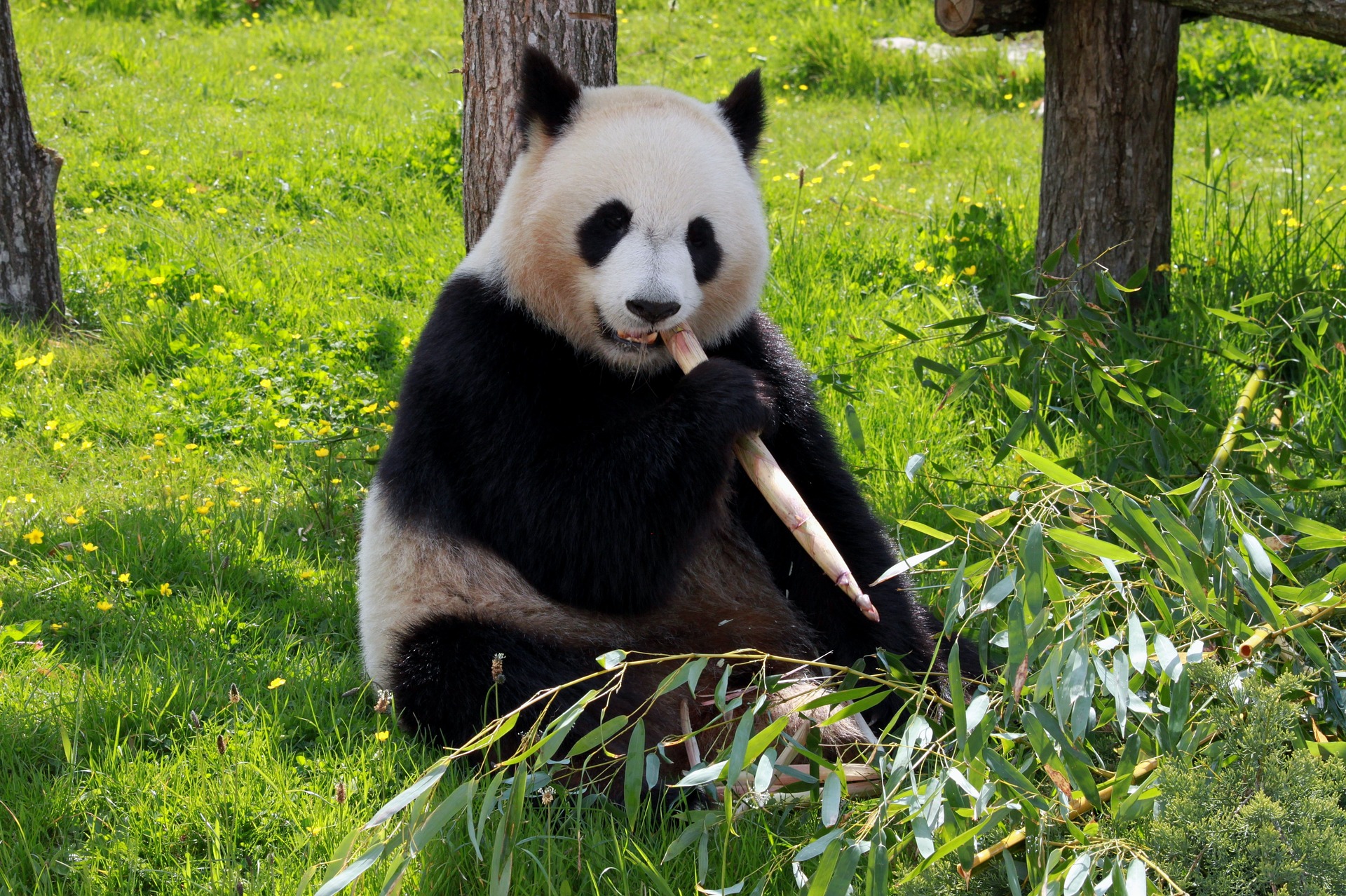
One of the most intriguing aspects of the giant panda is its diet. Although classified as a carnivore, the panda’s diet is almost entirely herbivorous, consisting of up to 99% bamboo. This unique dietary preference is a result of evolutionary adaptation. Pandas consume a variety of bamboo species, including leaves, stems, and shoots. On average, an adult panda can consume 12 to 38 kilograms of bamboo daily to meet its energy needs.
Interestingly, the panda’s digestive system is more similar to that of a carnivore, making it less efficient at breaking down cellulose in bamboo. To compensate, pandas spend up to 14 hours a day eating. Occasionally, they may supplement their diet with small mammals, birds, or carrion, but these instances are rare.
Physical Characteristics
The giant panda’s distinct black-and-white coloration serves as camouflage and communication. The dark patches around their eyes and ears may help them recognize each other and deter predators. Adult pandas typically weigh between 70 and 100 kilograms, with males being slightly larger than females. Their powerful jaws and strong teeth are well-suited for crushing bamboo.
Another remarkable feature is their pseudo-thumb—an elongated wrist bone that functions as a thumb, allowing them to grasp bamboo stalks with surprising dexterity. This adaptation is essential for their feeding habits and sets them apart from other bear species.
Behavior and Social Structure
Giant pandas are solitary animals by nature, with each individual occupying a defined territory. Males and females come together only during the brief mating season in spring. Communication between pandas involves vocalizations, scent markings, and body language. Despite their solitary tendencies, pandas are not aggressive and typically avoid confrontations.
Cubs are born tiny and helpless, weighing only about 100 grams at birth. They are nurtured by their mothers for up to 18 months before becoming independent. During this period, the mother invests significant time and energy into raising her young, as panda cubs are vulnerable to predators and environmental challenges.
Threats and Conservation Efforts
The giant panda is classified as “vulnerable” by the International Union for Conservation of Nature (IUCN). The primary threats to their survival include habitat loss, fragmentation, and climate change. Deforestation for agriculture, infrastructure development, and human encroachment have significantly reduced the panda’s natural habitat.
In response to these challenges, extensive conservation efforts have been implemented. China has established over 60 panda reserves, covering approximately 70% of their current habitat. These reserves aim to protect bamboo forests and provide a safe environment for pandas to thrive. Additionally, captive breeding programs have played a crucial role in increasing the panda population. Notably, the Chengdu Research Base of Giant Panda Breeding is at the forefront of these efforts.
The Role of Bamboo in Panda Conservation
Bamboo forests are not only essential for pandas but also support a diverse ecosystem of flora and fauna. Conservation strategies often focus on restoring and maintaining bamboo habitats. However, bamboo’s life cycle poses challenges; it flowers and dies off cyclically, sometimes leaving large areas devoid of food. To mitigate this, conservationists plant multiple species of bamboo to ensure a stable food supply for pandas.
Pandas in Captivity
Captive pandas have become ambassadors for their species, raising awareness about conservation issues. Zoos worldwide participate in panda loan programs, where pandas are sent abroad to promote research and conservation. These programs also generate funds that are reinvested into panda conservation projects in China.
Life in captivity offers pandas protection from predators and ensures a steady food supply, but it also presents challenges. Reproducing pandas in captivity requires careful management due to their low reproductive rates. Artificial insemination has been a successful technique to overcome these hurdles, resulting in numerous panda births over the years.
Cultural Significance
The giant panda holds a special place in Chinese culture and is often regarded as a symbol of peace and harmony. Historically, pandas were gifted to other nations as diplomatic gestures, a practice known as “panda diplomacy.” Today, they continue to represent goodwill and foster international cooperation.
Future Prospects
The future of the giant panda depends on continued conservation efforts and global cooperation. Advances in technology, such as GPS tracking and genetic research, have enhanced our understanding of panda behavior and ecology. Public awareness campaigns and ecotourism also play a role in funding and supporting conservation initiatives.
Despite the challenges, the giant panda’s population has shown a gradual increase in recent decades, a testament to the success of collective efforts. However, sustained commitment is essential to ensure their long-term survival.
Conclusion
The giant panda is more than just an adorable face; it is a symbol of the delicate balance between humans an
d nature. Its unique characteristics, coupled with its role in conservation, make it an extraordinary species worthy of admiration and protection. By preserving the giant panda, we are not only safeguarding a single species but also protecting an entire ecosystem and inspiring a global movement toward environmental sustainability.