
 By admin
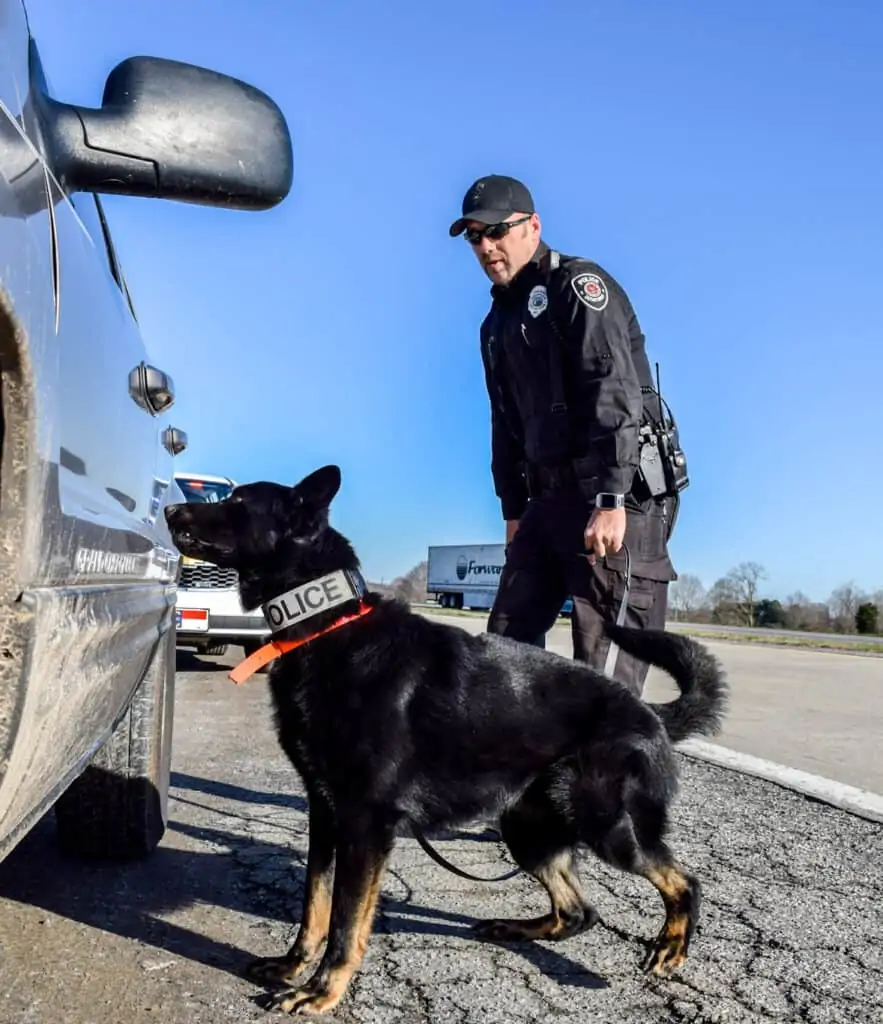
The Science of Sniffing: How Police Dogs Detect Narcotics with Unmatched Precision
Introduction
In an era marked by increasingly sophisticated drug trafficking networks and ever-evolving concealment methods, law enforcement agencies face a relentless challenge: how to reliably detect illicit substances hidden in plain sight. Amid rapid technological innovation—ranging from chemical sensors to artificial intelligence-driven screening systems—one tool continues to outperform expectations with remarkable consistency: the police detection dog. With a single, purposeful sniff, a trained narcotics detection dog can identify illegal drugs concealed inside vehicles, cargo shipments, luggage, buildings, and even open environments, often with greater speed and accuracy than advanced electronic devices.
This extraordinary capability is not the result of chance or instinct alone. Rather, it emerges from a powerful convergence of canine biology, neuroscience, behavioral psychology, and disciplined training methodologies refined over decades. The canine nose is a biological masterpiece, supported by a brain uniquely optimized for odor processing. When combined with modern, science-based training protocols and skilled human handlers, police dogs become highly precise mobile detection systems.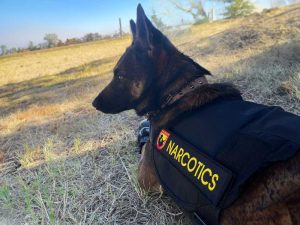
As the global drug trade adapts—introducing synthetic narcotics, novel psychoactive substances (NPS), and increasingly complex masking techniques—the science behind canine detection continues to advance as well. This article provides a comprehensive and up-to-date exploration of how police dogs detect narcotics with unmatched precision. From the microscopic architecture of their olfactory receptors to courtroom-admissible deployment protocols, we examine the science, training, limitations, and future of one of law enforcement’s most reliable allies.
I. The Canine Olfactory System: Nature’s Most Advanced Chemical Detector
Anatomical Superiority of the Canine Nose
At the heart of every successful narcotics detection dog lies an anatomical advantage that borders on the extraordinary. While humans possess approximately five to six million olfactory receptors, dogs boast an estimated 125 to 300 million, depending on breed. This massive difference alone gives dogs an olfactory sensitivity tens of thousands of times greater than that of humans.
Equally important is the surface area of the canine olfactory epithelium—the specialized tissue responsible for detecting odor molecules. In dogs, this area can be up to 50 times larger than in humans, allowing far more scent molecules to be captured and analyzed with each inhalation. The complex folds inside a dog’s nasal cavity further increase efficiency, ensuring prolonged contact between airborne chemicals and receptor cells.
Specialized Airflow and Continuous Scent Sampling
Unlike humans, dogs are capable of sniffing up to five times per second, creating a continuous flow of air through their nasal passages. This unique airflow design separates respiration from olfaction, meaning dogs can analyze scents without interrupting their breathing. As a result, they generate a detailed, real-time map of the surrounding odor environment—an essential skill when tracking or locating concealed narcotics.
The Olfactory Brain: Processing Power Beyond Comparison
Detection does not end in the nose. The portion of a dog’s brain dedicated to scent analysis—the olfactory bulb—is proportionally up to 40 times larger than that of humans. This neurological advantage allows dogs not only to detect odors but also to discriminate between them with extraordinary precision. A trained dog can isolate a specific narcotic odor even when it is present in minute quantities and surrounded by overwhelming background scents.
Recent Scientific Discoveries in Canine Olfaction
Modern imaging technologies, including functional MRI (fMRI), have revealed that dogs process odors in a highly sophisticated manner. Studies have demonstrated that dogs can distinguish between identical twins by scent alone and can detect subtle biochemical changes associated with diseases such as cancer, diabetes, and neurological disorders. These findings underscore the immense discriminatory power of canine olfaction—a capability directly leveraged in narcotics detection work.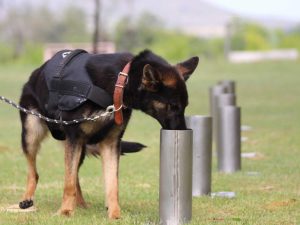
II. The Scent of Narcotics: What Detection Dogs Actually Smell
Volatile Organic Compounds (VOCs) and Odor Signatures
Contrary to popular belief, police dogs do not typically detect the solid or liquid drug itself. Instead, they identify volatile organic compounds (VOCs)—microscopic chemical molecules that evaporate from narcotics into the surrounding air. Each substance, whether cocaine, heroin, methamphetamine, fentanyl, or cannabis, emits a unique combination of VOCs known as an odor profile.
These odor profiles remain detectable even when drugs are tightly sealed, vacuum-packed, or concealed within other materials. The ability of dogs to recognize these chemical signatures is what enables them to locate narcotics hidden deep within cargo or structural compartments.
Masking Agents and Why They Fail
Drug traffickers frequently attempt to confuse detection dogs by using strong-smelling substances such as coffee grounds, spices, perfumes, fuel, or cleaning chemicals. However, this strategy rarely succeeds. Well-trained detection dogs are conditioned to ignore irrelevant odors and focus exclusively on the target narcotic scent.
Rather than being overwhelmed by masking agents, dogs separate the desired odor from background noise—a process known as olfactory discrimination. In many cases, masking substances may even help by increasing airflow and spreading narcotic VOCs further, inadvertently making detection easier.
Emerging Challenges: Synthetic Drugs and Novel Substances
The rise of synthetic narcotics and novel psychoactive substances presents new challenges. These compounds often have different chemical structures and VOC profiles than traditional drugs. Ongoing chemical research aims to identify the specific compounds dogs respond to most strongly, allowing training programs to adapt quickly and maintain detection accuracy in the face of evolving drug chemistry.
III. Selecting the Right Dog: Genetics, Temperament, and Drive
Breeds Commonly Used in Narcotics Detection
While any dog with sufficient olfactory capability could theoretically detect narcotics, certain breeds consistently excel due to their genetics, temperament, and work ethic. Commonly selected breeds include:
- German Shepherds
- Belgian Malinois
- Labrador Retrievers
- Springer Spaniels
- Dutch Shepherds
These breeds combine strong scenting ability with intelligence, stamina, and a desire to work closely with human handlers.
Temperament and Psychological Suitability
An effective detection dog must possess more than a powerful nose. Ideal candidates display confidence, focus, curiosity, and resilience in high-stress environments such as airports, border crossings, and crowded urban areas. Dogs that are easily distracted, fearful, or overly aggressive are unsuitable for professional K9 work.
IV. Training the Narcotics Detection Dog: Science-Based Methodologies
Operant Conditioning and Positive Reinforcement
Modern narcotics detection training relies almost exclusively on positive reinforcement. Using principles of operant conditioning, trainers associate the target narcotic odor with the dog’s highest-value reward—typically a favorite toy or food. Over time, the dog learns that locating the scent results in an enjoyable and motivating outcome.
This reward-based approach enhances accuracy, motivation, and long-term performance while minimizing stress and burnout.
Scent Imprinting and Progressive Complexity
Training begins with scent imprinting, during which the dog learns to recognize and memorize the odor profile of a specific narcotic. Once imprinting is complete, training scenarios gradually increase in complexity, incorporating multiple substances, varying quantities, different concealment methods, and diverse environments.
Alert Behaviors and Evidence Preservation
Dogs are trained to display a clear, consistent alert behavior upon locating narcotics. Passive alerts—such as sitting or staring—are often preferred in environments where evidence preservation is critical. Active alerts, such as scratching, may be used in outdoor or non-sensitive settings.
Certification and Continuous Skill Maintenance
Before deployment, K9 teams must pass rigorous certification tests that evaluate accuracy, reliability, and handler control. However, certification is not a one-time event. Ongoing maintenance training ensures skills remain sharp and adapts teams to new drug trends and environmental challenges.
V. Operational Deployment and Legal Considerations
Handler Expertise and Team Dynamics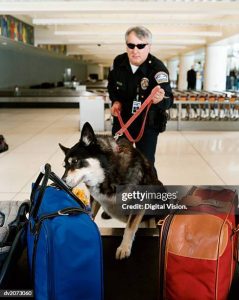
The handler-dog relationship is a critical component of successful detection. Handlers must understand canine body language, recognize subtle behavioral changes, and avoid unconsciously influencing the dog’s responses—a phenomenon known as handler bias.
The Scent Cone Principle
Odors disperse from their source in a pattern influenced by airflow, temperature, and physical barriers, forming what is known as a scent cone. Detection dogs instinctively work their way up this cone to locate the source. Understanding this principle is essential for accurate interpretation and courtroom testimony.
Limitations and Error Mitigation
Despite their remarkable abilities, dogs are not infallible. Fatigue, environmental contamination, and excessive handler influence can lead to errors. Best practices include double-blind testing, regular proficiency assessments, and transparent documentation of deployment procedures.
VI. The Future of Narcotics Detection: Dogs and Technology
Canines vs. Electronic Detection Systems
Technologies such as ion mobility spectrometers and chemical sensors play valuable roles, but they cannot yet replicate the speed, mobility, and adaptability of detection dogs. Rather than replacing canines, technology increasingly complements K9 units.
Genetic and Behavioral Research
Ongoing research into genetic markers associated with superior olfactory performance may refine future breeding and selection programs. Advances in canine cognitive science are also improving training efficiency and welfare.
Conclusion
Police dogs represent one of the most successful examples of cross-species collaboration in modern law enforcement. Their unparalleled ability to detect narcotics is grounded in extraordinary biology, refined through scientifically validated training methods, and deployed within carefully regulated legal frameworks. As drug trafficking methods evolve, so too does the science supporting canine detection, ensuring these remarkable animals remain indispensable assets in global security efforts.
Far more than tools, narcotics detection dogs are dedicated partners—living, breathing detection systems whose noses continue to outperform machines and whose contribution to public safety remains irreplaceable. In the ongoing fight against illegal drugs, the canine sniff remains one of law enforcement’s most reliable answers.
The Powerful Advantages of AI Tools