
 By admin
Introduction
The journey of discovering medicines and understanding their ability to treat specific diseases is one of humanity’s most remarkable achievements. From prehistoric herbal remedies to cutting-edge pharmaceuticals, this process reflects centuries of observation, experimentation, and scientific innovation. The question of how humans first recognized that a particular substance could cure or alleviate a specific disease may seem simple, but the answer involves a fascinating intersection of traditional knowledge, trial and error, and modern scientific research.
In this article, we explore the history and evolution of medicine discovery—from ancient intuitions to modern clinical trials. We examine how early humans began to associate natural substances with healing properties, how cultures refined and preserved medicinal knowledge, and how modern medicine relies on scientific validation to ensure efficacy and safety. This comprehensive overview offers insight into one of the most significant pillars of human progress: the art and science of healing.
Ancient Roots of Medicinal Knowledge
1. Healing in Prehistoric Times
Long before the development of formal medical systems, early humans relied on their environment for survival and healing. Prehistoric communities likely discovered medicinal plants through trial and error—consuming different herbs and noting their effects.
Archaeological evidence, such as the remains of medicinal plants found in burial sites dating back over 60,000 years, suggests that early humans used plants like yarrow and chamomile to treat ailments. Observation played a key role; early healers might have noticed animals eating certain leaves when sick and adopted similar practices.
2. The Role of Traditional Healers and Oral Transmission
As societies evolved, knowledge of medicinal plants and practices was passed down through generations, often by shamans, tribal healers, or elders. These individuals were the first “pharmacologists,” using experience-based methods to identify treatments for fevers, wounds, infections, and other ailments.
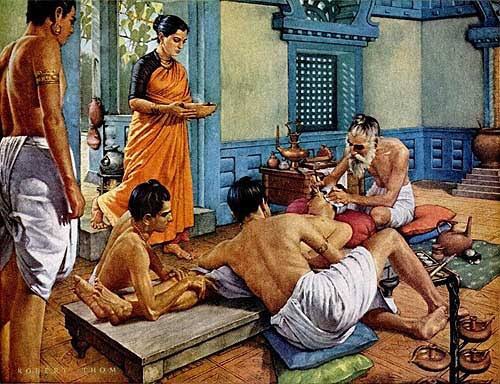
Ancient civilizations like the Egyptians, Sumerians, and Chinese began documenting medicinal knowledge on papyrus scrolls and clay tablets. The Ebers Papyrus (c. 1550 BCE) from Egypt lists hundreds of plant-based treatments. In India, the Ayurvedic system emerged, emphasizing balance and natural remedies, while Traditional Chinese Medicine (TCM) used herbs and acupuncture to harmonize the body’s energy.
From Observation to Association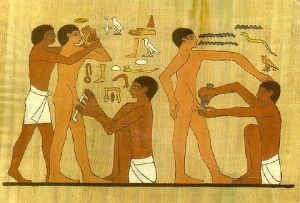
1. The Concept of Disease-Specific Treatment
Early medicine was often generalized, with treatments aimed at balancing the body rather than targeting specific diseases. However, over time, societies began to notice consistent patterns: certain herbs alleviated specific symptoms or illnesses repeatedly.
For instance, willow bark was used for centuries to relieve pain and fever. Its active ingredient, salicin, is the precursor to aspirin. Quinine, derived from cinchona bark, became the first effective treatment for malaria, and its use was based on indigenous South American knowledge passed on to European colonists.
These associations were initially anecdotal but were strengthened through repetition and collective knowledge.
2. Emergence of Written Medical Systems
By the time of Hippocrates in ancient Greece (c. 460 BCE), medicine began to shift toward observation and classification. Hippocrates and later Galen emphasized detailed descriptions of diseases and their symptoms. Although their theories were based on the four humors (now outdated), they laid the groundwork for associating treatments with specific ailments.
The Islamic Golden Age (8th–13th centuries) further advanced this approach. Scholars like Ibn Sina (Avicenna) compiled massive medical encyclopedias, such as The Canon of Medicine, which systematically described diseases and treatments. This methodical approach enabled more targeted interventions and a clearer connection between cause and cure.
The Scientific Revolution and Rational Drug Discovery
1. The Birth of Pharmacology and Chemistry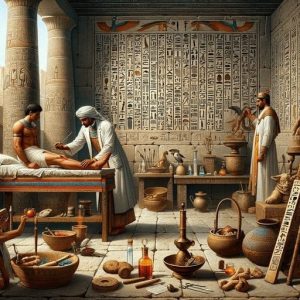
With the dawn of the Scientific Revolution in the 16th and 17th centuries, medicine transitioned from superstition and tradition to empirical science. Chemistry and biology provided the tools to isolate active ingredients from plants and understand how they worked in the body.
The 19th century saw major advances:
-
Morphine was isolated from opium.
-
Digitalis, derived from the foxglove plant, was found to treat heart conditions.
-
Vaccines were introduced by Edward Jenner, who discovered that cowpox could protect against smallpox.
These discoveries demonstrated that specific substances had measurable effects on specific diseases, transforming medicine into a science of precision.
2. Germ Theory and the Role of Microbiology
One of the greatest breakthroughs came with the development of germ theory in the 19th century. Scientists like Louis Pasteur and Robert Koch showed that microorganisms caused specific diseases. This opened the door to targeted treatments.
With this understanding, researchers could now look for compounds that either killed the pathogens (antibiotics) or helped the body fight them (vaccines). The discovery of penicillin by Alexander Fleming in 1928 revolutionized the treatment of bacterial infections.
Modern Medicine: Precision, Trials, and Validation
1. Clinical Trials and Evidence-Based Medicine
Today, no medicine can be approved for public use without undergoing rigorous testing through clinical trials. These trials are conducted in several phases:
-
Phase I: Tests safety in a small group.

-
Phase II: Evaluates efficacy and side effects.
-
Phase III: Involves large-scale testing to confirm effectiveness.
-
Phase IV: Post-market monitoring for long-term effects.
This method ensures that a drug not only works against a specific disease but also meets safety and ethical standards.
The rise of evidence-based medicine means that anecdotal or traditional claims are no longer sufficient. Every drug must demonstrate reproducible results under controlled conditions.
2. Modern Drug Discovery Techniques
Contemporary medicine relies on advanced techniques like:
-
High-throughput screening: Rapidly testing thousands of compounds.
-
Computational modeling: Predicting how molecules will interact with biological systems.
-
Biotechnology and genomics: Customizing drugs based on an individual’s genetic profile (personalized medicine).
-
Artificial intelligence (AI): Assisting in pattern recognition and drug design.
These innovations have vastly accelerated the pace of discovery and increased the precision with which scientists can target specific diseases.
How Do We Know a Drug Works for a Particular Disease?
1. Mechanism of Action
Scientists first study the mechanism of action—how a drug interacts with the body or pathogen. This could involve blocking a virus from entering cells, inhibiting an enzyme, or stimulating an immune response.
For example:
-
Antibiotics disrupt bacterial cell walls or protein synthesis.
-
Antivirals target replication mechanisms of viruses.
-
Cancer drugs often inhibit tumor growth by targeting specific molecular pathways.
2. Biomarkers and Diagnostic Tools
Modern medicine also uses biomarkers—biological indicators that can be measured to assess the presence or progression of a disease. These markers help in confirming whether a drug is effective.
For instance, reduced levels of HIV viral load in a patient receiving antiretroviral therapy indicate that the drug is working.
Traditional vs. Modern Approaches: A Synergistic Future
While modern pharmaceuticals dominate current healthcare systems, there’s a growing appreciation for traditional and herbal medicines. The World Health Organization (WHO) has recognized the value of traditional medicine, and many modern drugs have origins in natural remedies.
Today, researchers often revisit traditional medicine to identify potential new drugs. For example:
-
Artemisinin, an anti-malarial drug, was derived from traditional Chinese medicine.
-
Many cancer and cardiovascular drugs trace their roots to natural compounds.
Combining ancient wisdom with modern technology creates new opportunities in drug discovery.
Conclusion
The discovery of medicine and the understanding of how specific treatments combat particular diseases is the result of a long, evolving journey that spans cultures, eras, and disciplines. From prehistoric herbal experiments to sophisticated clinical trials and AI-driven research, humanity has continually advanced its ability to heal and prevent illness.
Our knowledge has shifted from empirical observations to a scientific understanding of mechanisms, molecules, and biology. This evolution has empowered us not only to treat existing diseases but also to anticipate and prevent future outbreaks with unprecedented speed and precision.
Understanding this history enriches our appreciation of modern medicine and inspires continued innovation in the quest for better health and longer lives.
The Truth About Vegan Diets and Nutrition