
 By admin
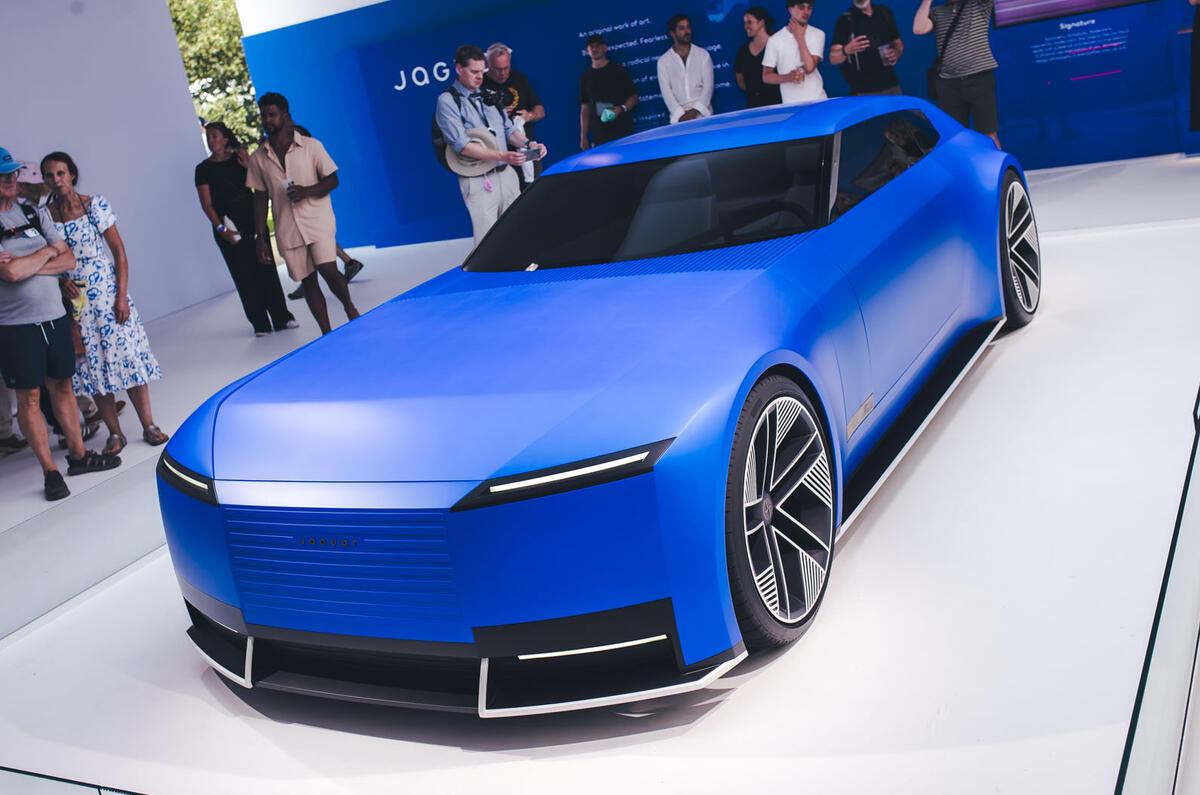
Jaguar: From British Craftsmanship to an All-Electric Ultra-Luxury Future
Introduction
The history of Jaguar is not merely the story of an automobile manufacturer; it is the chronicle of one of Britain’s most iconic brands, continuously reinventing itself across more than a century of industrial, cultural, and technological change. From humble beginnings crafting motorcycle sidecars in the early 1920s to its bold ambition of becoming an all-electric ultra-luxury marque, Jaguar has repeatedly demonstrated an extraordinary ability to adapt while preserving its core identity: elegance, performance, and innovation.
Throughout its evolution, Jaguar has embodied the spirit of British engineering excellence, blending refined aesthetics with racing pedigree and cutting-edge technology. The brand’s journey has been marked by legendary models, corporate upheavals, global economic challenges, and, most recently, a radical transformation under its “Reimagine” strategy. This transformation signals not just a technological shift, but a philosophical one—positioning Jaguar as a forward-thinking luxury brand in an era defined by electrification, sustainability, and digital sophistication.
This article explores Jaguar’s remarkable metamorphosis: its origins, golden age, ownership transitions, and its ambitious leap into a fully electric future. By examining both its storied past and visionary future, we gain insight into how Jaguar aims to redefine luxury mobility for a new generation.
I. The Origins of a British Icon (1922–1935)
1. The Birth of Swallow Sidecar Company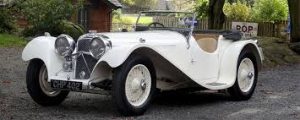
Jaguar’s story begins in 1922 in Blackpool, England, when two young entrepreneurs—William Lyons and William Walmsley—founded the Swallow Sidecar Company. At the time, motorcycles were a popular and affordable means of transportation, and sidecars offered an attractive solution for added comfort and utility. The company quickly gained a reputation for producing stylish, well-crafted sidecars that stood out from utilitarian competitors.
William Lyons, in particular, possessed a keen eye for design and marketing. He understood that aesthetics mattered just as much as functionality, a philosophy that would later define Jaguar’s approach to automobile manufacturing.
2. Transition from Sidecars to Automobiles
By the late 1920s, the founders recognized the growing demand for automobiles and began producing custom-bodied cars on chassis supplied by established manufacturers. The “Swallow” name became associated with elegant, affordable coach-built vehicles that appealed to aspirational middle-class buyers.
This early focus on design-led differentiation laid the foundation for Jaguar’s future success. Even at this formative stage, the company demonstrated an ability to deliver luxury-inspired styling at competitive prices—an ethos that would remain central for decades.
II. The Emergence of the Jaguar Identity (1935–1945)
1. The First Use of the Jaguar Name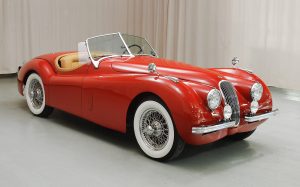
The name “Jaguar” first appeared in 1935 with the launch of the SS Jaguar saloon. The name was chosen to evoke qualities of speed, power, and grace—attributes that perfectly aligned with the brand’s aspirations. The vehicle was well received, praised for its performance and elegant proportions.
2. A Necessary Rebranding After World War II
Following World War II, the company faced an unavoidable challenge: the “SS” designation had become inextricably linked to Nazi Germany. In 1945, to avoid any association with the regime, the company officially renamed itself Jaguar Cars Limited.
This decision proved pivotal. By embracing the Jaguar name fully, the brand was able to craft a distinct and powerful identity rooted in sophistication, performance, and British pride.
III. The Golden Age of Jaguar (1948–1970s)
1. The XK Engine and a Technological Breakthrough
Jaguar’s post-war resurgence was fueled by the introduction of the revolutionary XK engine in 1948. This dual overhead camshaft inline-six engine was both powerful and durable, becoming the backbone of Jaguar’s success in both road cars and motorsport for decades.
The Jaguar XK120, launched the same year, stunned the automotive world by becoming the fastest production car of its time, capable of reaching 120 mph. It instantly established Jaguar as a global performance brand.
2. Motorsport Glory at Le Mans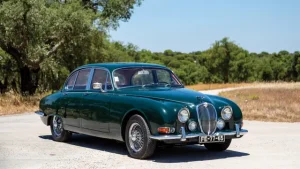
Jaguar’s engineering prowess was further validated on the racetrack. The C-Type (Type C) and later the D-Type achieved multiple victories at the 24 Hours of Le Mans during the 1950s. These wins cemented Jaguar’s reputation as a manufacturer capable of translating racing innovation into road-going excellence.
Disc brake technology, aerodynamics, and lightweight construction were among the innovations Jaguar pioneered during this era.
3. The Timeless Legend: Jaguar E-Type
Perhaps no Jaguar model is more iconic than the E-Type, introduced in 1961. With its long hood, flowing lines, and exceptional performance, the E-Type redefined what a sports car could be. Famously described by Enzo Ferrari as “the most beautiful car ever made”, the E-Type became a cultural symbol of the 1960s.
The E-Type encapsulated Jaguar’s golden age—where design, performance, and affordability converged in a way few manufacturers could replicate.
IV. Corporate Turbulence and Changing Ownership (1970s–2008)
1. British Leyland and the Challenges of Mass Production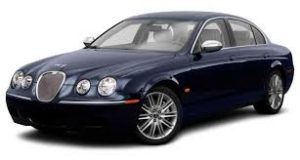
Despite its engineering brilliance, Jaguar struggled with quality control and financial stability during the 1970s, particularly under the umbrella of British Leyland. Industrial unrest, outdated manufacturing practices, and inconsistent reliability tarnished the brand’s reputation.
2. Ford Motor Company Era
In 1989, Ford Motor Company acquired Jaguar, aiming to modernize operations and improve reliability. Under Ford’s stewardship, Jaguar introduced new models such as the X-Type, S-Type, and XJ, benefiting from shared platforms and improved manufacturing standards.
While Ford succeeded in stabilizing Jaguar financially, critics argued that the brand lost some of its uniqueness during this period.
3. Acquisition by Tata Motors
A turning point came in 2008 when Tata Motors, India’s largest automotive group, acquired Jaguar (along with Land Rover), forming Jaguar Land Rover (JLR). Tata’s hands-off management style allowed Jaguar to regain creative freedom while benefiting from long-term investment and global expansion.
V. Reimagine Strategy: Jaguar’s Electric Revolution
1. A Bold Strategic Reset
Jaguar is currently undergoing the most radical transformation in its history under the “Reimagine” strategy. Rather than incrementally electrifying its lineup, Jaguar has chosen a clean break from the past—repositioning itself as an exclusive, fully electric luxury brand.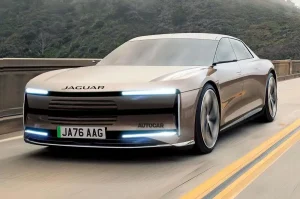
2. Ending Internal Combustion Production
By the end of 2024, Jaguar ceased production of nearly all its internal combustion models, including the XE, XF, F-Type, and E-Pace. This decision marked the end of an era and demonstrated Jaguar’s commitment to a fully electric future.
VI. The All-Electric Jaguar of Tomorrow (2025–2026)
1. A New Electric Flagship
Jaguar plans to become 100% electric by 2025, with the launch of its first next-generation EV: a four-door luxury GT producing over 600 horsepower. The model is expected to deliver an estimated range of up to 770 kilometers, positioning it among the most advanced electric luxury cars in the world.
2. Ultra-Luxury Positioning
Unlike mass-market EV brands, Jaguar is targeting the high end of the luxury spectrum. Entry prices are expected to start around $120,000, placing Jaguar in direct competition with Bentley, Porsche, and high-end electric marques.
VII. A New Visual Identity and Design Philosophy
1. The “Type 00” Concept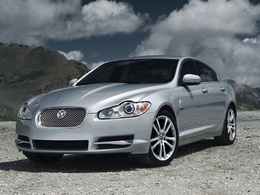
In late 2024, Jaguar unveiled a bold new design language through the “Type 00” concept, accompanied by a redesigned logo and visual identity. This aesthetic represents a deliberate departure from traditional Jaguar styling, favoring minimalist surfaces, dramatic proportions, and futuristic lighting signatures.
2. Targeting a New Generation
This new identity aims to attract a younger, tech-savvy, and affluent clientele who value sustainability, innovation, and exclusivity as much as heritage.
VIII. Sustainability and Carbon Neutrality
1. Commitment to Net-Zero Emissions
Jaguar Land Rover has committed to achieving carbon neutrality across its supply chain and operations by 2039. This includes renewable energy usage, sustainable materials, and responsible manufacturing practices.
2. Luxury with Responsibility
Jaguar’s vision of modern luxury is inseparable from environmental responsibility, aligning with global trends and regulatory pressures while enhancing brand credibility.
Conclusion
Jaguar’s journey is one of constant reinvention—a testament to resilience, creativity, and ambition. From handcrafted sidecars to legendary sports cars, from motorsport dominance to corporate challenges, and now to an all-electric renaissance, Jaguar has never stood still.
As the brand enters its bold new era, it seeks not merely to survive the automotive industry’s transformation, but to lead it—redefining what luxury means in a world shaped by electrification, sustainability, and digital innovation. If successful, Jaguar’s future may prove as iconic as its past.
BYD’s Electric Mobility Empire