
 By admin
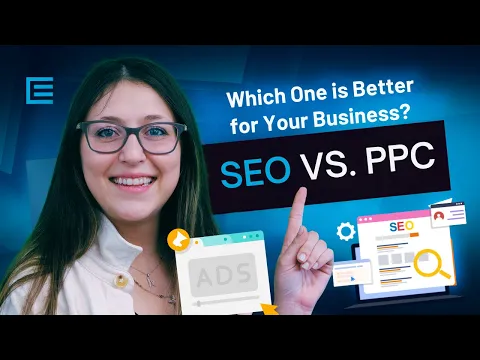
To SEO or To PPC? A Strategic Guide to Winning Online Visibility
Introduction
In today’s hyper-connected digital economy, the internet is no longer just a communication tool—it is the world’s largest marketplace. For businesses of all sizes, from startups to multinational corporations, having an online presence is no longer optional. Millions of consumers turn to search engines every day to discover products, services, information, and solutions to their problems. However, while the opportunities are enormous, the competition is equally intense.
Launching a website alone does not guarantee success. In fact, without a clear digital marketing strategy, even the most beautifully designed website may remain invisible. The online environment is crowded, noisy, and constantly evolving. To stand out, businesses must actively invest in strategies that increase visibility, attract targeted traffic, and convert visitors into customers.
Among the many digital marketing options available, Search Engine Optimization (SEO) and Pay-Per-Click advertising (PPC) remain the two most powerful and widely used strategies in search engine marketing. Both approaches aim to drive traffic to your website, but they operate in fundamentally different ways, each offering unique advantages and challenges.
This article provides a modern, in-depth comparison of SEO and PPC. By understanding how each strategy works, their benefits, costs, timelines, and ideal use cases, you will be better equipped to decide which approach—or combination of approaches—best aligns with your business goals.
Understanding the Digital Visibility Challenge
Why Online Visibility Matters More Than Ever
The majority of online experiences begin with a search engine. Studies consistently show that users rarely scroll past the first page of search results. If your website does not appear prominently, your chances of being discovered are drastically reduced. Visibility directly impacts brand awareness, credibility, and revenue.
In an environment where competitors are just one click away, businesses must be proactive. This is where search engine marketing becomes essential.
Search Engine Marketing at a Glance
Search engine marketing (SEM) is a broad discipline that focuses on increasing a website’s visibility in search engine results pages (SERPs). SEO and PPC are the two core pillars of SEM:
- SEO focuses on earning organic (unpaid) traffic.
- PPC focuses on buying traffic through paid advertisements.
Understanding the distinction between these two approaches is critical for making informed marketing decisions.
What Is SEO? (Search Engine Optimization)
The Core Concept of SEO
Search Engine Optimization (SEO) is the practice of improving a website so that it ranks higher in organic search engine results. Organic results are listings that appear naturally based on relevance, authority, and quality—not because the advertiser paid for placement.
SEO aims to align your website with search engine algorithms, ensuring that your content is easily discoverable, relevant, and valuable to users.
How Search Engines Rank Websites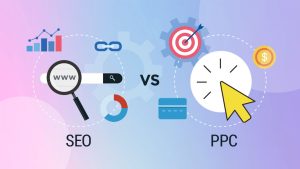
Modern search engines such as Google use complex algorithms that evaluate hundreds of ranking factors, including:
- Content relevance and quality
- Keyword usage and intent
- Page speed and mobile-friendliness
- Backlink quality and authority
- User engagement signals (time on page, bounce rate)
- Website security (HTTPS)
SEO is about optimizing these elements to build long-term trust and authority.
Key Components of a Modern SEO Strategy
1. Keyword Research and Search Intent
Effective SEO begins with understanding what users are searching for and why. Modern keyword research goes beyond simple phrases and focuses on search intent, which can be:
- Informational (seeking knowledge)
- Navigational (looking for a specific site)
- Transactional (ready to buy)
- Commercial investigation (comparing options)
Targeting the right keywords ensures that your content attracts users who are genuinely interested in your offerings.
2. On-Page SEO Optimization
On-page SEO involves optimizing individual pages, including:
- Title tags and meta descriptions
- Header tags (H1, H2, H3)
- High-quality, original content
- Internal linking
- Image optimization with alt text
These elements help search engines understand your content while improving user experience.
3. Technical SEO
Technical SEO ensures that search engines can crawl and index your site efficiently. This includes:
- Fast loading speeds
- Mobile optimization
- Clean site architecture
- Secure connections (SSL)
- Structured data markup
Without solid technical foundations, even the best content may struggle to rank.
4. Off-Page SEO and Backlinks
Backlinks remain one of the strongest ranking signals. A backlink from a reputable website acts as a vote of confidence. Modern link-building strategies emphasize quality over quantity, focusing on authoritative and relevant sources.
Advantages of SEO
Long-Term Traffic and Sustainability
SEO is a long-term investment. While it may take several months to see significant results, once rankings are established, they can generate consistent traffic without paying for each click.
Higher Trust and Credibility
Users often trust organic results more than paid ads. High rankings signal authority and reliability, enhancing brand reputation.
Cost Efficiency Over Time
Although SEO requires time, expertise, and resources, it does not charge per click. Over time, the return on investment can be substantial.
Limitations of SEO
- Results take time (often 6 months or more)
- Requires ongoing optimization and content creation
- Algorithm updates can impact rankings
- Competitive industries may be challenging
Despite these challenges, SEO remains one of the most valuable digital marketing assets.
What Is PPC? (Pay-Per-Click Advertising)
The Core Concept of PPC
Pay-Per-Click (PPC) advertising allows businesses to place sponsored ads in search engine results and other digital platforms. Advertisers pay a fee each time a user clicks on their ad.
Popular PPC platforms include Google Ads, Bing Ads, and social media advertising networks.
How PPC Works
PPC campaigns typically involve:
- Keyword bidding
- Ad creation
- Audience targeting
- Budget management
- Performance tracking
Advertisers compete in auctions, and ad placement is determined by bid amount, ad quality, and relevance.
Key Features of PPC Advertising
1. Immediate Visibility
Unlike SEO, PPC delivers instant results. As soon as a campaign goes live, ads can appear at the top of search results.
2. Full Control Over Targeting
PPC allows precise targeting based on:
- Keywords
- Location
- Device type
- Demographics
- Time of day
This level of control makes PPC ideal for short-term promotions and highly targeted campaigns.
3. Budget Flexibility
Advertisers can set daily or monthly budgets and pause campaigns at any time. Once the budget is exhausted, ads stop running, preventing overspending.
Advantages of PPC
- Fast and measurable results
- Ideal for product launches and promotions
- Highly scalable
- Advanced analytics and tracking
Fraud Protection and Click Control
Modern PPC platforms use sophisticated systems to detect invalid or fraudulent clicks, protecting advertisers from unnecessary costs.
Limitations of PPC
- Costs can rise quickly in competitive markets
- Traffic stops when ads stop
- Requires continuous monitoring and optimization
- Users may trust ads less than organic results
SEO vs PPC: A Strategic Comparison
Cost Structure
- SEO: Time and resource investment, no per-click cost
- PPC: Ongoing cost per click
Speed of Results
- SEO: Slow but sustainable
- PPC: Immediate but temporary
Trust and Credibility
- SEO: Higher perceived trust
- PPC: High visibility but lower trust for some users
Scalability
- SEO: Scales gradually
- PPC: Scales instantly with budget
Choosing the Right Strategy for Your Business
When SEO Is the Best Choice
- Long-term growth goals
- Content-driven businesses
- Limited advertising budget
- Focus on brand authority
When PPC Is the Best Choice
- Short-term campaigns
- New product launches
- Highly competitive keywords
- Immediate traffic needs
The Power of Combining SEO and PPC
The most successful digital marketing strategies often integrate both SEO and PPC. PPC can deliver immediate insights into keyword performance, while SEO builds long-term authority. Together, they create a balanced, resilient marketing ecosystem.
Conclusion
The question “To SEO or To PPC?” does not have a universal answer. Both strategies offer unique benefits and serve different purposes. SEO is a long-term investment that builds credibility, authority, and sustainable traffic. PPC, on the other hand, provides immediate visibility, precise targeting, and rapid results.
The smartest approach is not choosing one over the other blindly, but aligning each strategy with your business goals, timeline, and resources. For short-term objectives, PPC is highly effective. For long-term success, SEO is indispensable. When combined strategically, SEO and PPC can amplify each other and drive exceptional results.
The digital world is vast, competitive, and full of opportunity. With the right strategy, informed decisions, and continuous optimization, success is well within reach.
How Super Affiliates Dominate Online Sales