
 By admin
Chop Stroke, Half Volley, and Court Position in Tennis: Techniques and Strategies for Mastery
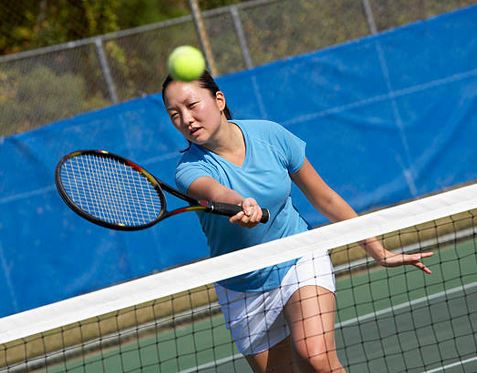
Tennis, a sport of precision and strategy, is as much about skillful shots as it is about intelligent court positioning. Understanding advanced techniques like the chop stroke, the half volley, and optimizing court position can significantly enhance a player’s performance. This article delves into these techniques, explaining their mechanics, strategic applications, and how they integrate into an effective tennis game.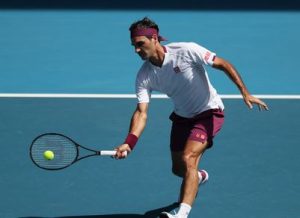
The Chop Stroke
The chop stroke is a defensive yet effective shot used in specific situations on the court. This shot involves a downward racquet movement at a steep angle to the ball, usually greater than 45 degrees and sometimes as extreme as 90 degrees. The racquet passes outside the ball, imparting a cutting motion similar to chopping wood. This motion creates a distinct right-to-left spin, giving the ball a unique trajectory and making it challenging for opponents to handle.
Mechanics of the Chop Stroke
- Racquet Movement: The racquet travels diagonally downward, slicing through the side of the ball.
- Wrist Action: The wrist remains stiff to ensure control over the shot and generate the spin.
- Spin and Curve: The ball acquires a pronounced spin, causing it to skid and stay low upon contact with the ground.
Difference Between Chop and Slice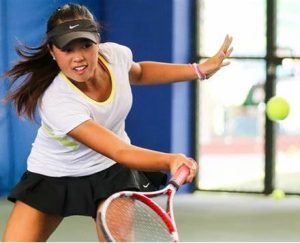
While both shots involve a cutting motion, the slice shot is less extreme in angle and relies more on wrist flexibility. The slice shot reduces the steep angle of the racquet’s path and adds a skidding break to the ball. The chop shot, on the other hand, “drags” the ball with less break, making it slower but more challenging for the opponent to counter.
Strategic Application
The chop stroke is primarily defensive and is effective when:
- Your opponent is on the baseline.
- You aim to disrupt their rhythm with varied ball spin.
- You want to drop soft shots at the feet of a net player.
However, it is not ideal against volley players, as the slower ball speed gives them time to react.
The Drop Shot
The drop shot is a variant of the chop stroke, played with an even lighter touch and entirely dependent on wrist action. It involves sharply angling the racquet around and under the ball to create a soft, short shot that lands just beyond the net. This technique is a powerful surprise tactic to pull opponents out of position.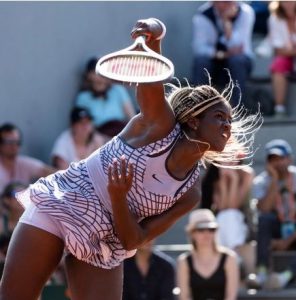
The Half Volley
The half volley is a highly technical shot that requires exceptional timing and precision. This shot occurs when the ball meets the racquet and ground almost simultaneously, often in situations where the player is under pressure.
Mechanics of the Half Volley
- Contact Point: The ball is struck as it bounces off the ground.
- Racquet Position: The racquet face is tilted slightly forward, staying close to the ground.
- Wrist Action: A stiff wrist ensures the ball remains low and controlled.
- Swing: A short, compact swing with no follow-through.
Strategic Application
The half volley is a defensive shot, used as a last resort when caught out of position. It allows players to stay in the rally without retreating and can buy time to recover their position. However, it is not a shot to rely on deliberately due to its high margin for error.
Court Position: Mastering Spatial Awareness
Proper court positioning is fundamental to efficient movement, effective shot selection, and overall match strategy. A tennis court measures 39 feet from the baseline to the net, and players must occupy specific zones to maximize coverage and minimize vulnerability.
Ideal Court Positions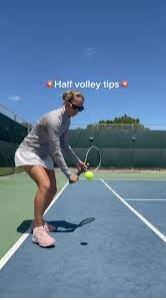
- Baseline Position: Stand about 3 feet behind the baseline, near the center of the court. This is ideal for baseline rallies, offering ample time to react to incoming shots.
- Net Position: Position yourself 6–8 feet from the net and directly opposite the ball. This is optimal for volleys and aggressive net play.
The “No-Man’s-Land” Rule
The area between the baseline and 10 feet from the net is often referred to as “no-man’s-land.” Players should avoid lingering here, as deep shots can catch them at their feet, leaving little room for a proper response. If forced to make a shot from this zone:
- Retreat to the baseline immediately after the shot to regain a strong defensive position.
- If retreat is not possible, advance to the net and adopt an offensive stance.
Positioning Strategies
- After the Shot: Always return to one of the two key positions (baseline or net) to prepare for the next ball. Avoid standing still and admiring your shot, as this wastes precious recovery time.
- Anticipation: Develop an instinct to predict your opponent’s next move. While some players have natural anticipation, others can cultivate it through practice and observation.
- Reacting to Opponent’s Shots: If caught at the net with a short shot, pick a side based on your opponent’s body language and jump to cover it as they swing. Even if you guess wrong, the effort to cover the shot can put pressure on your opponent.
Maximizing Court Coverage
Effective court positioning allows players to cover the largest possible area without compromising safety. Prioritize defending straight shots, as they are the most direct and dangerous. From there, adjust your positioning to guard against angled shots and cross-court plays.
Integrating Chop, Half Volley, and Court Position
These advanced techniques are not standalone strategies but are part of a comprehensive tennis game plan. Use the chop stroke, slice, and drop shots sparingly to disrupt your opponent’s rhythm and create opportunities for more aggressive play. The half volley serves as a defensive tool for tight situations, while proper court positioning ensures you are always ready for the next ball.
By mastering these elements, players can elevate their game, making their style more versatile and unpredictable. Whether you’re playing at a recreational level or competing professionally, these techniques and strategies can give you a significant edge.
Conclusion
Tennis is a blend of skill, strategy, and mental acuity. The chop stroke, half volley, and intelligent court positioning are advanced techniques that, when applied effectively, can transform your game. By incorporating these elements into your practice and match play, you’ll become a more adaptable and formidable player. Remember, tennis isn’t just about hitting the ball—it’s about knowing where to be, how to respond, and how to outthink your opponent.
Key Strategies for Mental Excellence : Tennis