
 By admin
The Evolution of PayPal: From Silicon Valley Startup to Global Digital Payments Powerhouse
Introduction
In the modern digital economy, few companies have reshaped the way people and businesses exchange money as profoundly as PayPal. What began as a modest Silicon Valley startup experimenting with cryptography and handheld devices has evolved into a global leader in online and mobile payments, serving hundreds of millions of users across more than 200 markets. PayPal’s journey mirrors the broader transformation of financial services—from traditional banking systems to fast, borderless, technology-driven transactions.
PayPal’s success is not merely the result of technological innovation. It is a story of strategic timing, bold leadership, competitive adaptation, and continuous reinvention. From its early days facilitating payments for eBay sellers, to becoming an independent fintech giant embracing artificial intelligence, cryptocurrencies, and omnichannel commerce, PayPal has consistently anticipated the changing needs of consumers and merchants alike.
This article explores the complete history of PayPal, tracing its origins, major milestones, strategic acquisitions, technological breakthroughs, and its latest repositioning in a rapidly evolving financial landscape. By examining PayPal’s past and present, we gain insight into how a digital payment platform can become a foundational pillar of the global economy.
1. The Origins of PayPal: Vision, Innovation, and Early Challenges (1998–2000)
1.1 The Birth of Confinity
PayPal’s story begins in December 1998 with the founding of Confinity, a Silicon Valley startup created by Max Levchin, Peter Thiel, and Luke Nosek. Initially, Confinity focused on developing security software for handheld devices such as the PalmPilot. The founders were deeply interested in cryptography, digital identity, and secure data transfer—concepts that would later become central to online financial transactions.
Although the original product struggled to gain traction, Confinity’s leadership quickly recognized a far more promising opportunity: enabling people to send money digitally using email. At a time when online payments were slow, fragmented, and dependent on traditional banking infrastructure, this idea was revolutionary.
1.2 The Emergence of Email-Based Payments
In 1999, Confinity launched the first version of its email-based payment system. The simplicity of sending money using only an email address resonated strongly with early internet users. This innovation eliminated the need for complex bank transfers and provided a seamless peer-to-peer payment experience.
At the same time, Elon Musk founded X.com, an ambitious online banking platform aimed at disrupting traditional financial institutions. X.com offered services such as digital wallets, money transfers, and interest-bearing accounts, positioning itself as a comprehensive online financial solution.
1.3 The Strategic Merger: Confinity and X.com
In 2000, recognizing their overlapping goals and complementary strengths, Confinity and X.com merged. While X.com initially focused on broader banking services, internal competition and market feedback revealed that the email-based payment system was the most successful product. As a result, the company shifted its strategic focus entirely toward payments and rebranded under the name PayPal.
This merger proved decisive. PayPal rapidly gained popularity, particularly among users of the fast-growing online marketplace eBay, where buyers and sellers urgently needed a trusted, efficient payment method.
2. PayPal’s Explosive Growth and the eBay Era (2002–2015)
2.1 IPO and Acquisition by eBay
PayPal’s user base expanded at an extraordinary pace, driven largely by eBay sellers who adopted the platform to simplify transactions and reduce payment friction. In February 2002, PayPal went public in a highly successful initial public offering (IPO), signaling strong investor confidence in its business model.
Later that same year, eBay acquired PayPal for $1.5 billion, recognizing it as a critical component of its marketplace ecosystem. The acquisition marked the beginning of a new era, providing PayPal with financial stability, brand credibility, and access to a massive global user base.
2.2 International Expansion and Regulatory Milestones
Under eBay’s ownership, PayPal expanded aggressively beyond the United States. The company entered new markets across Europe, Asia, and Latin America, adapting its services to local regulations and currencies. A major milestone came in 2007, when PayPal obtained a European banking license, enabling it to operate across the European Union under a unified regulatory framework.
This regulatory achievement allowed PayPal to offer more sophisticated financial services, strengthen consumer trust, and integrate seamlessly with local banking systems worldwide.
2.3 Strengthening Mobile and Social Payments
As smartphones became ubiquitous, PayPal recognized the importance of mobile payments. In 2013, the company acquired Braintree for $800 million, a strategic move that included ownership of Venmo, a rapidly growing peer-to-peer payment app popular among younger users.
Venmo introduced a social dimension to payments, transforming financial transactions into a shared, interactive experience. This acquisition positioned PayPal at the forefront of mobile and social payments, ensuring its relevance in a mobile-first world.
3. Independence and Strategic Reinvention (2015–Present)
3.1 The Separation from eBay
By 2015, market dynamics had changed significantly. PayPal’s growth potential extended far beyond eBay’s marketplace, and investors—including activist investor Carl Icahn—argued that PayPal would thrive as an independent company. In July 2015, PayPal officially separated from eBay and became a standalone public company listed on the NASDAQ under the ticker PYPL.
This independence gave PayPal the freedom to pursue partnerships with eBay’s competitors and expand its merchant network across the broader e-commerce ecosystem.
3.2 Diversification of Services
Following the separation, PayPal embarked on an ambitious diversification strategy. The company expanded into consumer and merchant credit solutions, offering products such as PayPal Credit, Buy Now, Pay Later (BNPL) services, and small business financing.
In 2020, PayPal entered the cryptocurrency space, allowing users to buy, sell, and hold digital assets such as Bitcoin and Ethereum. This move signaled PayPal’s commitment to remaining at the cutting edge of financial innovation and embracing emerging asset classes.
3.3 Strategic Acquisitions and Platform Expansion
One of PayPal’s most notable acquisitions during this period was Honey, a digital shopping assistant acquired in 2019 for $4 billion. Honey enabled PayPal to integrate price comparison, discounts, and rewards directly into the shopping journey, enhancing value for both consumers and merchants.
Through acquisitions and internal development, PayPal transformed itself into a comprehensive commerce platform rather than a simple payment processor.
4. PayPal in the Age of AI and Omnichannel Commerce (2024–2025)
4.1 Artificial Intelligence and Personalization
In 2024 and 2025, PayPal accelerated its investment in artificial intelligence to improve fraud detection, risk management, and personalized user experiences. AI-driven systems analyze vast amounts of transaction data in real time, allowing PayPal to prevent fraud more effectively while reducing friction for legitimate users.
AI also enables smarter recommendations, dynamic pricing insights for merchants, and more intuitive customer support through advanced chatbots and automation tools.
4.2 “PayPal Everywhere” and Physical Commerce
Traditionally associated with online payments, PayPal has recently made a strategic push into physical retail. The launch of the “PayPal Everywhere” campaign reflects the company’s ambition to become a universal payment solution across online and offline environments.
By partnering with point-of-sale providers and integrating with digital wallets, PayPal aims to offer seamless omnichannel payment experiences that bridge the gap between e-commerce and brick-and-mortar retail.
4.3 Competing in a Crowded Fintech Landscape
PayPal now operates in a highly competitive fintech ecosystem, facing rivals such as Apple Pay, Google Pay, Stripe, Square, and regional payment platforms. To maintain its leadership, PayPal emphasizes trust, global reach, regulatory compliance, and a broad suite of value-added services.
5. The Legacy of the PayPal Mafia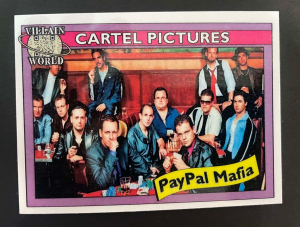
An often-cited aspect of PayPal’s history is the so-called “PayPal Mafia”—a group of former executives and founders who went on to create or lead some of the world’s most influential technology companies. This includes Elon Musk (Tesla, SpaceX), Peter Thiel (Palantir), Reid Hoffman (LinkedIn), and others.
The PayPal Mafia exemplifies how PayPal served as a training ground for visionary entrepreneurs, reinforcing its lasting influence on the global technology and startup ecosystem.
Conclusion
PayPal’s evolution from a small Silicon Valley startup to a global digital payments powerhouse is a testament to the power of innovation, adaptability, and strategic foresight. Over more than two decades, PayPal has continuously reinvented itself in response to technological change, shifting consumer expectations, and intensifying competition.
By embracing mobile payments, artificial intelligence, cryptocurrencies, and omnichannel commerce, PayPal has positioned itself not just as a payment processor, but as a central player in the future of digital finance. As the global economy becomes increasingly cashless and interconnected, PayPal’s commitment to security, convenience, and innovation ensures that it will remain a key force shaping how money moves in the digital age.
Google’s Role in Defining Digital Privacy